Toronto hosts the X.Org Developer's Conference 2026 later this month. The schedule announced by the organizers lines up talks that, from the outside, might look like material for Linux desktop developers: new Wayland features, a discussion on OpenCL over CUDA, the possibility of a Vulkan Gallium path, and various driver updates. For those observing local compute infrastructure, however, the program carries a different weight.
The reason is not any single session, but the direction the whole agenda suggests. Gallium and Vulkan live inside Mesa, the open-source project that provides graphics and compute drivers for many GPUs. Putting Vulkan Gallium on the table does not mean announcing a product: it means acknowledging that the low-overhead API and the Gallium architecture can overlap more than they do today. In a self-hosted environment, that evolution has concrete consequences. A driver less tied to proprietary components makes updates more predictable, reduces surprises in maintenance cycles, and simplifies integration with the rest of the Linux stack.
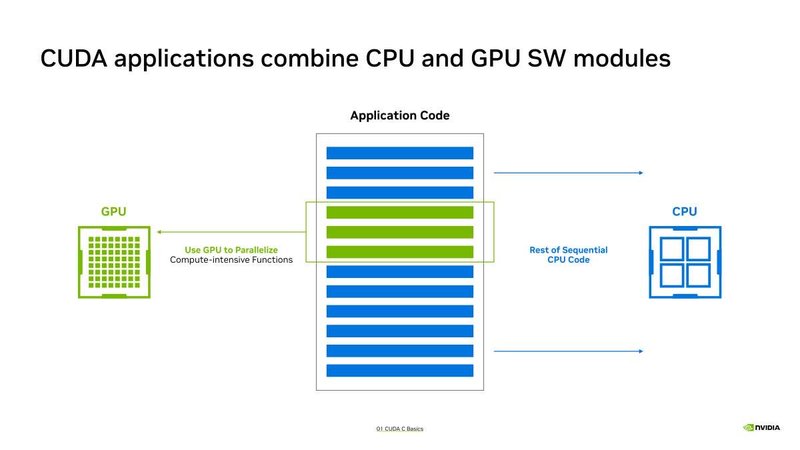
The discussion on OpenCL over CUDA is even more interesting. CUDA has dominated GPU computing for years, but for many organizations running on-premises clusters, the exclusive tie to NVIDIA is a problem of TCO and control. An OpenCL layer on top of CUDA does not remove vendor dependence: it moves it. It offers a compatibility path for existing workloads, lowers testing costs on mixed hardware, and opens room for competition that plays out more on software than on silicon.
For self-hosted Large Language Model Inference, drivers are not a secondary detail. VRAM management, Quantization choices, and pipeline latency all depend on how the runtime accesses the GPU. A more transparent driver stack makes it easier to diagnose a throughput drop, verify model behavior in an air-gapped environment, and document a configuration for audit. That is the structural shift: GPU driver maintenance is no longer only about rendering, but about the operational sustainability of those who choose to keep data and models within their own boundaries.
The winners are teams running heterogeneous GPUs that want to reduce the risk of being locked into a proprietary roadmap. The losers are vendors betting on closed vertical stacks, because the technical conversation is moving toward open, verifiable components. The fact that these topics surface at a historic X.Org conference is not accidental: local compute is becoming an industrial problem, not just a graphics driver issue.





💬 Comments (0)
🔒 Log in or register to comment on articles.
No comments yet. Be the first to comment!