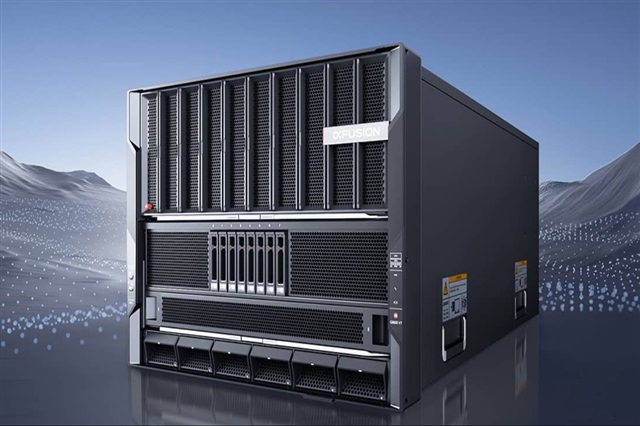
xFusion and China's Push for a Domestic AI Supply Chain: CNY 58.2 Billion Revenue
xFusion, a key player in the Chinese technology landscape, has announced revenue of CNY 58.2 billion. This result not only highlights the company's financial strength but also fits into a broader context of China's increasing focus on strengthening its artificial intelligence supply chain. The national strategy aims to promote technological self-sufficiency, reducing dependence on external suppliers and ensuring greater control over critical infrastructure.
xFusion's financial data reflects the country's commitment to building a robust and independent AI ecosystem. For companies and organizations operating in China, or considering partnerships with Chinese entities, the availability of reliable domestic suppliers becomes a crucial factor in planning their AI deployments, for both training and inference workloads.
The Context of Technological Sovereignty and AI
The drive towards a domestic AI supply chain is a recurring theme globally, with many nations seeking to secure control over data and fundamental technologies. This approach is particularly relevant for Large Language Models (LLM) and more intensive AI workloads, where data sovereignty and regulatory compliance are absolute priorities. A country's ability to autonomously produce and manage the hardware and software necessary for AI offers strategic advantages in terms of national security, intellectual property protection, and economic resilience.
For CTOs, DevOps leads, and infrastructure architects, the choice between cloud and self-hosted (or on-premise) solutions is increasingly influenced by these geopolitical considerations. A strong domestic ecosystem can simplify the procurement of specific components, such as GPUs with certain VRAM capacities or high-performance storage solutions, which are essential for on-premise LLM deployments.
Implications for On-Premise Deployments
The existence of a robust domestic AI supply chain, like the one China is actively promoting, has direct implications for on-premise deployment decisions. Companies opting for self-hosted infrastructures can benefit from greater availability of locally developed hardware and software, potentially with faster delivery times and more integrated technical support. This can translate into a more predictable TCO (Total Cost of Ownership) and greater flexibility in customizing infrastructure to meet specific performance requirements, such as throughput and latency for LLM inference.
However, choosing to rely on a domestic supply chain also involves trade-offs. While tighter control over data security and compliance is gained, a more limited range of hardware or software options might be faced compared to the global market. For those evaluating on-premise deployments, it is crucial to carefully analyze these constraints and opportunities, considering factors such as the availability of high-VRAM GPUs, compatibility with existing AI frameworks, and the scalability of the infrastructure to support increasing workloads. AI-RADAR offers analytical frameworks on /llm-onpremise to evaluate these trade-offs.
Future Prospects and Challenges
The strategy of strengthening the domestic AI supply chain, exemplified by xFusion's results, is set to shape the future of the global technology landscape. As nations continue to invest in self-sufficiency, companies will need to navigate an increasingly fragmented market where technology choices are influenced not only by technical and economic considerations but also by geopolitical factors. This scenario demands careful strategic planning for CTOs and infrastructure architects, who must balance innovation with resilience and compliance.
A country's ability to develop and sustain its own AI supply chain will be a key indicator of its technological leadership. For enterprises, this means carefully evaluating suppliers, their capabilities, and their adherence to local and international regulations, ensuring that their AI infrastructures are not only performant but also secure and compliant.





💬 Comments (0)
🔒 Log in or register to comment on articles.
No comments yet. Be the first to comment!