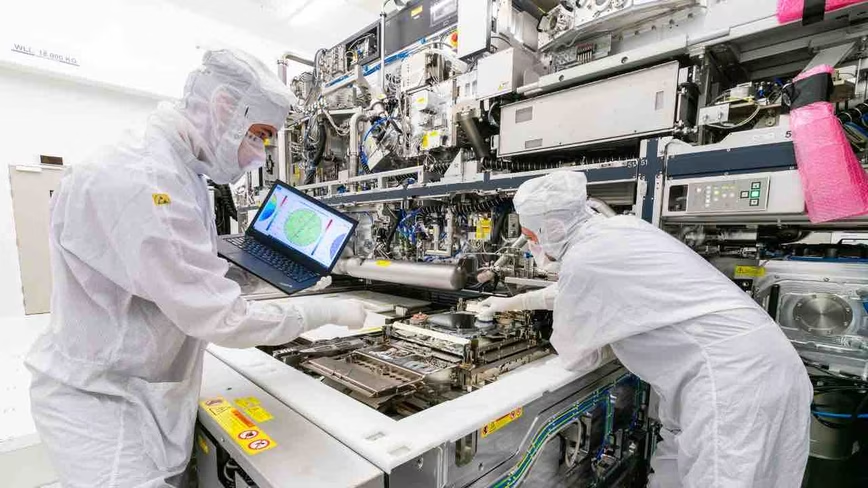
The news sent ripples through an industry accustomed to a single master. xLight, a California-based startup chaired by former Intel CEO Pat Gelsinger, has put $350 million on the table to develop an extreme ultraviolet (EUV) light source that could compete with ASML’s. If the plan succeeds, it would crack open the near-total monopoly the Dutch company holds on advanced chip manufacturing.
EUV lithography and the ASML wall
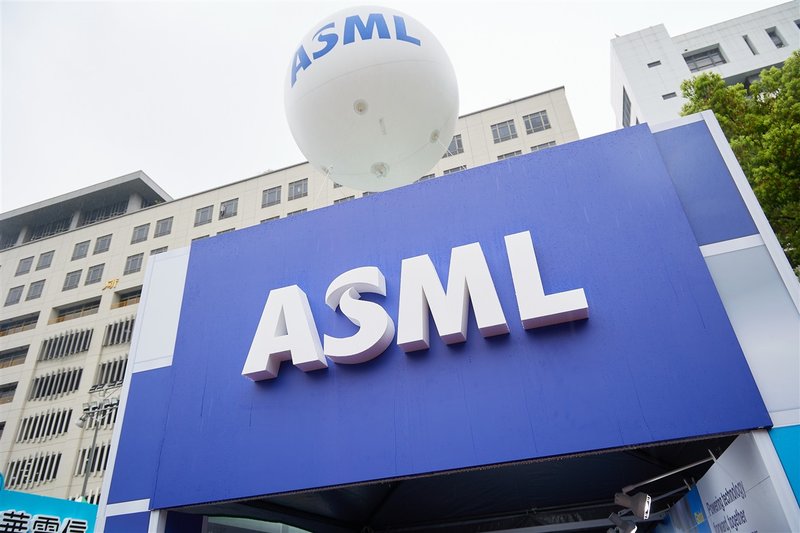
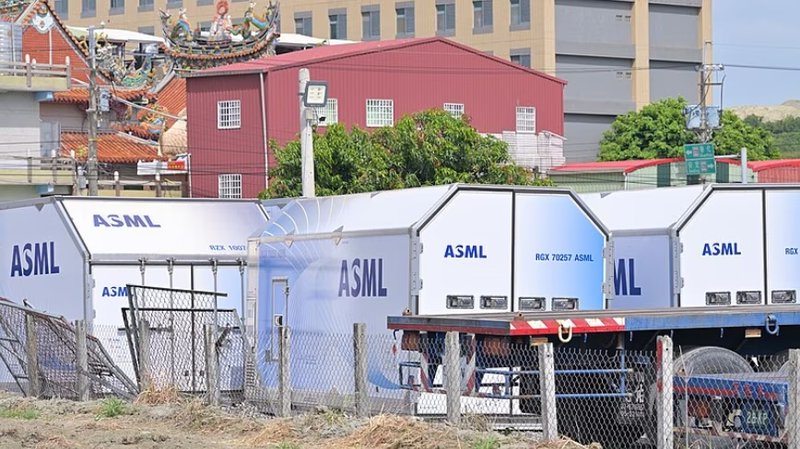
Fabricating the chips that power GPUs, LLMs, and cloud infrastructure requires machines capable of etching circuits at nanometer scale. Today, that level of precision is almost exclusively provided by EUV lithography, and ASML is the world’s sole supplier of complete systems. Its units cost hundreds of millions of dollars, with extremely long lead times — a bottleneck that ripples through the supply chain, from semiconductor manufacturers all the way to organizations buying servers for on-premises inference.
The heart of these machines is the EUV light source, which generates photons at wavelengths around 13.5 nanometers by hitting microscopic tin droplets with a high-power laser. xLight intends to build that very component, leveraging its expertise in lasers and precision optics. Pat Gelsinger, who led Intel through a renewed focus on domestic chip fabrication, brings both managerial heft and technical credibility.
AI hardware heats up again
The announcement comes as investment in AI-related hardware enjoys a fresh surge. Just days earlier, another Dutch company took aim at Nvidia, signaling that the AI semiconductor battle is no longer fought solely over chip design but also over the tools used to make them. Venture capitalists now see growth opportunities wherever strategic dependencies can be reduced.
For teams managing models on-premises, the stakes are tangible. The availability and cost of advanced chips directly shape the TCO of inference infrastructure. Any broadening of the production base — currently strangled by ASML’s dominance — could translate into more competitive pricing and faster procurement cycles. The effect won’t be immediate: xLight must first engineer and industrialize its source. But the message is clear: the EUV machine dominance, once thought unassailable, is now attracting serious capital aimed at breaking it open.
What it means for local deployments
Hardware buyers tracking the market know that lithography is the first link in a long chain. A credible alternative to ASML could accelerate the shift toward more efficient manufacturing nodes, cutting energy consumption per transistor and boosting compute density. In on-premises scenarios, where every watt and every rack unit counts, that’s gold. And in an ecosystem where data sovereignty demands keeping workloads in-house, the ability to source more modern hardware without biblical lead times reshapes CapEx calculations.
Of course, the road is long: xLight is raising funds, not yet shipping a working machine. But the deal shows that the market is betting on a future where semiconductor manufacturing is no longer a monolith. For those pushing large language models into production, having alternative silicon suppliers is a strategic lever too easily overlooked.






💬 Comments (0)
🔒 Log in or register to comment on articles.
No comments yet. Be the first to comment!