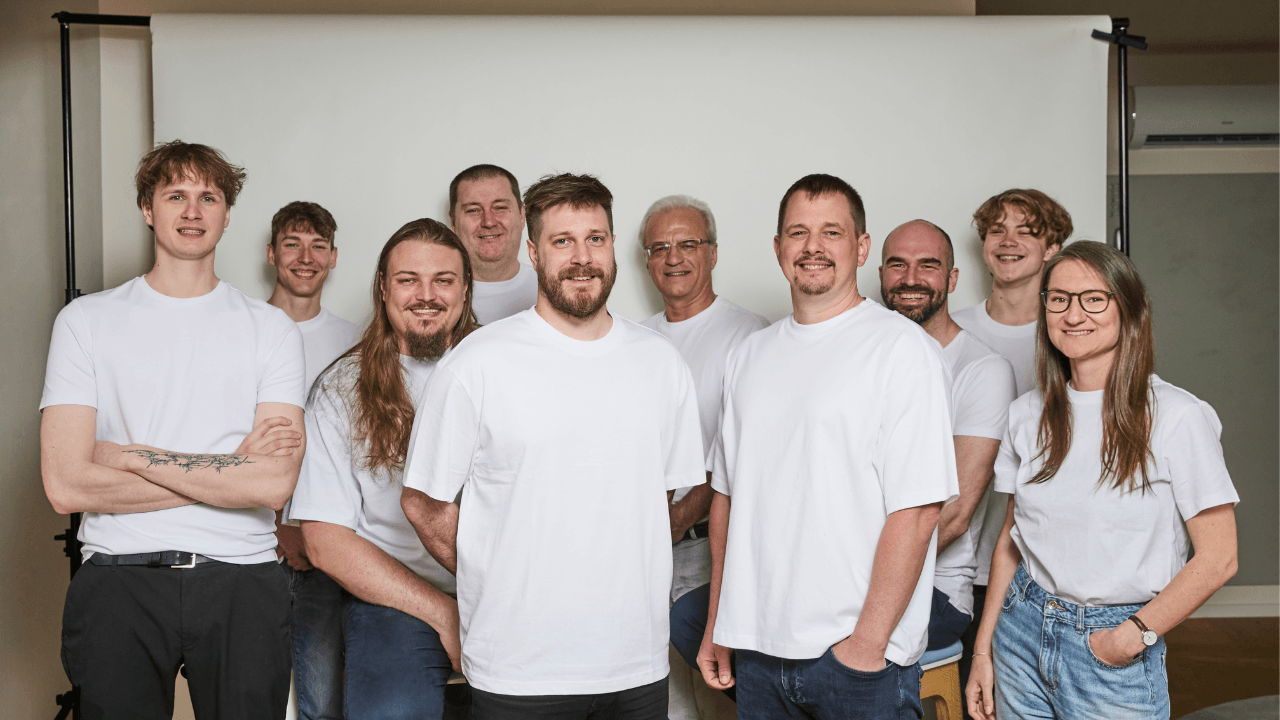
Zerops: A New Paradigm for Cloud Infrastructure in the AI Era
Zerops, a Platform-as-a-Service (PaaS) startup, recently announced it has raised $2 million in a seed funding round, led by Gi21 Capital. The company aims to redefine cloud architecture by addressing one of the most persistent challenges for developers: the clear separation between development and production environments. This dichotomy often leads to deployment failures, both for human developers and for AI coding agents.
Zerops' proposed solution involves creating a unified environment where applications behave identically from development to production release. This approach aims to ensure reliable deployments from the outset, eliminating an entire category of problems related to environmental discrepancies. The goal is to simplify the software lifecycle, making it more predictable and less prone to continuous debugging.
Bare-Metal Architecture and Operational Advantages
The Zerops platform stands out for being built on its own bare-metal infrastructure, with data centers distributed across Europe and the United States. This architectural choice allows the company to achieve significant cost efficiencies, translating into a service potentially up to four times cheaper than legacy platforms. Consistent infrastructure from the initial stages enables a production-ready system to be deployed with a single click, reducing configuration times that would otherwise take weeks.
Zerops runs applications within full Linux containers, not restricted app containers. This provides developers with a level of access and control comparable to what they would have on their own machines, including real-time visibility into running processes. The platform also integrates more than 15 essential services, such as databases, search engines, and messaging systems, reducing the need for complex external integrations. This often differentiates Zerops from platforms that typically offer only two or three integrated services. As applications grow, they remain within a single environment, eliminating the need to re-architect infrastructure at scale.
AI in the Development Cycle with Zerops Control Panel
A key element of Zerops' offering, particularly relevant in the current technological landscape, is the introduction of the Zerops Control Panel (ZCP). This feature is specifically designed for AI-driven development. ZCP connects AI coding agents, such as Claude, Codex, or Gemini, directly to real cloud infrastructure within a Zerops project. This allows agents to build, deploy, and debug applications under real conditions, rather than in isolated and potentially unrepresentative environments.
According to Aleš Rechtorík, co-founder and CEO of Zerops, the company's approach completely removes the gap between development and production, a guarantee now extended to AI coding agents. AI-produced code is thus production-ready from the first deployment. Damir Špoljarič, founder of Gi21 Capital, emphasizes that the market is reaching an inflection point, driven by rising cloud costs and the transformation of how software is written and managed by AI. Zerops' architecture, which does not abstract the underlying infrastructure and relies on owning the full stack, was conceived to address these new dynamics.
Future Prospects and Market Implications
The funds raised will be used to expand Zerops' global infrastructure in the US and Asia, accelerate product development, and grow its team. This expansion aims to solidify Zerops' position as a key player in a rapidly evolving market, where efficient cost management and seamless AI integration have become absolute priorities for businesses.
For organizations evaluating self-hosted alternatives or on-premise deployments for AI/LLM workloads, Zerops' approach highlights the importance of granular infrastructure control and a careful analysis of TCO (Total Cost of Ownership). The promise of predictable infrastructure and frictionless AI integration directly addresses the needs of CTOs, DevOps leads, and infrastructure architects seeking solutions that ensure data sovereignty, compliance, and optimal performance, without the costs and complexities often associated with traditional cloud models. AI-RADAR offers analytical frameworks on /llm-onpremise to evaluate these trade-offs and support strategic decisions.





💬 Comments (0)
🔒 Log in or register to comment on articles.
No comments yet. Be the first to comment!