
AI Surge Drives Next-Gen Platform Production
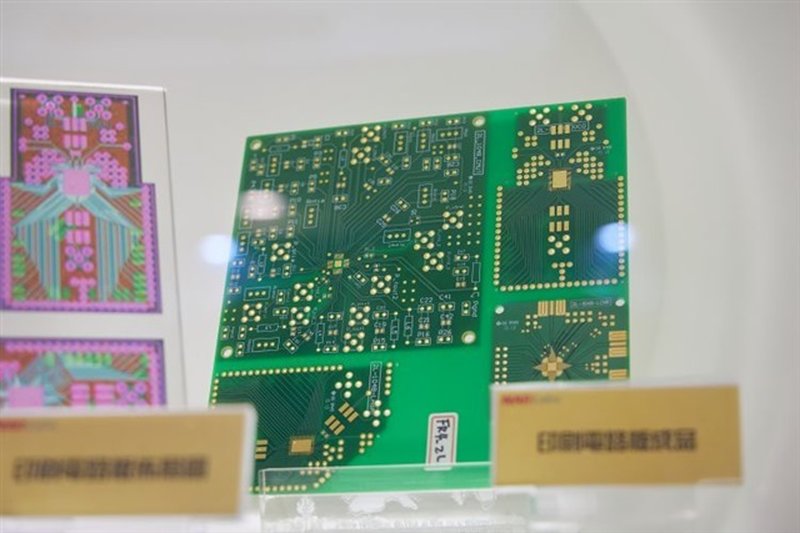
Zhen Ding, a leading Taiwanese company in the production of printed circuit boards (PCBs) and electronic modules, anticipates significant growth driven by artificial intelligence. The company projects an surge in demand as next-generation platforms, essential for AI infrastructure, enter large-scale production. This outlook highlights how the expansion of Large Language Models (LLMs) and other AI applications is generating substantial pressure on the global hardware supply chain.
The artificial intelligence sector, particularly the domain of LLMs, demands ever-increasing computing capabilities, which translates into a growing need for sophisticated electronic components. Companies like Zhen Ding are at the heart of this transformation, providing the fundamental building blocks for the servers, accelerators, and graphics processing units (GPUs) that power the most demanding AI workloads.
Hardware at the Core of AI Expansion
The "next-gen platforms" Zhen Ding refers to likely include critical components such as advanced printed circuit boards for GPUs and AI accelerators, high-density memory modules, and high-speed interconnects. These elements are indispensable for building systems capable of handling the complex training and Inference operations required by modern LLMs. The production of such components involves cutting-edge manufacturing processes, with stringent requirements in terms of precision, heat dissipation, and signal integrity.
For companies developing and deploying AI solutions, the availability and specifications of this hardware are decisive factors. A system's ability to support a certain number of Tokens per second, the latency for real-time responses, or the amount of VRAM available for a specific LLM, directly depend on the quality and power of the underlying components. The choice between different hardware architectures and their integration into an efficient Framework are strategic decisions that directly impact TCO and operational performance.
Implications for the Supply Chain and On-Premise Deployments
Zhen Ding's projection of an AI-driven surge has significant implications for the entire technology supply chain. Increased demand can lead to material availability constraints, longer lead times, and potential cost increases. For enterprises considering on-premise deployments for their AI workloads, these market dynamics are crucial. Securing access to cutting-edge hardware, such as GPUs with high VRAM or systems with high Throughput interconnects, becomes a strategic priority.
On-premise deployment offers advantages in terms of data sovereignty, control, and potential long-term TCO optimization, especially for consistent and predictable workloads. However, it requires careful infrastructure planning, from the choice of specific silicio to power and cooling management. Reliance on a robust supply chain for hardware components is a key factor in this evaluation. For those assessing on-premise deployments, AI-RADAR offers analytical frameworks on /llm-onpremise to evaluate the trade-offs between initial capital expenditure, operational costs, and performance requirements.
Future Outlook and Enterprise Challenges
Zhen Ding's announcement underscores the continuous and rapid evolution of the AI landscape, where hardware innovation progresses hand-in-hand with algorithmic development. Companies aiming to fully leverage the potential of LLMs and AI must face the challenge of building and maintaining an infrastructure capable of supporting their ambitions. This includes not only acquiring state-of-the-art hardware but also the ability to effectively integrate it into local stacks and air-gapped environments, where security and compliance are paramount.
An enterprise's ability to navigate this scenario, balancing CapEx investment in hardware with operational costs and the flexibility offered by the cloud, will be critical for the success of its AI strategies. Zhen Ding's projection is a clear indicator that the AI "gold rush" is also a race in production and innovation of the underlying hardware.







💬 Comments (0)
🔒 Log in or register to comment on articles.
No comments yet. Be the first to comment!