Topic / Trend Rising

LLM Inference Efficiency and Kernel Optimization

Across the stack, inference is being optimized via speculative decoding, k-quant CPU matrix kernels, GEMM autotuning in vLLM, low-rank attention alternatives, and test-time compute loops. These changes reduce FLOPs, VRAM, and latency for smaller or cheaper deployments.

Detected: 2026-10-03 ยท Updated: 2026-10-03

Related Coverage

2026-10-03 โ€ข PyTorch Blog

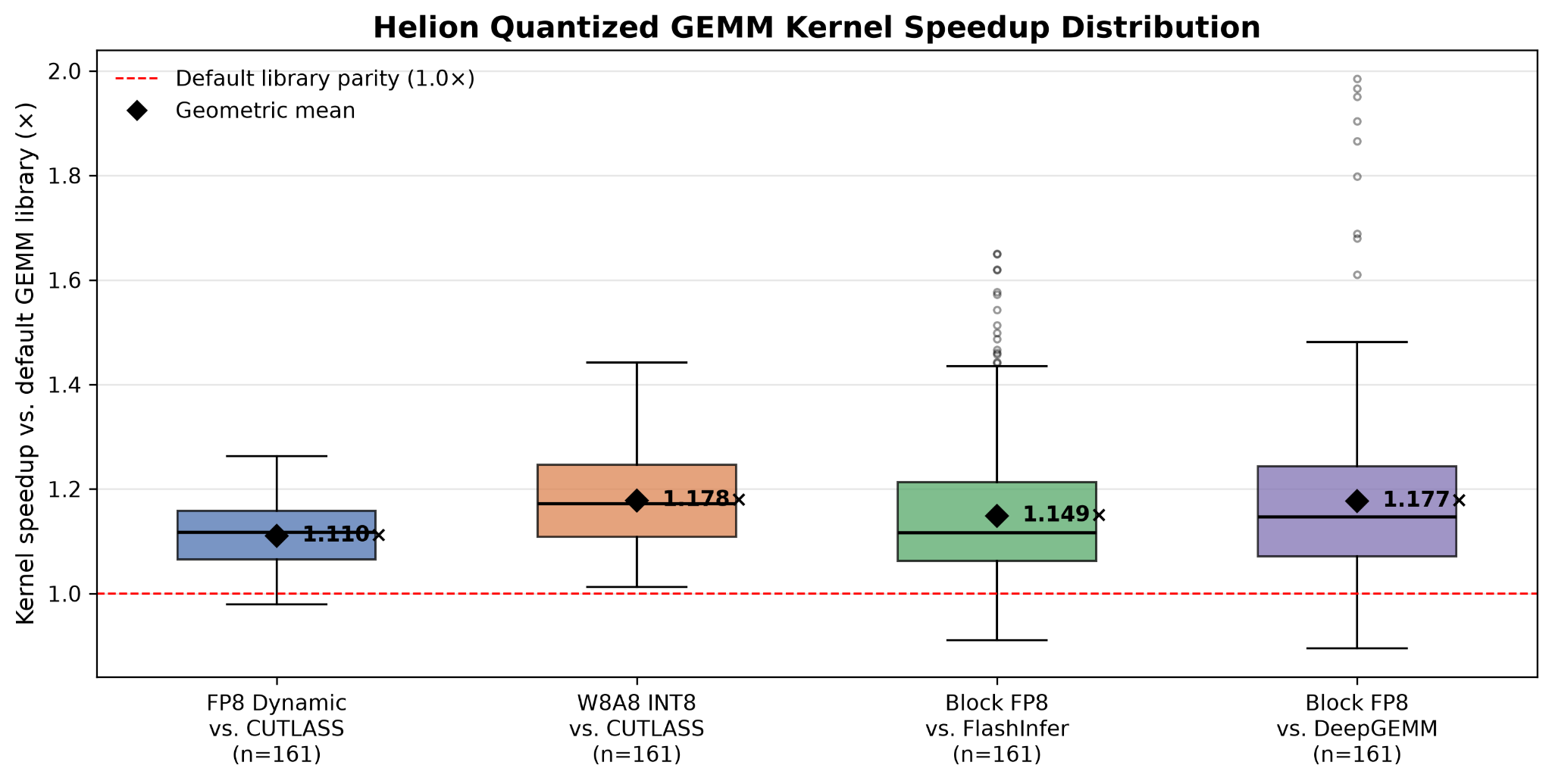
Helion in vLLM: GEMM tuning becomes search, not GPU craft

Helion's linear backend in vLLM shows a single GEMM kernel with an ahead-of-time autotuner can cover specialized variants and improve inference by up to 10% on Qwen3. For self-hosted LLM teams, the signal is twofold: less dependence on deep CUDA skil...

2026-10-01 โ€ข PyTorch Blog

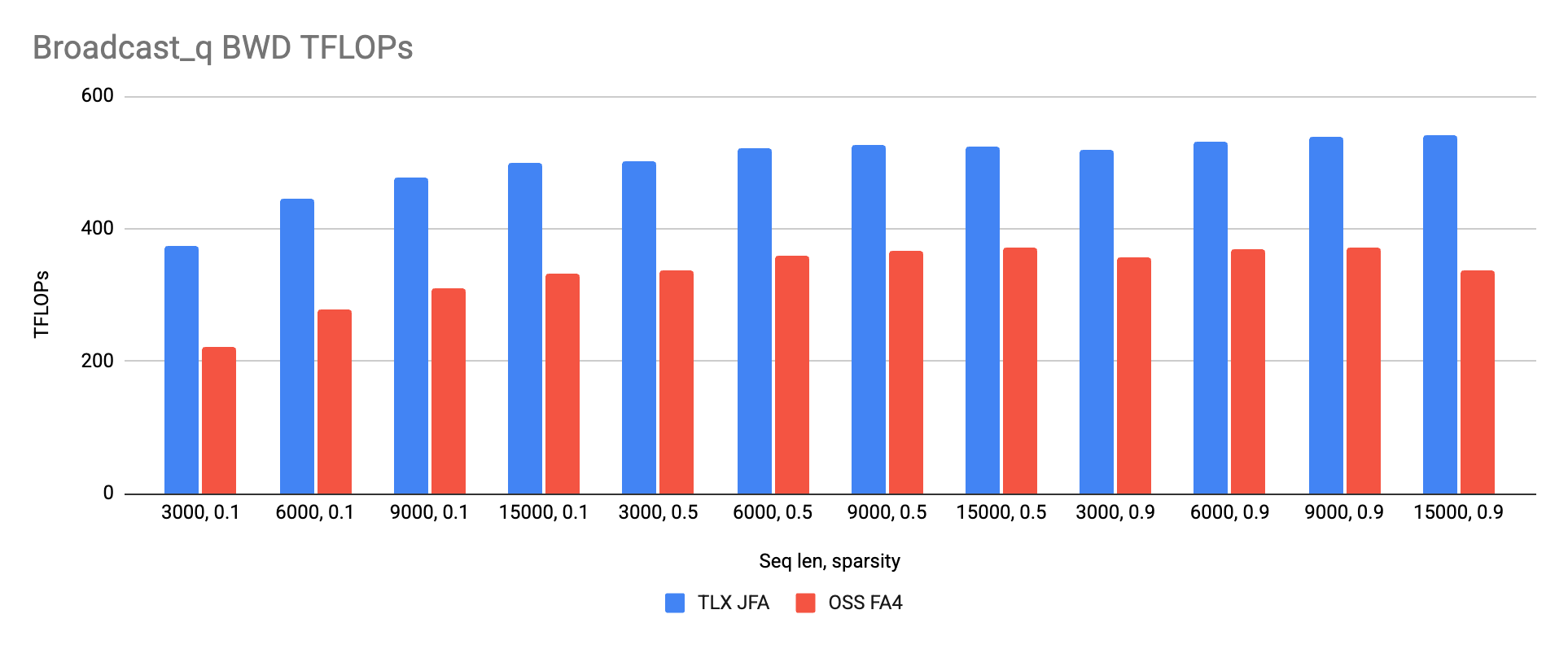
TLX takes jagged attention on Blackwell past FA4, with a third of the code

Meta's GEM attention kernel, rewritten in TLX, beats FlashAttention-4 on jagged Blackwell workloads: +13% forward and +50% backward on average, with about 3,200 lines versus 10,000. The result shows explicit hardware control no longer requires hand-w...

#Hardware #LLM On-Premise #Fine-Tuning
2026-09-30 โ€ข ArXiv cs.AI

Fine-tuning beyond text: DASA turns gradients into the dataset

DASA uses activation gradients from a frozen reference model to produce synthetic embeddings, fine-tuning LLMs without readable text. Tests on Llama and Qwen show performance similar to or better than natural language data, with up to 4.9x speedup ov...

2026-09-30 โ€ข ArXiv cs.AI

LLM fine-tuning without human-readable text: what DASA changes

A new method, DASA, generates synthetic fine-tuning data as continuous embeddings driven by activation gradients from a frozen reference model. In tests on six Llama and Qwen models with LoRA, it matches or surpasses natural-language data and speeds ...

#Hardware #LLM On-Premise #Fine-Tuning
2026-09-29 โ€ข LocalLLaMA

Nemotron 3: Value Shifts from Weights to Inference Orchestration

Nemotron 3's IOI 2026 score is not just a milestone. The stated result rests on GenCorrect, a test-time compute loop that multiplies tokens per query. For on-premise deployments, open weights and NVFP4 quantization lower the hardware barrier, but ope...

2026-09-29 โ€ข LocalLLaMA

NVIDIA Nemotron 3 beats gold at IOI 2026 with test-time compute

NVIDIA's model card for Nemotron-Labs-3-Competitive-Coding describes a 550B-A55B model fine-tuned on 477,642 synthetic reasoning traces distilled from GLM-5.2. Combined with the GenCorrect strategy, it scored 535.4 out of 600 on the IOI 2026 problem ...

#Hardware #LLM On-Premise #Fine-Tuning
2026-09-27 โ€ข LocalLLaMA

Penalizing overthinking tokens improves accuracy for quantized Qwen models

A test on 50 MATH-500 benchmark questions shows that penalizing hesitation tokens via logit bias improves accuracy for Qwen3.5-4B in GGUF format across all quantization levels tested. BF16 goes from 74% to 84%, while Q2_K doubles from 12% to 24%. The...

#Hardware #LLM On-Premise #Fine-Tuning
2026-09-27 โ€ข LocalLLaMA

llama.cpp speeds up prompt lookup drafting by 42 times

The open-source runtime for local LLM inference brings a change that makes prompt lookup drafting 42 times faster. This is not full generation speed, but a key component of speculative decoding: for self-hosted deployments, it can cut overhead and TC...

#Hardware #LLM On-Premise #DevOps
2026-09-26 โ€ข LocalLLaMA

llama.cpp speeds up CPU prompt processing with tiled mul_mat for k-quants

A pull request in llama.cpp introduces a tiled matrix-vector multiplication for k-quant formats. According to the report, using VNNI instructions speeds up CPU mul_mat by 3-7x with minimal added complexity. The improvement targets prompt prefill, mak...

#Hardware #LLM On-Premise #Fine-Tuning
โ† Back to All Topics