
Low-cost training that rewrites the rules
Training a Large Language Model from scratch to a working chatbot for roughly 200 Canadian dollars would have seemed like science fiction just weeks ago, not the chronicle of a personal project posted on GitHub. Yet the experience of Nicolas (SevereTilt) — a 1.1 billion parameter model built by mixing consumer GPUs and datacenter accelerators on vast.ai — marks a turning point that AI-RADAR has been tracking for some time. The news is not the model’s quality, admittedly inferior to Gemma3 1B or NanoChat, but the cost trajectory and the technical pipeline that make a crucial question concrete for those pushing on-premise: how close are we to having custom LLM training and deployment under one's own control become an operation within reach of an average IT team?
The commoditization of training shatters the assumption that enterprise GPU clusters or million-dollar cloud contracts are needed to break free from dependency on third-party models. With 20 billion tokens processed, a 52-hour LoRA fine-tuning on a modest RTX 3060, and a total spend lower than many annual SaaS subscriptions, the case shows that the boundary between individual experimentation and a minimum viable product has dangerously thinned. And if a single developer can orchestrate all this by renting on-demand GPUs, then the Total Cost of Ownership calculus for organizations changes radically: the real barrier is no longer access to silicon, but the ability to design data pipelines, choose architectures, and manage heterogeneous deployments.
From consumer GPU to H100: anatomy of a revealing hardware mix
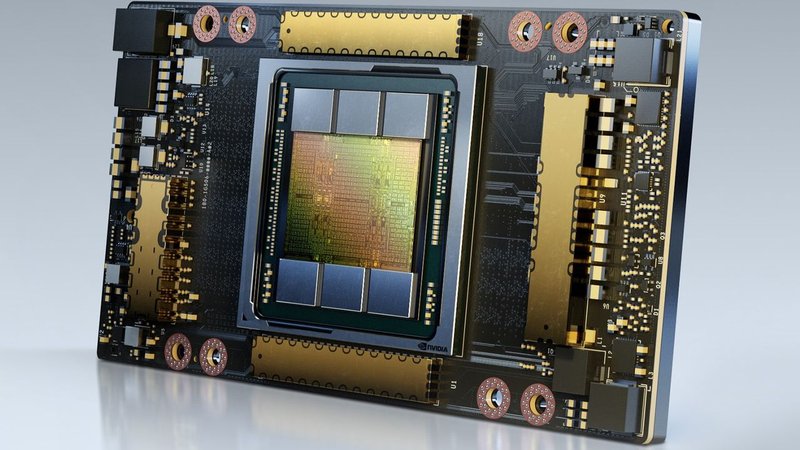
The hardware path chosen is itself an indicator of how balances are being redrawn. Early exploratory runs — 185 million parameters on an RTX 3090 (19 hours) and 500 million on a high-end consumer card (17 hours) — were conducted on GPUs that many enthusiasts or labs already own, confirming that initial development and debugging can take place entirely locally, without touching a single cloud byte. Only the heaviest phase, the final 20 billion tokens with the 1.1B model, required a rented H100: 13 hours for the first 2 billion tokens, then 130 hours to complete the dataset. But the point is that the bulk of exploratory work and the subsequent conversational customization remained on consumer hardware, including the LoRA fine-tuning on an RTX 3060.
This hybrid pattern has second-order implications. On one hand, it disproves the narrative that training a proprietary LLM necessarily means depending on centralized infrastructures. On the other, it signals that the on-demand cloud GPU market — of which vast.ai is an example — is becoming the true enabler of self-hosting, temporarily bridging the gap between what an organization can buy and the peak power needed for pretraining. With next-generation consumer GPUs equipped with more VRAM and multi-chip architectures, it is not science fiction to imagine that within a few hardware cycles the entire training of a model of this size could be completed on owned machines, eliminating even that last residue of rental dependency.
LoRA fine-tuning and quantization: the bridge to on-device inference
The true seal on the self-hosted approach comes from the adaptation and distribution phase. The LoRA fine-tuning on the OpenHermes dataset ran for 52 hours on an RTX 3060, a card that costs less than 300 euros used and requires neither oversized power supplies nor special cooling. This means that injecting conversational capabilities, specializing in specific domains, or aligning with corporate policies can become routine operations executable on workstations already present in offices, without moving sensitive data to external APIs.
Even more relevant for edge scenarios is the compilation and quantization work. The developer forked llama.cpp to support architectural differences, converted the model to GGUF Q2_K format, and ran it on a WearOS watch at about 2 tokens per second. It is not production-grade performance, but it proves that the inference of a self-trained LLM can live entirely on extremely low-power devices, without connectivity. The Google Cloud Platform demo using only CPUs and GGUF files, designed to analyze the base model's logprobs, completes the picture: deployment requires no GPUs and can be moved to any on-premise server, even in air-gapped environments.
Data sovereignty: from abstract principle to concrete project
AI-RADAR has always stressed that data sovereignty is not a slogan but an architectural choice affecting security, compliance, and costs. The $200 experiment suddenly makes this choice viable even for organizations without dedicated AI teams. A company can rent GPUs solely for the pretraining phase — taking care to encrypt data and choose providers that wipe volumes on completion — and then immediately bring everything else back within its own perimeter: fine-tuning, quantization, deployment, and of course inference on real data.
This breaks the classic trade-off between customization and confidentiality. Until yesterday, using an LLM on internal data almost always meant sending it to a cloud endpoint controlled by a third party, with all the risks of exposure and contractual lock-in. Now an organization can build a language assistant that never leaves the corporate network, trained on proprietary documentation, with the possibility of periodic updates via incremental fine-tuning on local GPUs. In regulated sectors or public administration, where data residency is an obligation and not an option, the signal is unequivocal: the economic barrier that made sovereign AI an exclusive privilege has collapsed.
Limits and false myths: what this experiment (still) doesn’t tell us
However, plenty of caution is needed before painting a completely rosy picture. The 1.1B parameter model shows quality admittedly lower than Gemma3 1B and NanoChat, and the 4096-token context window is a bottleneck for many real-world use cases, from long document summarization to complex conversation analysis. Moreover, the $200 cost is the fruit of February–March 2025 spot rates, already rising due to surging GPU demand: replicating the same experiment today could cost significantly more, and the budget risks exploding if one aims for quality comparable to commercial models.
Nor should the required skill level be underestimated. The author manually chose architecture, hyperparameters, vocabulary size (32k with SentencePiece), and performed targeted preprocessing of the FineWeb-Edu dataset, selecting only documents prior to 2023 to assess temporal coherence. These operations demand a solid understanding of the training pipeline and are not automatable with a simple script. Commoditization does not wipe out the need for expert orchestration; it simply shifts value from owning computing power to the ability to govern data and design choices.
Prospects: what to watch in the coming months
The real effect of this experiment is not so much the model itself, but the mindset shift it forces on IT decision-makers. If a connected individual can obtain a working language assistant for $200, then AI budgets in organizations must stop focusing on buying GPU quotas and start funding skills in data engineering, MLOps, and quality evaluation. The real question is no longer «how many H100s can we afford?», but «can we pick the right data, execute effective fine-tuning, and deploy securely?»
Among the signals to monitor are the evolution of training frameworks optimized for consumer GPUs (for example, integration of parallelism techniques that leverage multiple cards without NVLink), the availability of base models with permissive licenses that make fine-tuning on corporate data legal, and the pricing trends of cloud GPU services, which could become the last mile of training for smaller organizations. On the hardware front, platforms like Nvidia’s Project Digits or new Apple Silicon chips with unified memory could accelerate the ability to train mid-sized models entirely locally, further reducing TCO. Finally, regulatory pressure on data residency will push more and more entities to consider self-hosting not as an exception, but as the default setup. And when the cost of training an LLM from scratch drops below an annual license fee, any make-or-buy evaluation will have to be redone from the ground up.





💬 Comments (0)
🔒 Log in or register to comment on articles.
No comments yet. Be the first to comment!