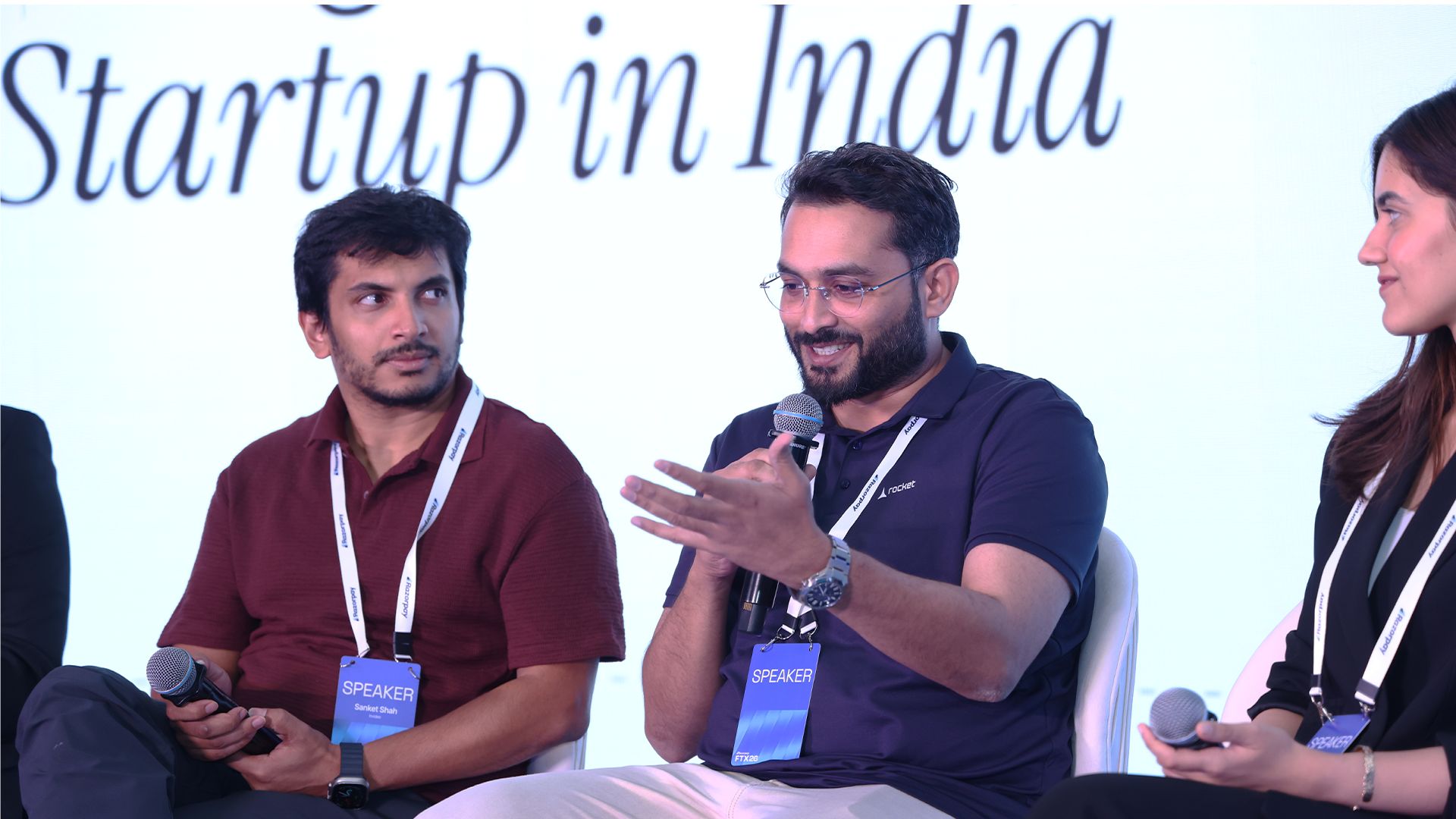
A sum between $20 and $25 million. That is reportedly the size of the investment that asset manager 360 One is about to finalize in Rocket, an Indian AI startup. The news, gathered from sources close to the deal, adds that other investors may join the round, amplifying a clear signal: Indian AI is attracting capital, and not just for generic software, but for the infrastructure that lets enterprises keep direct control over their models.
The rising tide of on-premise AI investments
Rocket has not yet publicly disclosed its product, but the market context provides precise coordinates. Demand for solutions to run Large Language Models in self-hosted environments — on-premise servers, edge nodes, private data centers — is growing rapidly. Three classic drivers are pushing this trend: the need for data sovereignty (especially in regulated sectors like finance, healthcare, and public administration), predictable Total Cost of Ownership compared to variable cloud expenses, and the ability to optimize latency or customize models without external constraints.
In this landscape, a funding round of this size is not an isolated event. Startups that simplify on-premise fine-tuning, low-VRAM quantization, or the management of inference pipelines on proprietary hardware are increasingly on venture capital’s radar. Rocket might fit into this niche, but even if it does not, 360 One’s move certifies the appetite for ventures that can enable local AI, far from the big hyperscalers.
Why on-premise is no longer a niche
Until recently, on-premise deployment of LLMs was considered the turf of early adopters or organizations with extreme security requirements. That is no longer the case. On one side, the maturation of frameworks like vLLM, Ollama, and TensorRT-LLM has lowered the technical barrier. On the other, the availability of GPUs with ample VRAM (from the 80 GB of an A100 to multi-GPU configurations with NVLink) and quantization techniques (INT8, FP16) makes it possible to run models with tens of billions of parameters in compact physical spaces.
For Italian and European companies, this means seriously evaluating a self-hosted AI infrastructure aligned with GDPR constraints without negotiating complex contractual clauses with cloud providers. It is not a matter of absolute cost — on-premise requires upfront CapEx and dedicated skills — but of predictable cost over time and control over the entire data chain. Those who start today with an investment of a few tens of thousands of euros can scale relatively easily, adding nodes or accelerating inference via software.
The signal for the ecosystem
Rocket, whatever its technological roadmap, slots into a trajectory where capital is seeking not just the next ChatGPT, but also the next building block to make AI truly operational in the enterprise. India, with its talent pool and vertical markets still undergoing digitalization, represents an ideal testing ground. If the round attracts additional investors, as the sources suggest, the message to the sector will be even stronger: the future of AI lies not only in clouds, but also in the racks of companies that choose to bring it in-house.
For those evaluating this path, trade-offs must be weighed: the learning curve of internal teams, hardware maintenance, the balance between CapEx and OpEx. AI-RADAR offers in-depth analytical frameworks on /llm-onpremise precisely to navigate these steps, with concrete data and no shortcuts. Today’s news is, in short, both a culmination and a starting point: investment follows demand, and the demand for local AI is just beginning.







💬 Comments (0)
🔒 Log in or register to comment on articles.
No comments yet. Be the first to comment!