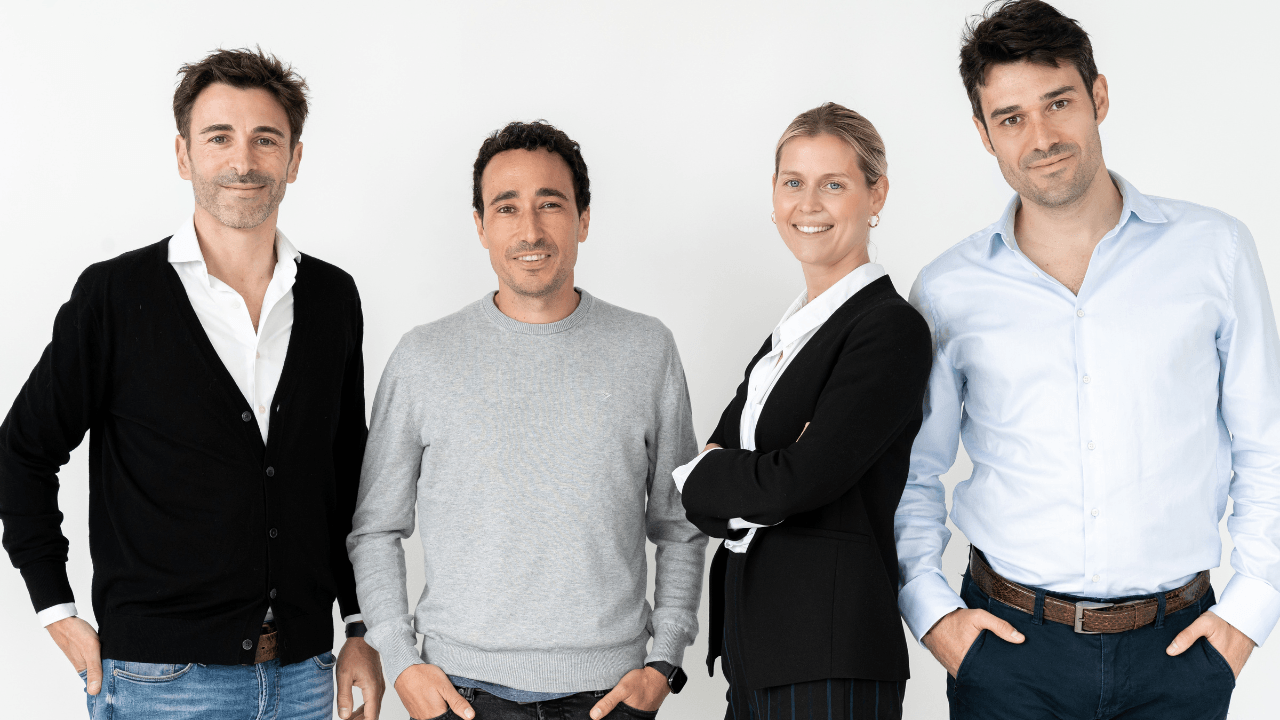
When a venture capital firm raises €115 million to provide liquidity to other VC funds, it may look like a financial shell game far removed from on-prem servers and locally trained LLMs. Yet the announcement by Acurio Ventures of its new fund, Acurio Secondaries I FCR, tells a deeper story about Europe’s tech ecosystem and its ambitions for digital sovereignty.
Acurio, a Spain-based firm, has closed a roughly €115 million vehicle dedicated entirely to buying mature European VC fund stakes on the secondary market. The fund targets sub-€20 million transactions — a slice ignored by the large US asset managers that dominate global secondaries volumes (over $200 billion in 2025) but which remains in its infancy in Europe. The thesis is straightforward: many early-stage European funds, now 8–10 years into their lifecycle, hold portfolios with untapped potential but face pressure from limited partners for returns. Acurio steps in as a buyer of those LP positions, with a stated goal of doubling net invested capital and generating an IRR above 25%. The fund has already committed close to €45 million.
Those are the facts. But the question for anyone tracking the development of artificial intelligence outside the hyperscalers’ clouds is: why should a secondaries fund matter to those building local AI stacks? The answer lies in the liquidity cycle.
Europe has spawned hundreds of vertical startups in generative AI, robotics, and data management. Many of these were backed by VC funds that now sit on illiquid stakes. This isn’t just about missed exits; it’s that capital remains locked in structures that, by contract, cannot support new fundraising when LPs are tapped out. In a market where IPOs are rare and M&A alone isn’t enough, secondaries act as a release valve. They allow resources to be reactivated — money that, once unblocked, can flow back into growth rounds for infrastructure-layer AI companies developing specialized hardware, fine-tuning frameworks for on-premise, or solutions for data residency that go beyond cloud-only models.
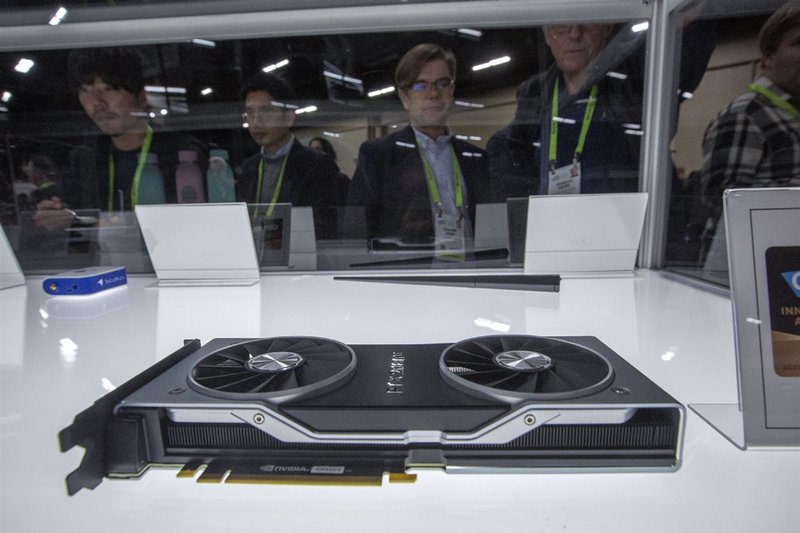
There’s a subtler thread. European technological sovereignty — a topic close to AI-RADAR’s core — is not built only with chips designed in Bologna or rack-mounted Nvidia GPUs. It needs a financial fabric that doesn’t force promising startups to sell early to non-European buyers for lack of alternatives. Secondaries offer funds an interim exit, reducing the pressure to rush for quick acquisitions and allowing strategic portfolio companies to stay independent until they reach a scale that allows them to compete globally. Acurio, with this move, isn’t being altruistic: it buys at a discount and bets on validated assets. The second-order effect, however, is that it sets capital in motion again, increasing the odds that a few hundred million euros will become available for European teams building models, frameworks, and hardware components for self-hosted inference.
Granted, Acurio’s fund isn’t buying GPUs or paying data center power bills. It operates in the financial folds of venture capital. Yet the environment it operates in is the same one that determines how much money reaches the next group of companies that try to offer a European alternative to cloud-only pipelines. At a time when secondaries investments hit record highs but remain dominated by US managers, the emergence of a player focused on Europe and small transactions signals a maturing market. It brings financial sophistication to what is today a gap, and it’s precisely in that gap that ambitions around local AI infrastructure often wither.
Diego Recondo, Partner at Acurio, said the fund closed “in a difficult fundraising market for VC” and with “a 100% private investor base that includes prestigious institutional investors.” That detail matters: it shows professional investors see value in an overlooked segment, which could attract similar vehicles. If European secondaries take off, the patient capital that today funds R&D in LLM compression, quantization, and on-prem architectures could have a more efficient recycling channel, reducing reliance on funding cycles dictated by Silicon Valley.
Whether the trickle-down effect materializes is an open question. Acurio must deploy in 18–24 months and prove that the mature funds it backs, with realistic exit plans in two-three years, deliver in line with expectations. For now, the fund has already committed more than a third of its target. And while all this unfolds, those building the next generation of servers for on-prem LLM inference are watching: every euro unlocked from a 2010s-vintage fund is a euro that can become a new round for a European AI infrastructure company. It is not a direct correlation, but it is the financial architecture on which the race for technological sovereignty rests.





💬 Comments (0)
🔒 Log in or register to comment on articles.
No comments yet. Be the first to comment!