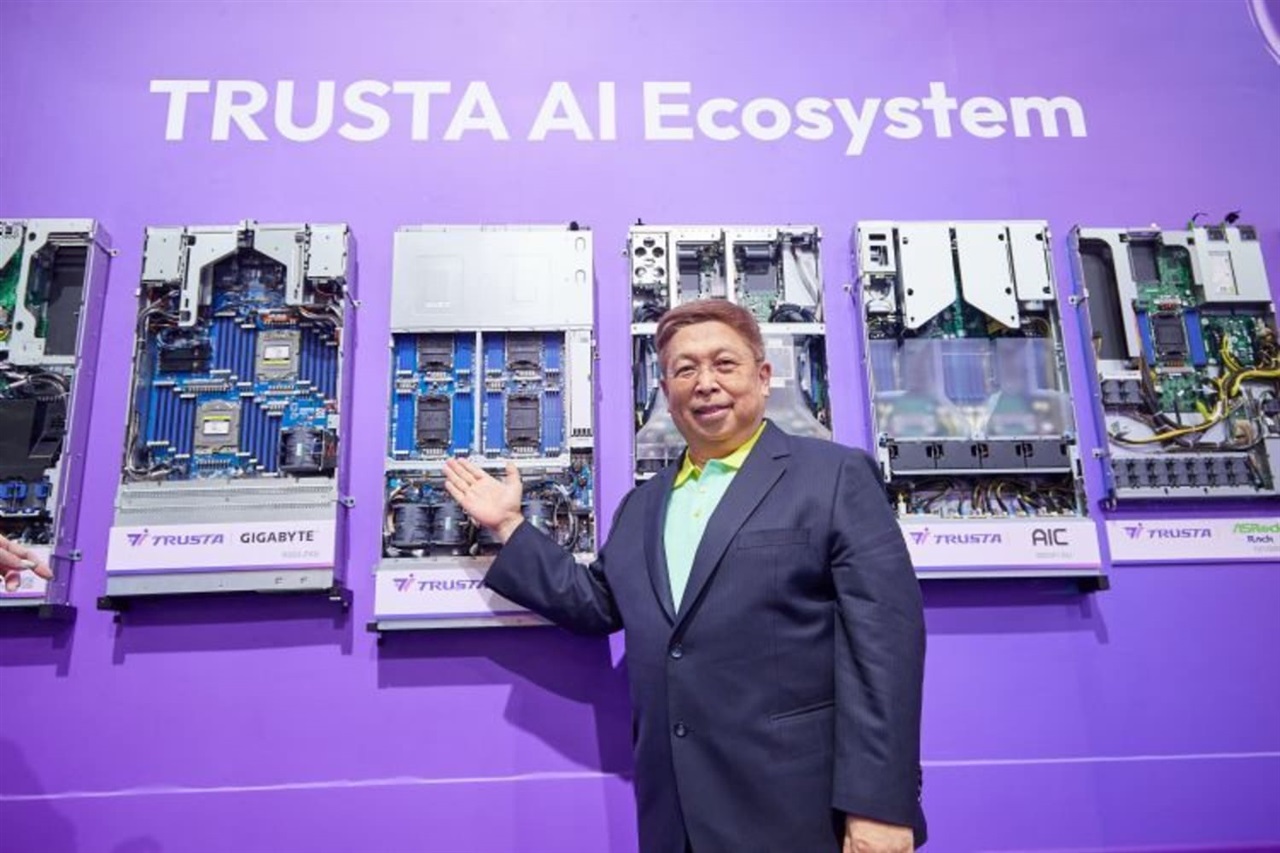
When a memory manufacturer surpasses in a few months the revenue of the entire previous year, the market takes notice. That is what emerges from ADATA’s accounts: the Taiwanese company has already brought in more than forecast for the whole of 2025, riding what analysts call a memory supercycle. It is nothing new for those who follow the sector: DRAM and NAND move in cycles, and anyone building on-prem AI hardware knows those cycles bite when it is time to draw up a budget.
The term "supercycle" is not just marketing. It signals a phase where demand outstrips supply structurally, driven not by a passing bubble but by persistent vectors: ever more voracious data centers, workloads for LLM training, distributed inference, and edge infrastructure. The result is a rise in unit prices that propagates upstream and downstream, eventually reaching those assembling servers for on-prem AI.
The hidden cost of hardware independence
For organizations that choose to keep models in-house – whether for data sovereignty, cost control, or latency requirements – memory cost is not a theoretical line item. It is one of the most volatile components of TCO. In a GPU cluster, VRAM determines the maximum model size that can be served without relying on extreme quantization or swapping to disk. System memory (DRAM) conditions the ability to parallelize preprocessing, serve multiple models, and overall throughput.
With the supercycle in full swing, anyone weighing an investment in a fleet of machines for fine-tuning or self-hosted inference faces a choice: pull forward orders to lock in prices, accepting the immediate financial burden, or postpone and hope for a normalization. The first option puts pressure on working capital; the second can stretch project timelines and, in the meantime, push toward a cloud fallback.
Here the supercycle touches the exposed nerve of on-prem strategy. The cloud, with its pay-as-you-go contracts and the ability to scale up without immobilizing assets, appears less exposed to commodity hardware price swings. At least in the short term, the relative advantage of self-hosted shrinks, because cloud providers can negotiate volumes and smooth the impact of price hikes. This is not an argument to abandon on-prem, but a reminder: data sovereignty comes with a fluctuating entry price, and those who pursue it must factor memory cyclicality into their cost models.
Second-order industrial dynamics are also visible backstage. Memory makers, ADATA among them, invest in production capacity only after the supercycle is already underway, which means the market remains supply-constrained for at least 18–24 months. For hyperscalers this is manageable; for a mid-sized company or a research lab that wants to keep its data local, it can translate into delivery delays and opaque pricing.
There is an important structural signal: ADATA’s explosive revenue growth is not just the effect of a favorable conjuncture. It is a symptom of an AI economy that is becoming ever more dependent on the simplest, most critical raw material: the bits that keep models alive. While the industry debates transformer architectures, 4-bit quantization, and pruning techniques, the cost of physical RAM redefines the boundaries of what is feasible locally.
For those evaluating on-prem deployment, trade-offs are today more than ever tied to the memory supply chain. AI-RADAR explores these knots in the section dedicated to analytical frameworks at /llm-onpremise, where TCO analysis goes beyond GPU prices to include memory, storage, and energy consumption. The ongoing supercycle is a reminder that hardware is not a static cost: it is a strategic variable that dances to the rhythm of industrial cycles. Ignoring it means building AI adoption plans on foundations that can shift before the first server is even up and running.







💬 Comments (0)
🔒 Log in or register to comment on articles.
No comments yet. Be the first to comment!