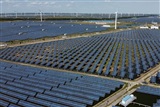
The advance of artificial intelligence across Asia is generating unprecedented demand for computational capacity. Behind the spotlight on LLMs, fine-tuning and inference workloads lies a less glamorous but equally critical factor: energy. As reported by Digitimes, the accelerated construction of new data centers throughout Asia is turning the availability of green energy into a test bed for the entire supply chain, from renewables to distribution systems.
AI race and hunger for megawatts
Every new rack loaded with inference GPUs is not only a silicon investment but also an implicit contract on the electricity grid. Industry estimates – without needing precise numbers – agree that a medium-sized AI-focused data center can consume as much power as a small town. In markets like Singapore, Japan and South Korea, energy density per square meter is exploding, forcing operators and governments to revise generation plans.
Tensions play out on multiple fronts: construction of solar and wind farms cannot keep pace with the activation deadlines of new sites; grid connections require lengthy approvals; and the very production of renewable components – panels, inverters, turbines – suffers from logistical bottlenecks. In practice, the sustainability promised by AI risks being undermined by the same growth it is meant to fuel.
Green energy becomes a bottleneck
The paradox is evident: while technology companies sign long-term power purchase agreements for clean energy, the actual ability to deliver it is increasingly uncertain. Offshore wind projects, for example, take years to develop and are exposed to weather and geopolitical risks. The green hydrogen supply chain, often cited as a backup solution, is still embryonic and far from the required scale.
This stress on the energy supply chain translates into higher costs and less predictability for those building or expanding data centers. For enterprises evaluating on-premise deployment, energy cost becomes a TCO variable that is difficult to lock into business plans. The local availability of reliable clean energy can make the difference between a sustainable project and one stuck in permitting.
What changes for self-hosted models
Those pursuing self-hosted infrastructure – whether for data sovereignty or to control recurring costs – face a crossroads. On one hand, increasing chip efficiency (think quantization techniques and new low-power architectures) reduces the energy footprint per operation. On the other, the overall volume of workloads, driven by ever-larger LLMs and continuous fine-tuning pipelines, quickly erodes those gains.
In this context, Asian regions with privileged access to stable renewable sources – such as hydropower in certain areas or solar in desert zones – could become magnets for new on-prem investments. Yet, competition to secure that capacity has already begun and grid connection timelines are lengthening. Companies considering bringing inference workloads in-house must therefore add energy due diligence to the project checklist, alongside the choice of GPU or serving framework.
A test bed for the global market
The Asian situation acts as a litmus test for the rest of the world. If the most dynamic continent in the AI race struggles to align computing ambitions with clean power supply, the problem is bound to resurface elsewhere. Europe, with its regulatory constraints and growing but finite renewable capacity, is watching closely. Even the United States, where the AI data center boom has already sparked debates on using natural gas as a bridge fuel, could face similar bottlenecks.
Ultimately, the green energy stress test is not a mere hiccup but a strong signal for the entire ecosystem: the infrastructure underpinning artificial intelligence is not just about cables and servers, but about real kilowatt-hours, with physical constraints that no virtualization can bypass. For those deciding where to install the next GPU cluster, this awareness counts more than any synthetic benchmark.






💬 Comments (0)
🔒 Log in or register to comment on articles.
No comments yet. Be the first to comment!