The Rise of Mini PCs for On-Premise AI
The artificial intelligence landscape continues to evolve, with increasing emphasis on the ability to run AI workloads not only in the cloud but also in on-premise environments or directly at the edge. This trend is driven by needs for data sovereignty, reduced latency, and control over operational costs. In this context, compact systems, also known as AI mini PCs, are gaining traction as versatile solutions for inference and, in some cases, even for fine-tuning smaller models.
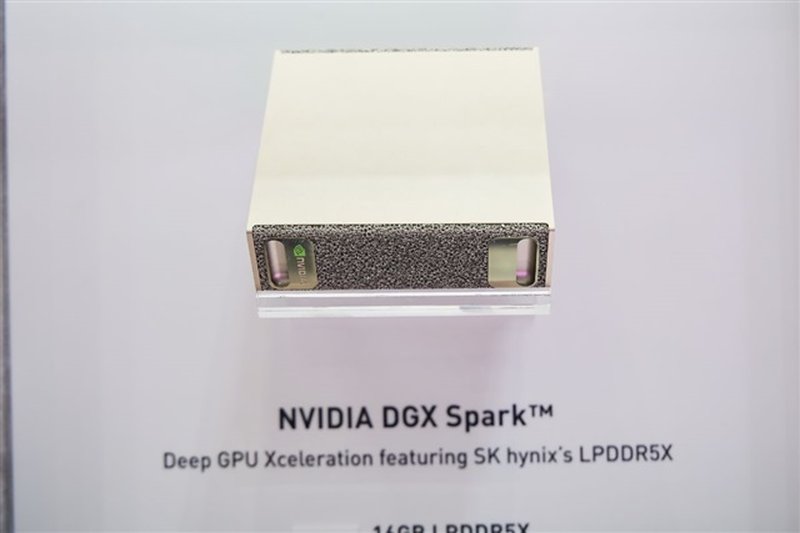
NVIDIA pioneered this segment with its DGX Spark, a system that set a benchmark for the size and capabilities of a compact AI unit. However, the market has responded with a series of alternatives from other vendors, all designed to offer similar functionalities in a reduced form factor. An analysis of these offerings reveals a surprising uniformity in their physical characteristics.
Technical Details: Dimensions and Weight Compared
A recent survey compared the dimensional and weight specifications of several AI mini PCs, presented as alternatives to NVIDIA's DGX Spark. The collected data shows a remarkable convergence among various manufacturers, suggesting that the DGX Spark's dimensions have become a de facto standard for this category of devices.
The NVIDIA DGX Spark model, with its dimensions of 150 mm width, 50.5 mm height, and 150 mm length, and a weight of 1.2 kg, serves as a reference. Offerings from Dell (Pro Max), HP (ZGX Nano G1n), Lenovo (ThinkStation PGX), MSI (EdgeXpert), GIGABYTE (AI TOP ATOM), Acer (Veriton GN100 AI Mini Workstation), and ASUS (Ascent GX10) closely align with these measurements. Variations are minimal: height can range between 50.5 mm and 54.5 mm, width and length remain almost consistently at 150 mm (with the exception of MSI at 151 mm), and weight varies between 1.2 kg and 1.48 kg. This homogeneity indicates a clear optimization for the integration of specific components, likely a single compact GPU and an efficient cooling system, within a standardized enclosure.
Implications for On-Premise and Edge Deployment
The standardization of dimensions in these AI mini PCs has significant implications for on-premise and edge deployment strategies. For companies that need to process sensitive data locally, or operate in environments with limited connectivity or low-latency requirements, these devices offer a practical solution. Their compactness makes them ideal for installation in confined spaces, such as offices, factories, or vehicles, where traditional rack servers are not feasible.
Furthermore, the ability to distribute AI inference capabilities granularly, rather than centrally, supports distributed architectures and air-gapped scenarios, enhancing data sovereignty. From a TCO perspective, adopting these systems can reduce infrastructure and cooling costs compared to larger data center solutions, although it is crucial to evaluate the performance-per-watt ratio and scalability for future workloads. AI-RADAR offers analytical frameworks on /llm-onpremise to assess these trade-offs, providing tools for informed decisions without direct recommendations.
Future Prospects and Trade-offs to Consider
While dimensions and weight are important factors for logistics and physical integration, they represent only part of the equation when evaluating an AI system. For CTOs, DevOps leads, and infrastructure architects, it is crucial to also consider internal hardware specifications, such as available VRAM, GPU compute power, inference throughput, and latency. A compact system might sacrifice the ability to host large models or handle high batch sizes, in favor of portability and energy efficiency.
The choice between various models will therefore depend on specific application needs: a deployment for real-time data processing at the edge might prioritize low latency, while a computer vision application might require more VRAM. The remarkable physical similarity among these systems suggests that differentiation will increasingly occur at the level of software optimization, energy efficiency, and integration with specific ecosystems. Careful evaluation of these trade-offs is essential for successful AI deployment.









💬 Comments (0)
🔒 Log in or register to comment on articles.
No comments yet. Be the first to comment!