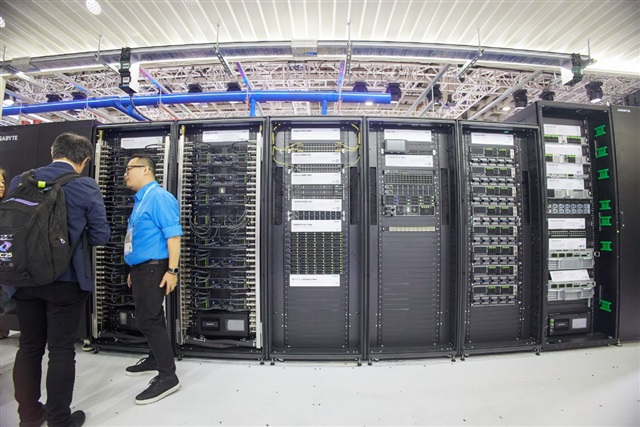
When the generative AI race accelerates, the most concrete signals often come from basic components. PMICs – Power Management Integrated Circuits – are tiny chips that manage electrical power within servers. According to DIGITIMES, demand for AI server PMICs is triggering spillover orders for Taiwan’s chip designers, exceeding the capacity of primary suppliers and temporarily reshaping supply dynamics.
It’s a detail that may sound technical, but through the lens of anyone evaluating on-premise infrastructure for LLMs, it becomes a variable worth watching. Servers dedicated to inference and training of large language models are power-hungry: the latest GPUs demand stable voltages and tight energy efficiency margins. PMICs are the first link in the regulation chain that ensures operational stability and, consequently, predictable performance.
Taiwan is a critical node in semiconductor manufacturing. Its chip designers, often fabless, have long captured demand for specialized components. Seeing them receive unplanned orders – so-called spillover – indicates that global production capacity is under strain. This is not a passing wave: the building complexity of AI boards, HBM memory integration, and cooling systems architecture drive a structural increase in power components per node.
For an organization sizing a local processing cluster, this news is not just an industry story. If PMIC lead times stretch, the entire server assembly pipeline slows down. Hardware lead times for AI, already inelastic, risk further dilation. And with that, TCO (Total Cost of Ownership) calculations and go-live windows shift. We are not talking about any commodity: on-premise architectures, often chosen for data sovereignty or granular infrastructure control, depend on the physical availability of compute nodes. A bottleneck in a seemingly ancillary component like a PMIC can turn into a blocking factor.
AI-RADAR monitors these supply chain moves as indicators of resilience – or fragility – in a still highly concentrated hardware ecosystem. Those managing self-hosted stacks know that planning cannot ignore the thermodynamics of silicon: energy efficiency and power stability are not details but prerequisites for reliability. As AI server demand keeps pushing, the spillover order signal suggests that vendors may need to rethink their supply chains, with cascading effects on availability and costs.
How long the system will hold without designers resorting to alternative solutions or partial redesigns remains an open question. For those currently assessing hardware purchases for LLM inference, the message is clear: monitor not only GPU roadmaps but also the consistency of power management components. Because computing power, after all, needs to be switched on.




💬 Comments (0)
🔒 Log in or register to comment on articles.
No comments yet. Be the first to comment!