Alibaba and the Race for Domestic AI Accelerators
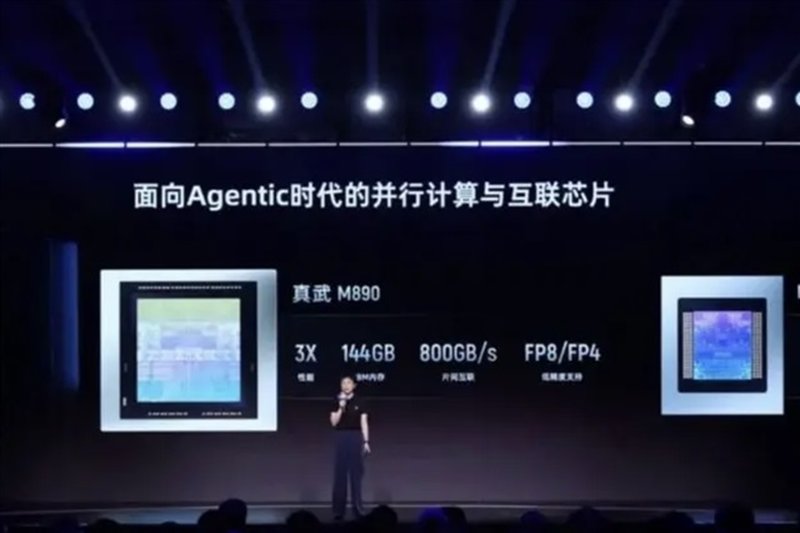
Alibaba, through its dedicated chip unit T-Head, recently unveiled the Zhenwu M890, a new AI chip positioned as a domestic alternative to NVIDIA's products. This move occurs within a complex geopolitical context, marked by increasing export controls and China's strategic push for technological self-sufficiency in the artificial intelligence sector. The announcement, which includes the disclosure of the chip's detailed specifications, underscores Alibaba's commitment to strengthening its position in the AI accelerator market.
The decision to develop proprietary hardware solutions reflects a broader trend where technological sovereignty and supply chain resilience are becoming absolute priorities for nations. The Zhenwu M890 emerges at a crucial time, highlighting how global dynamics are directly influencing the development and deployment of AI infrastructure at both corporate and national levels.
The Zhenwu M890 in the Technological Landscape
The Zhenwu M890 is described as a GPU-class AI chip, suggesting its suitability for intensive AI workloads such as Large Language Model (LLM) training and inference. Its design as a domestic alternative to NVIDIA chips indicates T-Head's ambition to offer competitive performance and functionalities tailored to the needs of the Chinese market. The availability of hardware alternatives is crucial for reducing dependence on a single vendor and for stimulating innovation within the local ecosystem.
According to Alibaba, the Zhenwu M890 is already in scaled mass production. This detail is significant, as the ability to scale production is a critical factor for the adoption and widespread use of any new hardware technology. For companies evaluating on-premise LLM deployments, the availability of locally produced chips can influence decisions related to Total Cost of Ownership (TCO), logistics, and regulatory compliance.
Implications for On-Premise Deployments and Data Sovereignty
For CTOs, DevOps leads, and infrastructure architects, the emergence of chips like the Zhenwu M890 has direct implications for AI deployment strategies. The availability of domestic hardware can offer advantages in terms of data sovereignty, allowing organizations to keep their AI workloads within national borders, complying with local regulations and security requirements. This is particularly relevant for sensitive sectors such as finance, healthcare, or public administration, where data protection is paramount.
The choice between cloud and self-hosted solutions for AI workloads is often driven by a careful analysis of trade-offs. Domestic hardware can reduce risks related to supply chain disruptions and export restrictions, offering greater control over the underlying infrastructure. Although detailed specifications for the Zhenwu M890 were not provided in the source, its existence underscores the importance of evaluating a diversified portfolio of hardware options to ensure resilience and flexibility in LLM deployments. For those considering on-premise deployments, AI-RADAR offers analytical frameworks on /llm-onpremise to evaluate these trade-offs.
Future Prospects in the AI Accelerator Market
The introduction of the Zhenwu M890 by Alibaba is a clear indicator of increasing competition in the global AI accelerator market. While NVIDIA continues to dominate with its GPUs, innovation from players like Alibaba and other Chinese manufacturers is set to shape the future of AI hardware. This competition can lead to greater diversification of offerings, potentially lowering costs and improving efficiency for end-users.
The AI accelerator landscape is constantly evolving, with a growing focus on optimizations for LLM inference and training. The ability to offer high-performance and scalable solutions that meet sovereignty and control requirements will be a decisive factor for long-term success. The Zhenwu M890 represents an important piece in this evolution, signaling a clear direction towards technological independence and the creation of robust local hardware ecosystems.





💬 Comments (0)
🔒 Log in or register to comment on articles.
No comments yet. Be the first to comment!