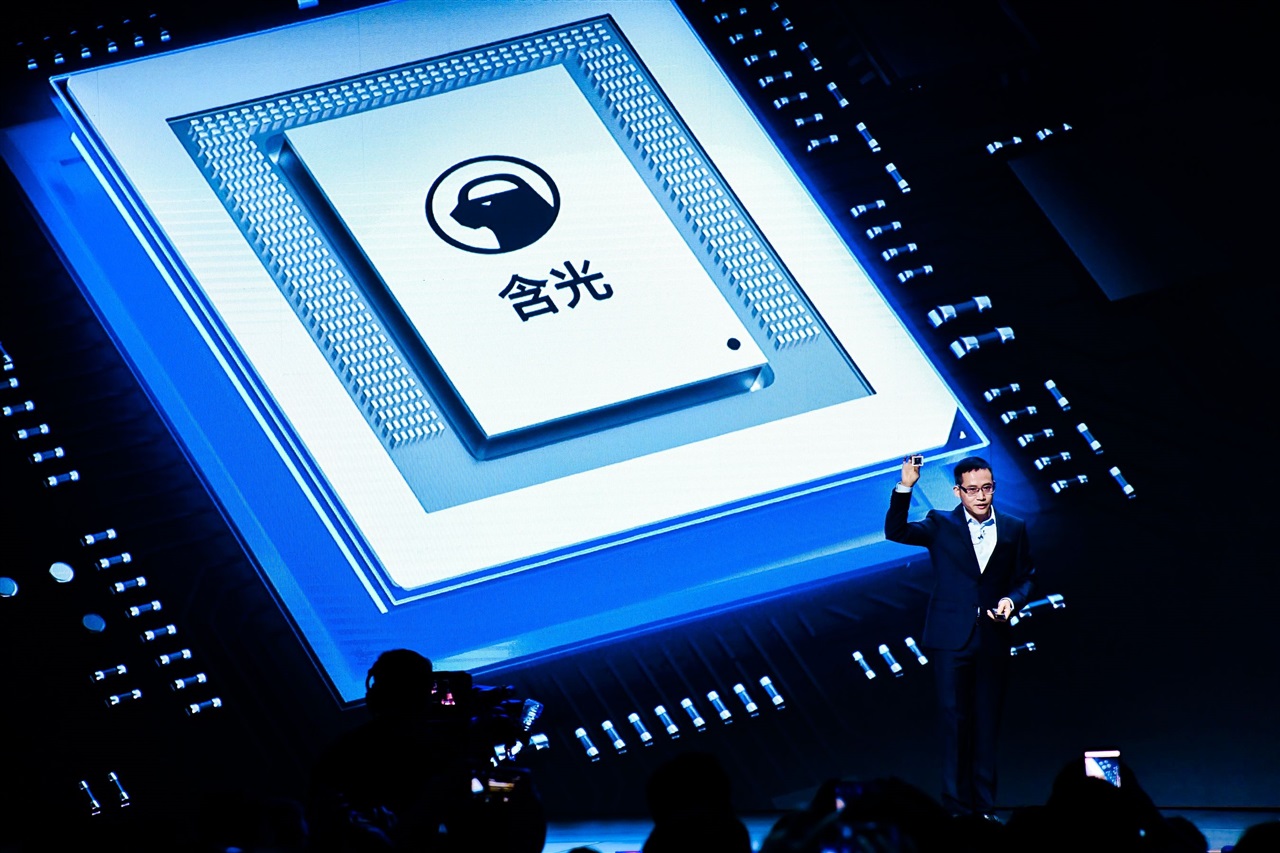
A capital injection that serves as a manifesto
Alibaba quietly tripled the registered capital of T-Head, the semiconductor unit known for its Xuantie series of RISC-V processors. This isn’t just an accounting tweak: it’s a signal that the Hangzhou group intends to play a leading role in the global race for AI chips, pushing internally designed silicon that breaks free from the dynamics of Western foundries.
For those watching the evolution of on-premise inference, this move carries weight: custom chips mean the ability to design compute pipelines optimized for one’s own workloads, reducing dependence on external vendors and potentially lowering long-term TCO. With its RISC-V DNA, T-Head represents an alternative to the x86 and Arm ecosystems, and a capital increase of this magnitude shines a light on the capacity to turn research projects into silicon ready for the data center.
Why tripling capital right now matters
Increasing the registered capital of a chip company is not a frequent short-term operation. It implies a substantial injection of resources that can translate into new hires, more aggressive tape-outs, and expanded test labs. In T-Head’s case, the move comes as Alibaba restructures its cloud business and pushes LLM offerings such as the Qwen family. Vertical integration between the internal chipmaker and Alibaba Cloud’s AI services could create an ecosystem where hardware is tuned to the inference needs of proprietary models, fostering on-premise deployments for enterprise clients that want to avoid relying on foreign GPUs.
From an industry perspective, the operation fits into a broader movement: the Chinese “sovereign chip”. With US export restrictions limiting access to GPUs like the A100 and H100, China is accelerating development of alternative architectures. With direct financial backing from Alibaba, T-Head can now aspire to compete not only on control processors but also on AI-specific accelerators, potentially enabling inference server configurations that keep data on national soil.
RISC-V, sovereignty, and the impact on on-premise deployments
T-Head’s adoption of RISC-V is not a niche choice; it’s a strategic pillar. The open-source architecture avoids Arm licensing and allows building fully auditable systems, a decisive advantage when dealing with security and regulatory compliance in governed environments. For those evaluating self-hosted setups with sensitive data, a RISC-V chip with integrated AI accelerators offers a sovereignty path that goes beyond mere hardware location: it means control over the silicon supply chain itself.
Although technical details on upcoming Xuantie iterations remain private, the tripling of capital suggests that Alibaba is laying the groundwork for higher production volumes or a performance leap. Looking ahead, T-Head-based systems could come into play for on-premise LLM fine-tuning or for serving inference workloads at controlled latencies, without relying on external cloud APIs. This scenario satisfies those who need to keep data and models behind their own firewall, but with hardware that is not necessarily ultra-high-end.
The bet still has many knots to untie
Bringing an AI chip from the lab to volume production brings huge industrial risks: wafer yields, software validation, support for frameworks like PyTorch or TensorFlow. T-Head will have to prove it can compete not just on cost per transistor but also in the development ecosystem. Without mature tooling, even the most promising hardware struggles to find adoption outside hyperspecialized settings.
Still, the capital injection is a marker of serious intent. It shows that the market is rapidly evolving toward a plurality of architectures and that the AI hardware race is no longer just a duel between NVIDIA and AMD. Over the coming years, AI-RADAR will closely track these platforms, because the availability of alternative chips could rewrite the equations of TCO and data sovereignty for those planning on-premise AI infrastructures today.






💬 Comments (0)
🔒 Log in or register to comment on articles.
No comments yet. Be the first to comment!