
Alphabet and the AI Investment Cycle
Alphabet, through its recent communications, has highlighted an acceleration in its capital expenditure (CapEx) cycle dedicated to artificial intelligence. The company plans to allocate approximately US$80 billion to expand and enhance its global infrastructure. This substantial figure reflects the increasing centrality of AI in the technological giant's development strategies and service offerings.
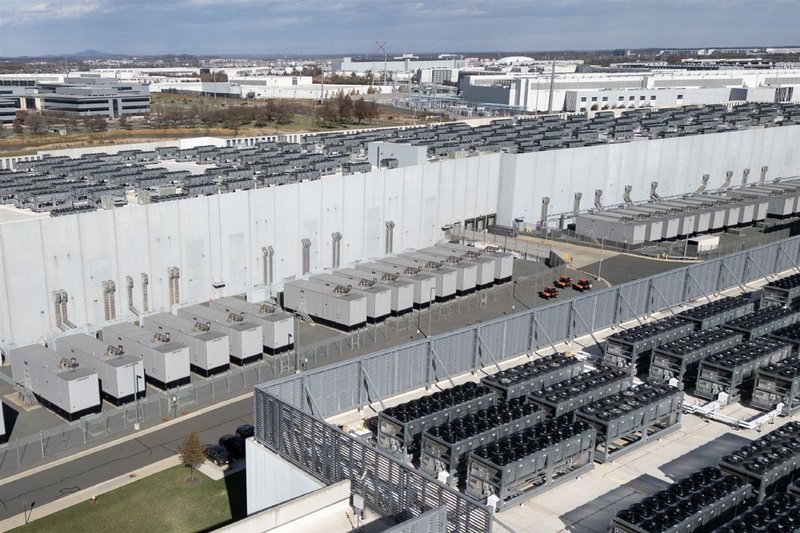
This financial commitment is not limited solely to the development of algorithms or software models but extends predominantly to the hardware and physical structures necessary to support increasingly intensive computational workloads. Alphabet's decision is part of a market context where the race for AI demands massive infrastructural resources, both for training and inference of Large Language Models (LLM) and other advanced solutions.
Implications for AI Infrastructure
Alphabet's US$80 billion investment underscores a clear trend in the tech industry: the need for robust and scalable infrastructure is a critical success factor in the age of artificial intelligence. This capital will likely be used for acquiring new GPUs, expanding existing data centers, and building new facilities, as well as optimizing networks and storage systems.
For companies evaluating the deployment of LLMs and other AI applications, Alphabet's approach highlights the complexity and cost associated with managing these technologies at scale. While cloud giants can afford investments of this magnitude, enterprises considering self-hosted or on-premise solutions must carefully analyze the Total Cost of Ownership (TCO), which includes not only hardware acquisition (such as servers with adequate VRAM for inference) but also operational, energy, and maintenance costs.
The On-Premise Deployment Context
Alphabet's push towards proprietary AI infrastructure offers insights for organizations prioritizing data sovereignty and direct control over their computational assets. Although Alphabet's investment is cloud-oriented, it demonstrates the strategic importance of owning and managing the underlying infrastructure. For many businesses, especially those in regulated sectors, the on-premise deployment of LLMs and local AI stacks represents a mandatory choice to ensure compliance and security.
The ability to manage the entire stack, from bare metal to software frameworks, allows for granular control over performance, latency, and throughput—crucial aspects for sensitive AI applications. This approach requires meticulous resource planning, from selecting the most suitable GPUs (e.g., A100 or H100 for training/inference) to configuring efficient cooling and power supply systems.
Future Outlook and Trade-offs
Alphabet's substantial investment signals an intensification of competition in the AI sector, with a significant impact on the availability and costs of computational resources. For companies without similar financial capabilities, the choice between a cloud deployment and a self-hosted solution becomes even more critical. Both approaches present distinct trade-offs in terms of flexibility, scalability, security, and TCO.
AI-RADAR, in its analysis of on-premise LLM architectures, provides analytical frameworks to help decision-makers evaluate these constraints and identify the most suitable strategy for their specific needs, balancing performance, costs, and data sovereignty requirements. The ability to navigate this complex landscape will be crucial for successful AI adoption.








💬 Comments (0)
🔒 Log in or register to comment on articles.
No comments yet. Be the first to comment!