
Alphabet and the Investment in AI
Alphabet, the holding company that controls Google, has announced its intention to raise $80 billion through the sale of stock. The primary objective of this massive financial operation is to support and accelerate the expansion of its initiatives in the field of artificial intelligence. This move underscores the enormous capital requirements that characterize the development and deployment of cutting-edge AI technologies, particularly Large Language Models (LLMs).
This investment reflects a broader trend in the tech sector, where major companies are pouring significant resources into AI research, development, and infrastructure. The race to dominate the artificial intelligence landscape demands not only top-tier talent and research capabilities but also unprecedented computational infrastructure, capable of handling intensive workloads for model training and inference.
The Implications for AI Infrastructure
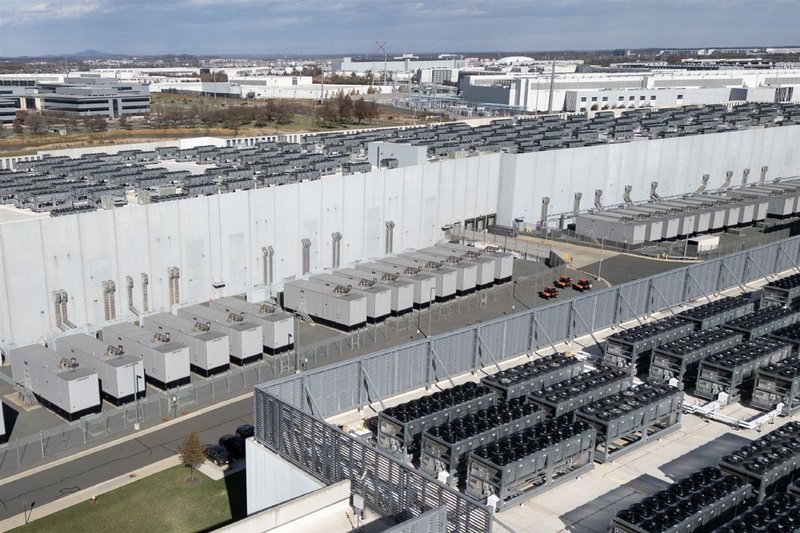
An investment of this magnitude directly translates into a growing need for dedicated hardware and infrastructure. To support its AI expansion, Alphabet will likely invest in a considerable number of latest-generation GPUs, such as NVIDIA H100s or future architectures, which require vast amounts of VRAM and compute capacity. This also implies the expansion of existing data centers or the construction of new ones, with all the associated challenges of power management, cooling, and high-speed network connectivity.
The complexity of deploying LLMs at scale is not limited to silicon procurement. It also requires the development of optimized software pipelines, orchestration frameworks, and high-performance storage systems. For companies operating with LLMs, the choice of infrastructure is crucial: it directly influences throughput, latency, and ultimately, the Total Cost of Ownership (TCO) of AI operations.
On-premise vs. Cloud: An Open Debate
While Alphabet, as a cloud giant, tends to leverage its own infrastructure, its investment strategy highlights dilemmas common to many companies approaching AI. The decision between an on-premise deployment and the use of cloud services remains a focal point for CTOs and infrastructure architects. The cloud offers scalability and an OpEx cost model, but on-premise can guarantee greater control, data sovereignty, and, for consistent workloads, a lower TCO in the long run.
For organizations with stringent compliance or security requirements, or those operating in air-gapped environments, the self-hosted deployment of LLMs and their related infrastructures often becomes a necessity. Managing bare metal servers, optimizing hardware resources, and implementing quantization solutions to reduce VRAM requirements are critical aspects in these contexts. AI-RADAR offers analytical frameworks on /llm-onpremise to help evaluate these complex trade-offs.
Future Prospects and Deployment Challenges
Alphabet's substantial capital injection is a clear signal of confidence in AI's transformative potential, but also an acknowledgment of the costs associated with its realization. The ability to scale AI infrastructure, manage the supply chain for advanced silicon, and attract top talent will remain central challenges for all players in the sector.
Strategic infrastructure decisions, balancing performance, cost, and control, will be crucial for long-term success. The evolution of models, the optimization of inference processes, and the search for innovative data management solutions will continue to drive investments and technological choices in the artificial intelligence landscape.










💬 Comments (0)
🔒 Log in or register to comment on articles.
No comments yet. Be the first to comment!