
AMD's Evolving Packaging for AI
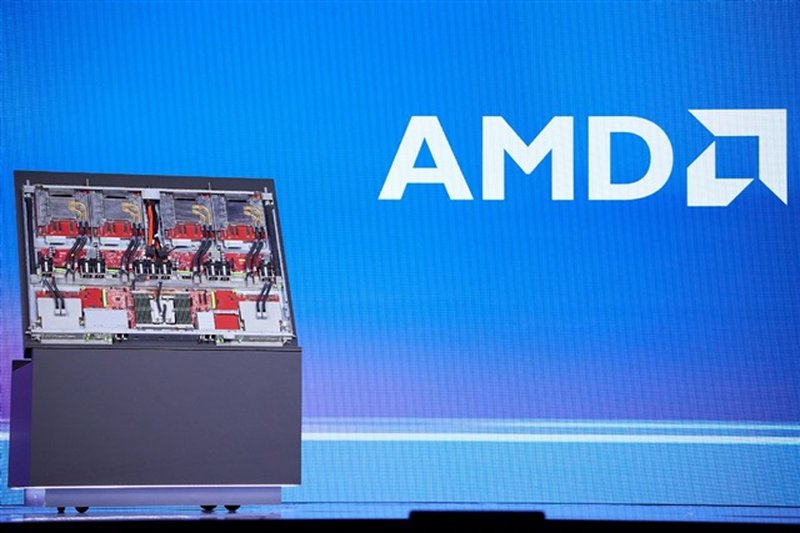
AMD, a key player in the semiconductor landscape, is actively exploring new directions in advanced packaging for its chips, particularly those destined for artificial intelligence. Under the leadership of CEO Lisa Su, the company is looking beyond CoWoS (Chip-on-Wafer-on-Substrate) technology, a widely adopted 2.5D packaging method known for its ability to integrate multiple chips on a single substrate, enhancing bandwidth and reducing latency. This strategic expansion includes the exploration of Embedded Fan-out Bridge (EFB), a technology that promises further advantages in terms of density and performance.
The decision to diversify packaging options reflects the increasing complexity and performance demands of modern AI accelerators. For Large Language Models (LLM) workloads and other artificial intelligence applications, the ability to rapidly transfer large volumes of data between compute logic and memory (VRAM) is crucial. Technologies like CoWoS and EFB are specifically designed to address these challenges, enabling the integration of High Bandwidth Memory (HBM) directly adjacent to the processor die, drastically reducing distances and improving overall system efficiency.
The Critical Role of Advanced Packaging in AI Infrastructure
Advanced packaging is not merely about miniaturization; it is a decisive factor in the performance and energy efficiency of AI chips. For on-premise deployments, where companies invest in dedicated infrastructure, hardware selection is paramount. Processors with advanced packaging can offer higher compute density per unit of space, superior throughput, and better energy efficiency, all of which translate into a more favorable Total Cost of Ownership (TCO) in the long run.
AMD's adoption of solutions like EFB can directly influence companies' ability to perform large-scale LLM inference and training within their own data centers. Increased memory bandwidth and reduced latency mean that models can run faster and with larger batch sizes, optimizing hardware resource utilization. For those evaluating on-premise deployments, AI-RADAR offers analytical frameworks on /llm-onpremise to assess the trade-offs between different hardware architectures and their implications for TCO and data sovereignty.
Implications for the Supply Chain and Market
Opening a new “front” in advanced packaging, such as EFB, has significant repercussions for the global semiconductor supply chain. The involvement of a “trio” of Taiwanese substrate suppliers highlights Taiwan's centrality in the high-tech chip manufacturing ecosystem. This diversification of packaging technologies can not only mitigate risks associated with reliance on a single solution but also stimulate innovation and competition among suppliers, leading to continuous improvements and potentially more competitive costs over time.
For companies planning investments in AI hardware, understanding these supply chain dynamics is crucial. The availability, lead times, and costs of packaging components directly influence the production and availability of GPUs and AI accelerators. AMD's ability to integrate different packaging technologies can offer greater flexibility and resilience in manufacturing, a non-trivial aspect in a rapidly evolving market with extremely high demand.
Future Prospects and Strategic Decisions
AMD's move towards EFB and beyond CoWoS reflects a broader trend in the semiconductor industry: the relentless pursuit of solutions to overcome the physical limits of chip integration. As Moore's Law slows, advanced packaging emerges as one of the primary vectors of innovation for improving processor performance. This evolution is particularly relevant for the AI sector, where the demand for computational power continues to grow exponentially.
Companies making strategic decisions about AI infrastructure must carefully consider how these packaging innovations translate into concrete benefits. The choice between different chip architectures and their underlying packaging technologies involves trade-offs in terms of initial costs, operational efficiency, scalability, and cooling requirements. Neutrality is key: there is no universal solution, but rather a set of constraints and opportunities that must be aligned with the specific needs of each organization, especially for those prioritizing control and data sovereignty through self-hosted and air-gapped deployments.









💬 Comments (0)
🔒 Log in or register to comment on articles.
No comments yet. Be the first to comment!