Introduction
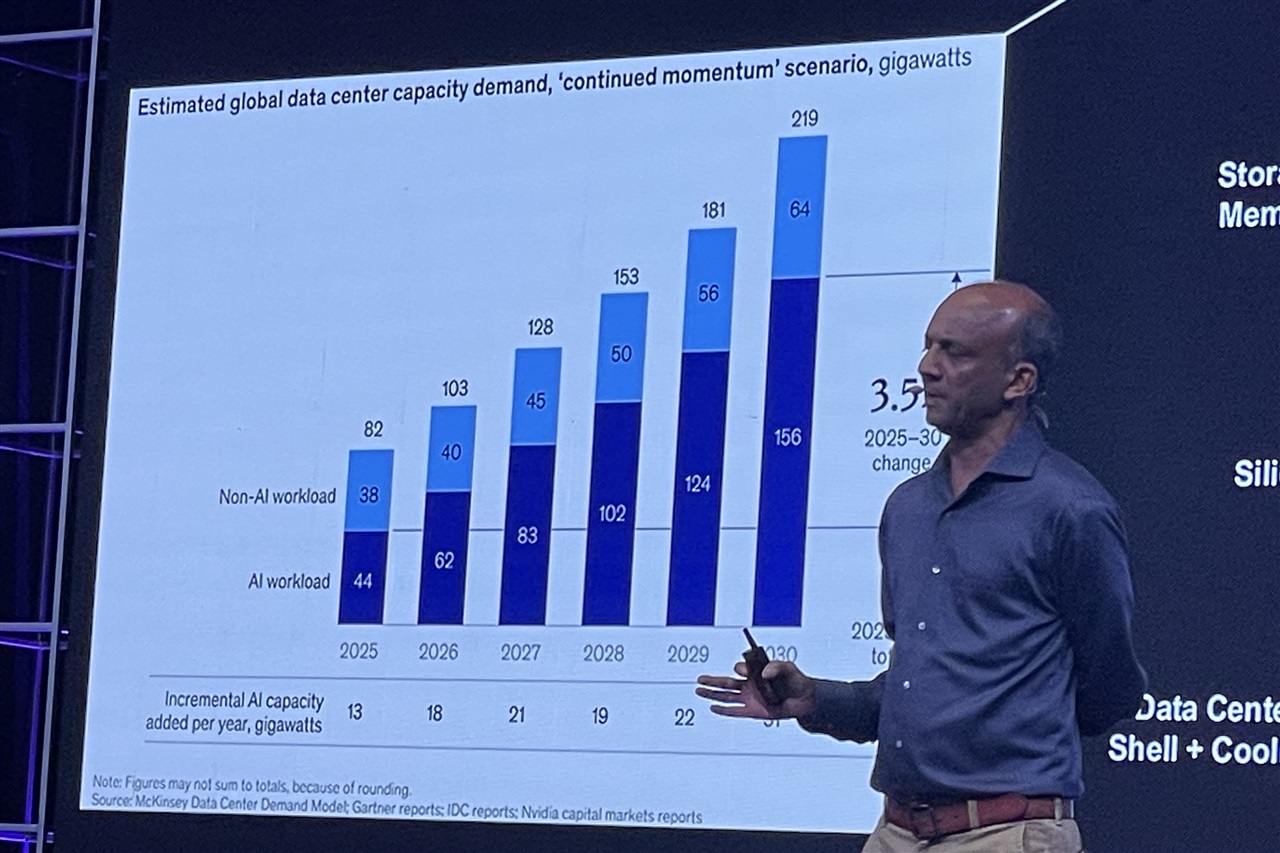
AMD, a key player in the artificial intelligence hardware landscape, raised an alarm during the SuperAI 2026 event. The company outlined a series of "infrastructure walls" that could hinder the rapid expansion of AI in the coming years. This perspective, emerging from an analysis presented by Digitimes, underscores how the exponential growth of Large Language Models (LLM) and AI applications is putting pressure on the physical foundations of our technological infrastructure.
AMD's concerns are not limited to chip availability but extend to more basic and often overlooked elements, such as energy production and the availability of critical materials. This scenario demands deep consideration from CTOs, infrastructure architects, and decision-makers who must plan long-term AI deployments, especially in contexts where data sovereignty and direct control over hardware are priorities.
Technical Details of the Limitations
Among the specific constraints cited by AMD are "turbine backlogs" and "copper limits." Delays in the production and delivery of turbines indicate a potential shortage in power generation capacity, a crucial factor for powering modern data centers. AI workloads, particularly the training and inference of large-scale LLMs, are notoriously energy-intensive, requiring increasing amounts of electricity to power arrays of high-performance GPUs. Inadequate power infrastructure can translate into higher operational costs and limitations to scalability.
"Copper limits" highlight another material challenge. Copper is an essential component for printed circuit boards, high-speed interconnect cables (such as those used in NVLink or InfiniBand), and cooling systems. Its availability and cost can directly influence the production of AI hardware, from individual GPUs to server clusters. These physical limitations can impact the throughput and latency of communications between components, critical elements for the performance of distributed AI systems.
Context and Implications for AI Deployments
For organizations considering on-premise or hybrid AI deployments, these observations from AMD take on particular importance. Planning a self-hosted AI infrastructure requires not only the selection of GPUs (such as A100 or H100 with high VRAM specifications) but also a careful evaluation of available electrical power, cooling systems, and internal network capacity. "Turbine backlogs" and "copper limits" translate into an increase in Total Cost of Ownership (TCO) and potential delays in implementation.
Data sovereignty and regulatory compliance often push companies towards on-premise or air-gapped solutions. However, building such environments requires robust and resilient physical infrastructure. The challenges highlighted by AMD suggest that the availability of fundamental resources could become as limiting a factor as the availability of advanced silicon, influencing strategic decisions and the ability to maintain control over their AI stacks.
Future Outlook and Mitigation Strategies
The picture painted by AMD at SuperAI 2026 is not just a warning but an invitation to view AI not only as a matter of algorithms and models but also as a profound infrastructural challenge. Companies will need to carefully evaluate not only the peak performance of hardware but also the long-term sustainability of the entire deployment pipeline. This includes the energy efficiency of chips, workload optimization to reduce consumption, and diversification of supply chains.
Addressing these "walls" will require innovation not only in silicon but also in data center engineering, energy management, and material logistics. For those evaluating on-premise deployments, AI-RADAR offers analytical frameworks on /llm-onpremise to assess the trade-offs between initial, operational costs, and infrastructure resilience. The ability to anticipate and mitigate these limitations will be crucial for maintaining a competitive edge in the era of artificial intelligence.









💬 Comments (0)
🔒 Log in or register to comment on articles.
No comments yet. Be the first to comment!