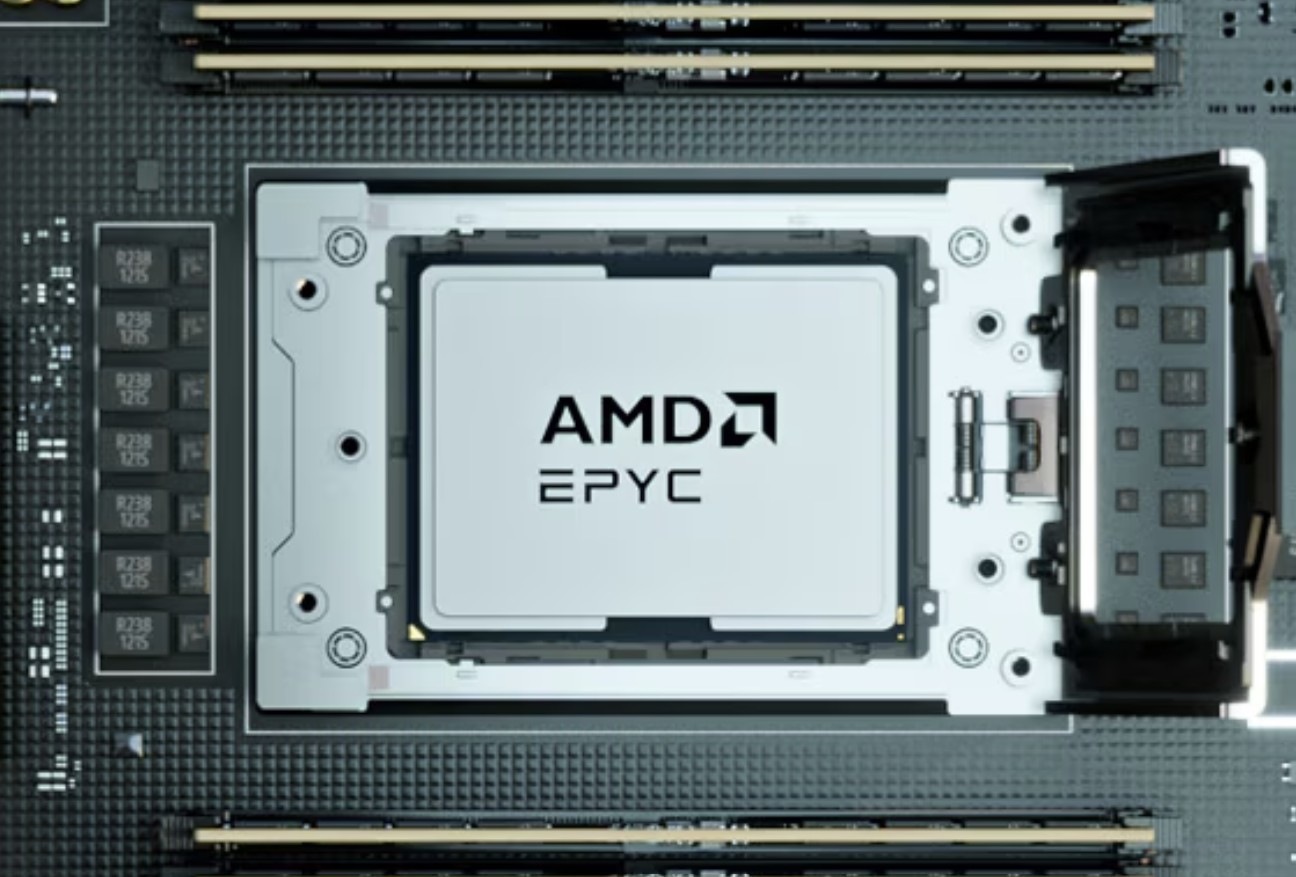
AMD Unveils EPYC 8005 Series: A New Horizon for Servers
AMD has officially released the details and SKUs for its new EPYC 8005 series processors, marking a significant evolution in the capabilities of its server product line. This new offering positions itself as a key solution for infrastructures demanding a balance between core density, energy efficiency, and robust performance. The introduction of these processors underscores AMD's commitment to providing diverse options for an expanding data center market.
The EPYC 8005 series, based on the Zen 5 architecture, promises to redefine expectations for modern server workloads. With increasing focus on optimizing operational costs and sustainability, processors with a well-defined TDP and high core density become particularly attractive for companies managing large-scale infrastructures.
Technical and Architectural Details of the EPYC 8005 Series
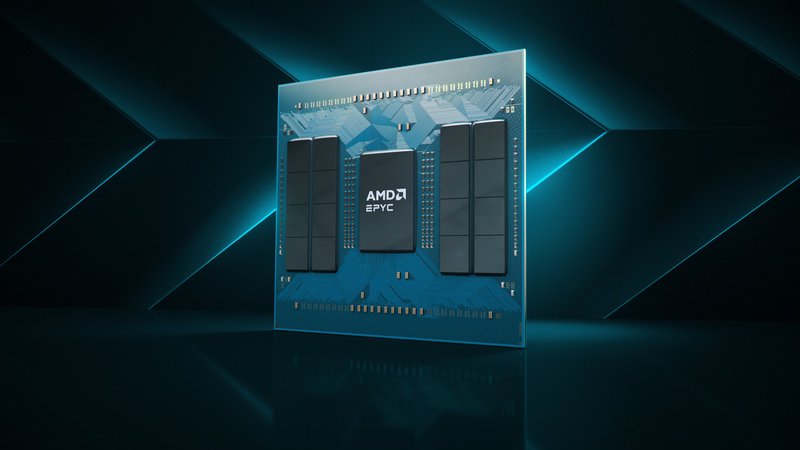
At the heart of the EPYC 8005 series is the Zen 5 architecture, which enables configurations of up to 84 cores per processor. This core density, combined with a Thermal Design Power (TDP) of 225W, suggests an optimization aimed at scenarios where efficiency per watt and per core is paramount. Such specifications are crucial for data centers looking to maximize computing power within stringent energy and thermal budgets.
The ability to integrate such a high number of cores into a controlled power envelope allows for addressing a wide range of workloads, from high-performance computing (HPC) to virtualization applications, database services, and, in some contexts, even less demanding artificial intelligence model inference or data preparation for Large Language Models (LLM). The Zen 5 architecture is designed to improve instructions per cycle (IPC) performance and overall efficiency, fundamental aspects for modern IT infrastructures.
Implications for On-Premise Deployments and Data Sovereignty
For organizations prioritizing on-premise deployments, the AMD EPYC 8005 series represents a significant option. The ability to manage intensive workloads with self-hosted hardware offers substantial advantages in terms of data sovereignty, regulatory compliance, and direct control over the infrastructure. Adopting on-premise solutions allows companies to keep data within their physical and logical boundaries, an increasingly stringent requirement in sectors such as finance, healthcare, and public administration.
Evaluating the Total Cost of Ownership (TCO) is a decisive factor in these choices. Processors like the EPYC 8005, with their energy efficiency and core density, can contribute to reducing long-term operational costs, balancing the initial hardware investment. For those evaluating on-premise deployments for AI/LLM workloads, AI-RADAR offers analytical frameworks on /llm-onpremise to assess the trade-offs between performance, costs, and security requirements, highlighting how processor choice is a cornerstone of this equation.
Future Prospects and Hardware Selection Trade-offs
AMD's introduction of the EPYC 8005 series reflects a broader trend in the server processor market: the pursuit of increasingly specialized solutions optimized for specific workloads. While GPUs remain dominant for large-scale LLM training and inference, high-core-density CPUs like EPYC continue to play an irreplaceable role for supporting infrastructure, data management, and running a wide range of enterprise applications.
The decision to adopt a specific hardware platform always involves a careful evaluation of trade-offs. Companies must consider not only raw performance but also energy efficiency, scalability, compatibility with the existing software ecosystem, and vendor support. The EPYC 8005 series presents itself as a solid proposition for those seeking a high-performing and efficient alternative for their data centers, helping to shape the future of on-premise server deployments.




💬 Comments (0)
🔒 Log in or register to comment on articles.
No comments yet. Be the first to comment!