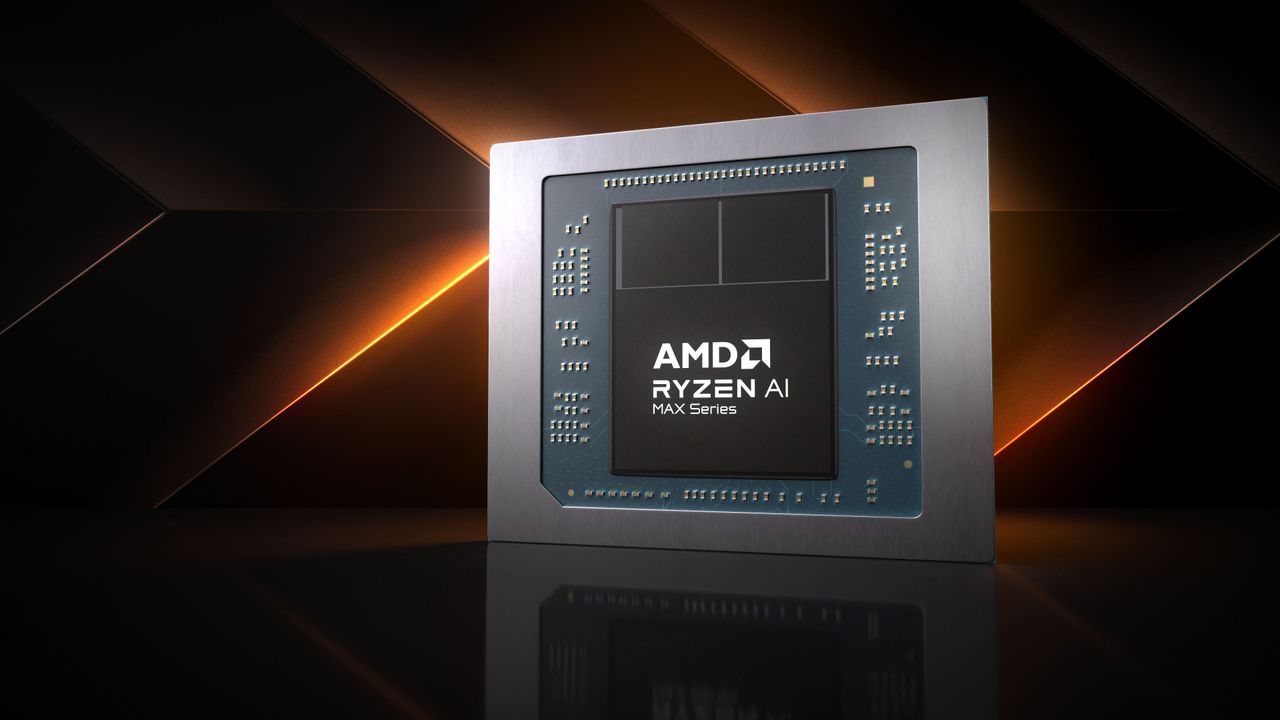
AMD's Push into Local AI with 'Gorgon Halo'
AMD continues to advance local artificial intelligence acceleration with the introduction of the Ryzen AI Max 400, codenamed 'Gorgon Halo'. This refreshed APU (Accelerated Processing Unit), which integrates CPU and GPU into the same package, positions itself as a key solution for companies looking to run AI workloads directly on their systems, away from external cloud infrastructures.
The emphasis on unified memory and the integration of latest-generation architectures underscores AMD's commitment to delivering efficient and powerful AI processing capabilities for on-premise and edge scenarios. This approach addresses the growing demand for solutions that ensure greater data control and reduced latency, critical aspects for many enterprise applications.
Technical and Architectural Details of the New Chip
The heart of the Ryzen AI Max 400 'Gorgon Halo' beats with the Zen 5 architecture for the CPU and RDNA 3.5 for the graphics component. This combination allows the chip to effectively handle both general computing tasks and graphics acceleration, and crucially, intensive AI workloads. The operating frequency, which can reach up to 5.2 GHz, indicates significant overall computing power, essential for maintaining high performance in complex application contexts.
The most relevant feature for the AI world is its ability to support up to 192GB of unified memory. This means that the CPU and GPU share the same memory pool, a crucial factor for AI workloads, particularly for Large Language Models (LLM). Unified memory significantly reduces latency and simplifies data transfer between computing cores, optimizing the efficiency of inference and fine-tuning for considerably sized models that would otherwise require very expensive dedicated VRAM GPUs.
Implications for On-Premise Deployments and Data Sovereignty
For CTOs, DevOps leads, and infrastructure architects, a chip like the 'Gorgon Halo' presents significant opportunities. The availability of 192GB of unified memory on a single APU can enable the execution of sizable LLMs or multiple smaller models in parallel, directly on workstations or edge servers. This is fundamental for organizations prioritizing data sovereignty, regulatory compliance (such as GDPR), and security, by avoiding sending sensitive data to external cloud services.
Furthermore, on-premise deployment can contribute to optimizing the Total Cost of Ownership (TCO) in the long run, by reducing operational expenses associated with cloud resource usage and offering more granular control over the infrastructure. The ability to operate in air-gapped environments is another non-negligible advantage for specific sectors like defense, finance, or healthcare, where security and isolation are stringent requirements.
Future Prospects and Considerations for Enterprises
The evolution of APUs like the Ryzen AI Max 400 'Gorgon Halo' reflects a clear trend towards distributed AI processing. While cloud data centers will remain central for large-scale model training, the ability to perform efficient and secure inference at the edge or on-premise is becoming increasingly strategic. Companies will need to carefully evaluate the trade-offs between performance, power consumption, and memory requirements to choose the most suitable solution for their AI workloads.
The choice between self-hosted and cloud-based solutions for LLM workloads is complex and depends on multiple factors, including budget constraints, scalability needs, and security policies. AI-RADAR continues to monitor these innovations, providing analysis to help decision-makers navigate the complexities of on-premise LLM deployments, as discussed in our analytical frameworks available at /llm-onpremise.





💬 Comments (0)
🔒 Log in or register to comment on articles.
No comments yet. Be the first to comment!