
Anthropic Launches Claude Fable 5 for the Public
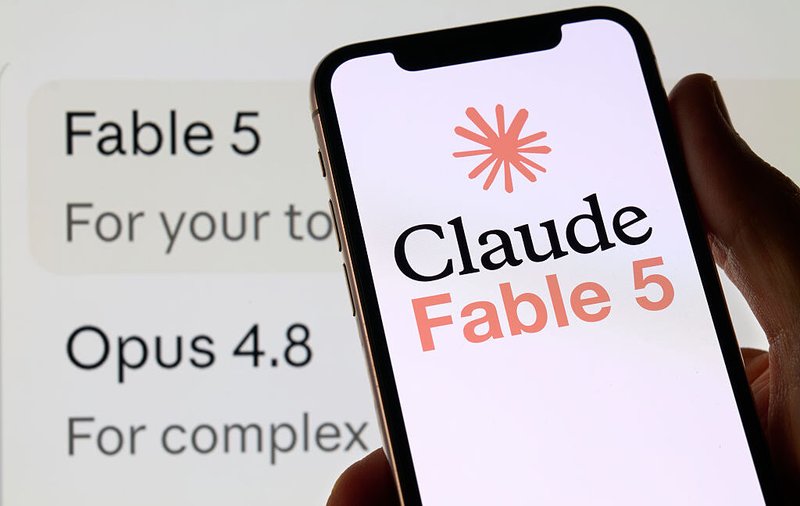
Anthropic has announced the release of Claude Fable 5, its first Large Language Model (LLM) belonging to the "Mythos" class and made available to the public. This move marks a significant step in the accessibility of advanced models, allowing a wider audience to experience the capabilities of one of the latest architectures developed by the company.
The public availability of Claude Fable 5, starting today, opens new perspectives for developers and businesses looking to integrate advanced AI functionalities into their applications. The "Mythos" class suggests a higher level of complexity and performance, positioning the model as a powerful resource for a wide range of use cases, from content generation to automated customer support.
Safety Mechanisms and Enterprise Implications
A distinctive feature of Claude Fable 5 is the integration of robust safety mechanisms, or "guardrails," designed to block responses in areas considered high-risk. The source explicitly mentions sectors such as cybersecurity and biology, where the generation of unfiltered content could have significant consequences. These filters are crucial for adoption in enterprise contexts, where regulatory compliance and risk management are absolute priorities.
For organizations operating in regulated sectors, the presence of such safety mechanisms can be an enabling factor, reducing the need to internally develop complex moderation solutions. However, it is essential to evaluate how these guardrails can be configured or customized for specific business needs, especially in on-premise deployment scenarios where granular control over data and processes is indispensable. Transparency regarding the limits and capabilities of these filters thus becomes a key element for CTOs and infrastructure architects.
On-Premise Deployment and Data Sovereignty
While Claude Fable 5 is now publicly accessible, its adoption in enterprise environments raises crucial questions regarding deployment. For companies prioritizing data sovereignty, security, and compliance, the option of a self-hosted or air-gapped deployment often remains the preference. The architecture of a "Mythos" class model might require significant hardware resources, such as GPUs with high VRAM and throughput, to ensure adequate performance in local inference scenarios.
Evaluating the Total Cost of Ownership (TCO) for an on-premise deployment of an LLM of this scale includes not only the initial investment in silicon and infrastructure but also operational costs related to power, cooling, and management. For those evaluating self-hosted alternatives versus cloud solutions, AI-RADAR offers analytical frameworks on /llm-onpremise to understand the trade-offs between control, costs, and scalability. The ability to fine-tune the model in a controlled environment, without exposing sensitive data to external services, is another fundamental aspect for many organizations.
Future Prospects and Strategic Trade-offs
Anthropic's release of Claude Fable 5 reflects the growing trend of making increasingly powerful models available, balancing innovation and responsibility. For businesses, the decision to adopt a public LLM with predefined safety mechanisms implies a trade-off between implementation speed and the desired level of customization and control. While an off-the-shelf model can accelerate development, its integration into critical processes requires careful analysis of its limitations and implications for data governance.
In a rapidly evolving technological landscape, the choice between using pre-trained models and developing proprietary solutions, perhaps with fine-tuning on specific data, is a strategic decision. Companies must consider not only the model's capabilities but also the infrastructure required for its deployment, risk management, and the ability to maintain sovereignty over their data. The availability of models like Claude Fable 5 enriches the market but demands thorough analysis to align with business objectives and technical requirements.






💬 Comments (0)
🔒 Log in or register to comment on articles.
No comments yet. Be the first to comment!