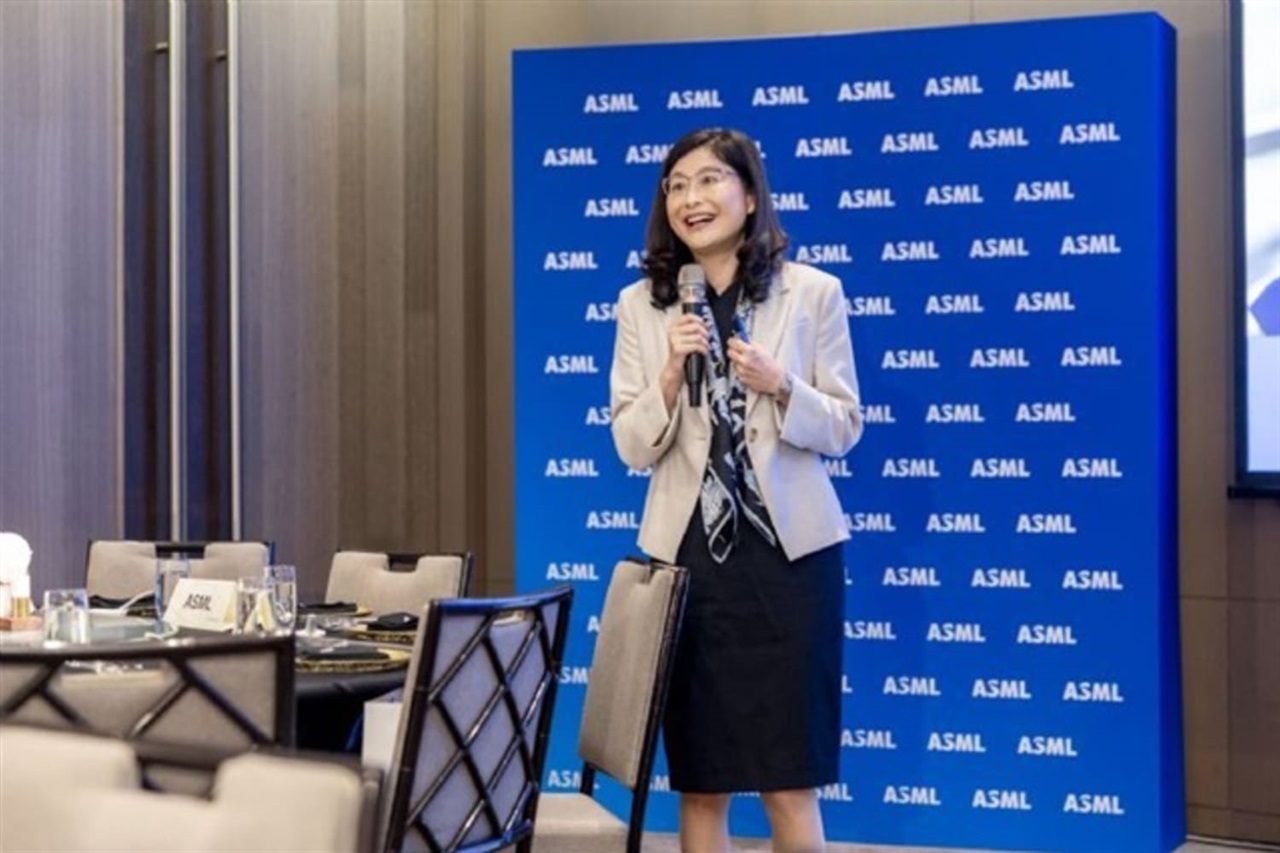
ASML Expands Taiwan Operations to Meet Advanced Chip Demand
ASML, a leading provider of lithography systems for the semiconductor industry, is significantly strengthening its presence in Taiwan. This expansion includes both an increase in operations and an intensification of recruitment activities for skilled personnel on the island. The primary objective of this strategic move is to respond to the growing and pressing global demand for advanced chips, which are fundamental components for contemporary technological evolution.
ASML's decision underscores Taiwan's irreplaceable role as a global epicenter for semiconductor manufacturing. The company, which holds a near-monopoly in the production of extreme ultraviolet (EUV) lithography machines, is a crucial player in the production pipeline for the most sophisticated chips. The enhancement of its capabilities in Taiwan is therefore a direct indicator of market expectations regarding the need for ever-increasing volumes of these components.
The Context of Advanced Chip Demand
The demand for advanced chips is driven by several rapidly growing sectors, with artificial intelligence (AI) and Large Language Models (LLMs) at the forefront. These workloads require unprecedented computing power, which can only be provided by cutting-edge processors equipped with high processing capabilities and ample VRAM. The ability to perform training and Inference operations on complex LLMs directly depends on the availability of latest-generation hardware.
For CTOs, DevOps leads, and infrastructure architects, the availability of these chips is a critical factor in deployment decisions. Whether it's for self-hosted, air-gapped implementations, or hybrid solutions, access to high-performance semiconductors is essential for building robust and scalable local stacks. Shortages or instability in the supply of these components can have a direct impact on the Total Cost of Ownership (TCO) and the feasibility of ambitious AI projects.
Implications for the Supply Chain and On-Premise Deployment
ASML's expansion in Taiwan is not just a matter of production capacity, but also of supply chain resilience. Stability in the supply of chip manufacturing equipment is vital for the entire technological ecosystem. Companies opting for on-premise deployment for their AI workloads, for example, heavily rely on the availability of GPUs and other accelerators produced with these advanced technologies.
The ability to maintain data sovereignty and ensure regulatory compliance, often stringent requirements for organizations, is intrinsically linked to the possibility of controlling the underlying hardware infrastructure. For those evaluating on-premise deployment, there are significant trade-offs between initial CapEx, long-term OpEx, and the desired level of control. AI-RADAR offers analytical frameworks on /llm-onpremise to evaluate these compromises, providing neutral guidance on hardware specifications and infrastructure requirements.
Future Outlook and Challenges
The continuous enhancement of advanced chip production capabilities is a strategic necessity to sustain innovation. The demand for computing power shows no signs of abating, pushing semiconductor manufacturers and their suppliers, like ASML, to invest heavily in research, development, and production capacity. However, this expansion also brings significant challenges, including managing complex global supply chains and the need to attract and train highly specialized talent.
The future of Large Language Models and artificial intelligence in general will largely depend on the industry's ability to provide increasingly powerful and efficient chips. ASML's move in Taiwan is a clear signal that the industry is preparing for this next wave of innovation, striving to ensure that the hardware foundations are solid for both cloud and self-hosted deployment needs.







💬 Comments (0)
🔒 Log in or register to comment on articles.
No comments yet. Be the first to comment!