
ASML: A $674 Billion Giant at the Heart of Europe
ASML, the Dutch giant specializing in lithography systems for semiconductor manufacturing, achieved a historic milestone this week. Its market capitalization reached $674 billion, solidifying its position as Europe's most valuable company. This extraordinary result reflects not only the company's financial strength but also its strategic importance in the global technology ecosystem, particularly for the production of the most advanced chips.
ASML's stock rally has been fueled by optimistic analyst forecasts, who are betting on a significant increase in the production of extreme ultraviolet (EUV) lithography systems. This technology is the cornerstone for manufacturing next-generation processors, which are essential for powering innovation in computationally intensive sectors, including Large Language Models (LLM) and AI infrastructures.
The Crucial Role of EUV Lithography in the AI Era
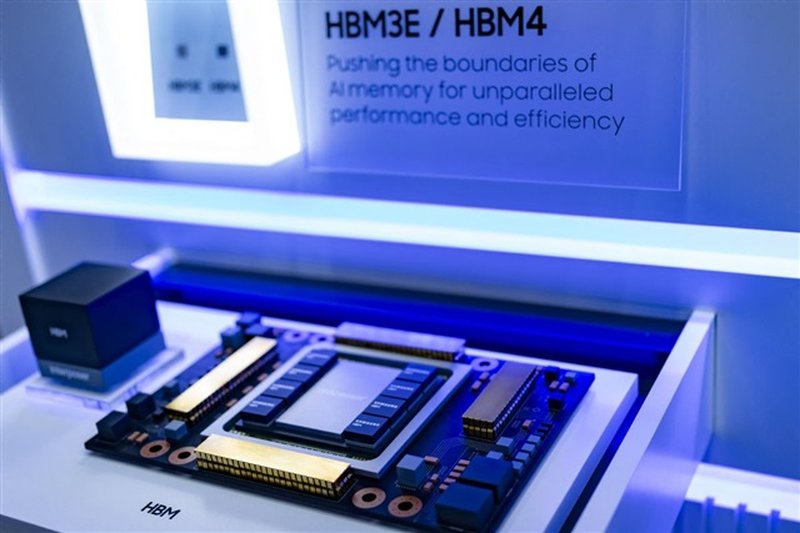
ASML's EUV technology is indispensable for creating chips with smaller, denser transistors, which are at the core of modern processor performance. Without the ability to etch circuits with nanometer precision, the development of high-performance GPUs and NPUs (Neural Processing Units), critical for complex LLM inference and training, would be severely hampered. These advanced chips are the engine that enables the efficiency and speed required by today's AI workloads.
For companies evaluating on-premise deployments of AI solutions, access to hardware based on these cutting-edge chips is a critical factor. The density and energy efficiency of semiconductors produced with EUV directly translate into an improved Total Cost of Ownership (TCO), reducing energy consumption and cooling requirements. This is particularly relevant for those seeking to build local AI stacks, ensuring data sovereignty and control over their infrastructure.
Implications for AI Infrastructure and On-Premise Deployments
ASML's dominant position in the EUV lithography market has significant repercussions across the entire semiconductor supply chain, influencing the availability and cost of high-performance chips. For CTOs, DevOps leads, and infrastructure architects planning to expand their AI capabilities, understanding the chip manufacturing landscape is crucial. ASML's ability to increase EUV output can mitigate bottlenecks in the supply of GPUs and other AI accelerators, making it easier to build robust self-hosted infrastructures.
The choice between on-premise and cloud solutions for AI workloads is often driven by a balance of costs, performance, security, and data sovereignty. The efficiency and power of EUV-enabled chips strengthen the argument for on-premise deployments, offering the possibility of achieving high performance with greater control over the environment. For those evaluating these alternatives, AI-RADAR offers analytical frameworks on /llm-onpremise to compare the specific trade-offs of each approach.
Future Prospects and ASML's Centrality
ASML's success highlights the highly specialized and capital-intensive nature of the semiconductor industry. The company holds a near-monopoly in EUV technology, with extremely high barriers to entry, both in terms of research and development and production investments. This position grants it unparalleled strategic influence over the future of technological innovation.
In an era where AI is redefining every sector, the ability to produce increasingly powerful and efficient chips remains a decisive factor. ASML, with its EUV technology, stands as an irreplaceable pillar for the advancement of artificial intelligence, ensuring that the hardware necessary for the most demanding deployments, including on-premise ones, can continue to evolve and meet growing market demands.








💬 Comments (0)
🔒 Log in or register to comment on articles.
No comments yet. Be the first to comment!