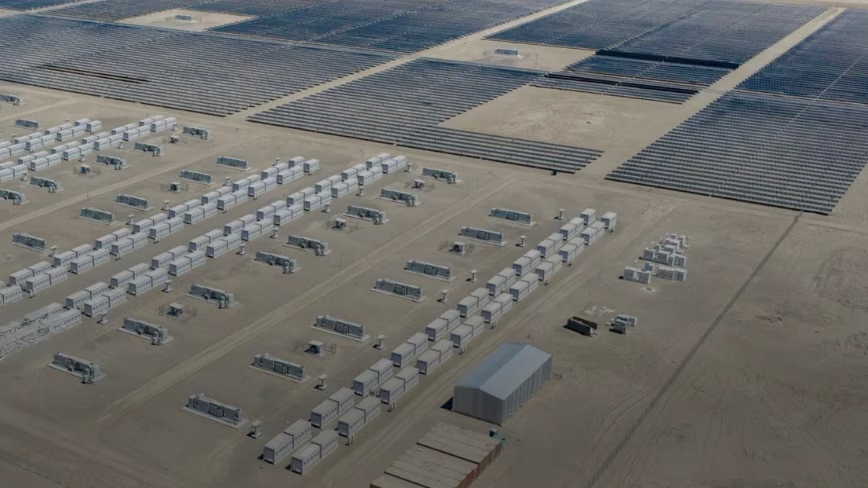
A New Energy Hub in the Atacama Desert
Chile's Atacama desert is emerging as a strategic area for the development of large-scale energy infrastructures. In this context, ContourGlobal, an independent power producer backed by KKR, recently inaugurated a hybrid solar and storage facility representing an investment of nearly $500 million. This initiative underscores the growing importance of energy storage solutions in ensuring the stability and reliability of electrical grids, especially in regions with abundant renewable energy potential.
The facility, named Victor Jara, is designed to capture solar energy during daylight hours and release it into the grid after sundown. This on-demand storage and distribution capability is crucial for overcoming the inherent challenges of intermittent renewable sources, such as solar, which do not produce energy constantly. Its location in the Atacama desert is not coincidental, given the high solar irradiation that characterizes the region, making it ideal for photovoltaic projects of this scale.
Technical Details and Plant Capacity
The core of the Victor Jara plant lies in its hybrid architecture, which integrates various technologies to maximize operational efficiency and flexibility. The photovoltaic component boasts a peak capacity of 231 megawatts (MWp), a significant value that allows for the generation of a substantial amount of clean energy. This is complemented by a battery storage system with a capacity of 1.3 gigawatt-hours (GWh), designed to store excess energy produced during the day.
This combination enables the plant to deliver a constant power output of 200 megawatts (MW) even after sunset, when solar production ceases. Such delivery capacity is crucial for balancing grid load and providing reliable power during evening peak hours. The integration of these technologies represents a significant step forward in creating more resilient energy systems less dependent on fossil fuels, a model that can also inspire infrastructure planning for energy-intensive workloads.
Implications for Infrastructure and TCO
For CTOs, DevOps leads, and infrastructure architects evaluating the deployment of on-premise AI and LLM workloads, the availability of reliable and cost-effective energy is a decisive factor. Projects like the one in Atacama highlight how investment in energy storage solutions can contribute to stabilizing long-term operational costs (TCO) and improving the overall sustainability of operations. A robust energy infrastructure, ideally powered by renewable sources, can reduce dependence on more volatile and expensive traditional grids.
Planning data centers for LLM inference or training, especially in self-hosted or air-gapped environments, requires careful evaluation of power sources. The ability to integrate storage systems or draw from renewable-powered grids can offer significant advantages in terms of resilience, data sovereignty (by reducing reliance on external energy providers), and compliance with ESG goals. For those evaluating on-premise deployments, AI-RADAR offers analytical frameworks on /llm-onpremise to assess the trade-offs between different infrastructural options, including energy aspects.
Future Prospects for Energy and Deployment
The expansion of hybrid solar and storage plants, such as Victor Jara, foreshadows a future where critical infrastructures, including AI data centers, can benefit from a more stable, clean, and controllable energy supply. The ability to manage the intermittency of renewables through advanced storage systems is key to unlocking the full potential of these sources. This approach not only supports decarbonization but also offers greater autonomy and energy security.
In an era where AI power requirements continue to grow, an organization's ability to control its energy footprint and associated costs will become a competitive differentiator. The example of the Atacama desert demonstrates that significant investments in renewable energy production and storage solutions are not only feasible but essential for supporting the next generation of technological infrastructures, while ensuring optimized TCO and greater environmental sustainability.








💬 Comments (0)
🔒 Log in or register to comment on articles.
No comments yet. Be the first to comment!