
The New Direction of Taiwanese Giants
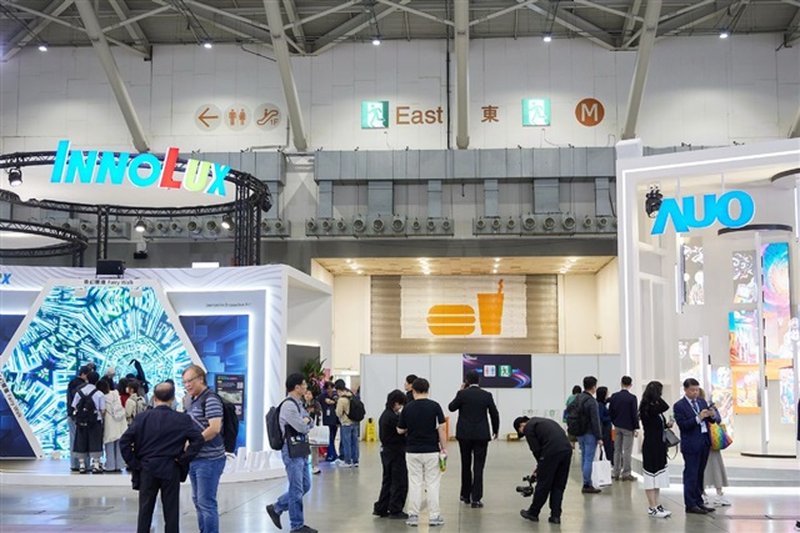
Taiwan's leading panel manufacturers, AUO and Innolux, are redefining their business strategies, shifting towards high-value-added segments in advanced packaging. This evolution marks a significant turning point for companies traditionally focused on display production, highlighting a clear intention to capitalize on the growing needs of the semiconductor industry, particularly those driven by the explosion of artificial intelligence and Large Language Models (LLMs).
AUO is concentrating its efforts on developing Co-Packaged Optics (CPO solutions), a technology poised to revolutionize chip interconnection. Concurrently, Innolux is pushing innovation in Fan-Out Panel Level Packaging (FOPLP), an approach aimed at improving the efficiency and density of integrated circuit packaging. These initiatives not only represent a strategic diversification but also position the companies as key players in supplying essential components for next-generation computing infrastructure.
Technical Details and AI Implications
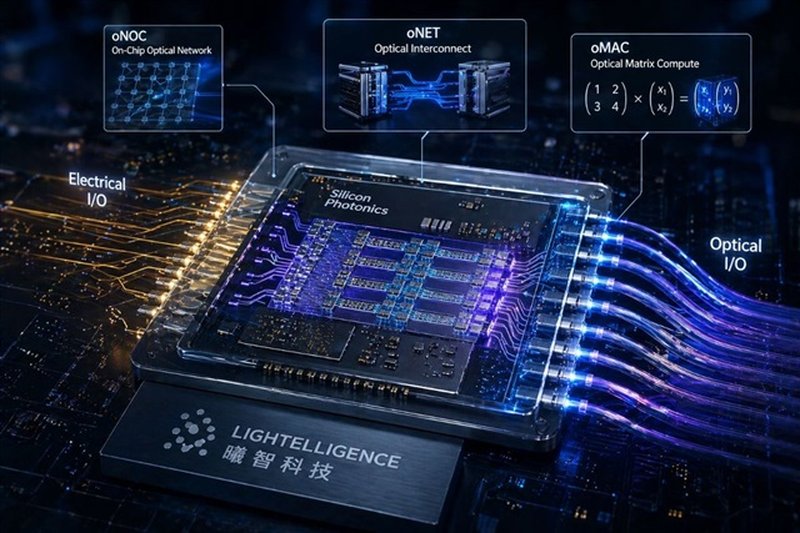
Co-Packaged Optics (CPO) is an advanced packaging technology that integrates optical modules directly within the same package as a computing or networking chip. The primary goal of CPO is to overcome the bandwidth and power consumption limitations of traditional electrical interconnects, especially at high speeds. By bringing optical transceivers closer to the silicio, CPO reduces the distance signals must travel electrically, decreasing latency and power consumption, and significantly increasing throughput. For AI and LLM workloads, which demand enormous bandwidth for GPU-to-GPU and node-to-node communication, CPO is critical for building high-performance clusters and more efficient data centers.
Fan-Out Panel Level Packaging (FOPLP) represents an evolution of Fan-Out Wafer Level Packaging (FOWLP), but with a key difference: it uses larger substrates, similar to the glass panels used for displays, rather than traditional circular silicio wafers. This allows for packaging a greater number of dies simultaneously, potentially reducing per-unit costs and increasing productivity. FOPLP offers advantages in terms of integration density, thermal management, and package size, making it ideal for creating compact and powerful AI modules, such as accelerators or chiplets. These technologies are crucial for infrastructure architects evaluating on-premise deployments, as they directly impact the computing density, energy efficiency, and overall TCO of self-hosted AI systems.
Market Context and Strategic Choices
The decision by AUO and Innolux to invest in CPO and FOPLP is not coincidental but responds to a clear trend in the semiconductor market. The demand for advanced packaging is growing rapidly, driven by the need to integrate an increasing number of transistors and functionalities into smaller spaces, while maintaining high performance and reduced power consumption. Panel companies, with their expertise in large substrate production and precision manufacturing, are well-positioned to enter this sector, leveraging their existing production capabilities.
This strategic diversification allows them to reduce dependence on the volatile display market and access an expanding segment with potentially higher margins. Packaging innovation is an enabler for the next generation of AI hardware, from edge inference chips to powerful LLM training accelerators in data centers. For companies considering an on-premise deployment, the evolution of these technologies translates into higher-performing hardware options and, in the long term, potentially more cost-effective solutions in terms of TCO, thanks to greater efficiency and density.
Outlook for On-Premise Deployments
Advancements in technologies like CPO and FOPLP have direct and significant implications for organizations choosing to implement AI and LLM workloads in self-hosted or air-gapped environments. The ability to integrate optics and chips more efficiently (CPO) and to package multiple dies into a single compact package (FOPLP) translates into servers and racks with significantly higher computing density. This is crucial for optimizing physical space in private data centers and for reducing energy consumption per compute unit, which are critical factors in TCO management.
Furthermore, the improved efficiency and reduced latency offered by these technologies contribute to superior performance for LLM inference and training, enabling companies to handle larger models or achieve results more quickly. For those evaluating on-premise deployments, adopting hardware based on these innovations can offer a competitive advantage in terms of data sovereignty, control over infrastructure, and customization capabilities. AI-RADAR offers analytical frameworks on /llm-onpremise to evaluate the trade-offs between performance, cost, and control that these new technologies introduce into the AI deployment landscape.






💬 Comments (0)
🔒 Log in or register to comment on articles.
No comments yet. Be the first to comment!