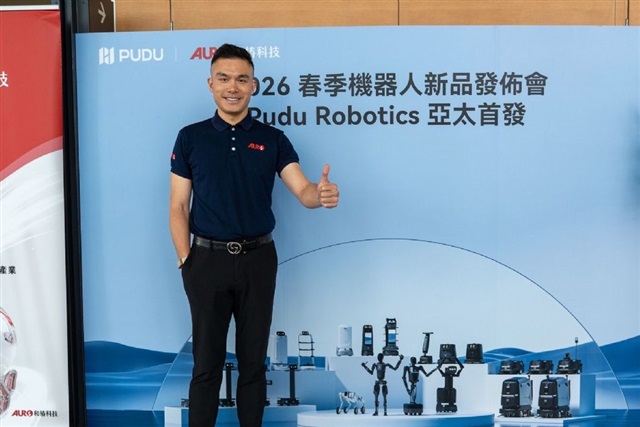
Aurotek and the Advancement of Smart Automation in Taiwan
Aurotek, a company active in the automation sector, has announced the release of three new artificial intelligence-powered robots. The stated goal is to significantly boost Taiwan's smart automation market. This initiative is part of a global context of increasing AI adoption in industrial settings, where operational efficiency and innovation capabilities represent critical factors for competitiveness.
The introduction of robots equipped with AI capabilities marks a step forward in the evolution of production and logistics systems. Such solutions promise to transform traditional processes, offering new opportunities to optimize operations, reduce costs, and improve product quality. For companies operating in technology-intensive sectors, the integration of these technologies becomes a strategic imperative.
The Role of AI in Industrial Robotic Systems
AI-powered robots distinguish themselves from their predecessors by their ability to perceive, reason, and act in complex and dynamic environments. This is made possible by the integration of advanced sensors, machine learning algorithms, and, in many cases, on-edge or on-premise processing capabilities. Such systems can perform tasks ranging from precise object manipulation to autonomous navigation, quality inspection, and predictive maintenance.
Real-time data processing, essential for the responsiveness of these robots, often requires local deployment. This on-premise approach ensures low latency and data sovereignty, crucial aspects in industrial environments where security and regulatory compliance are priorities. Choosing a local infrastructure also allows for tighter control over hardware and software, optimizing performance for specific AI inference workloads.
Implications for the Taiwanese Market and Beyond
Aurotek's move reflects a broader trend in the Taiwanese manufacturing sector, aiming to consolidate its position as a technology hub. The adoption of AI robots can lead to increased productivity, greater flexibility in production lines, and the ability to handle higher production volumes with fewer errors. This translates into a competitive advantage for companies investing in these technologies.
For organizations evaluating the implementation of AI solutions in industrial contexts, it is essential to consider the trade-offs between cloud and on-premise deployment. While the cloud offers scalability and reduced initial costs, self-hosted or air-gapped solutions are often preferred for applications requiring low-latency processing, protection of sensitive data, and a predictable Total Cost of Ownership (TCO) in the long term. AI-RADAR offers analytical frameworks on /llm-onpremise to evaluate these trade-offs in detail.
Future Prospects of AI Automation
The introduction of these robots by Aurotek is a concrete example of how artificial intelligence is redefining the industrial automation landscape. The integration of LLMs and more complex AI models into robotic systems is expected to continue evolving, leading to even more autonomous and learning-capable machines. This will require increasingly sophisticated supporting infrastructure, with particular attention to computing capacity and data management.
The future of smart automation will largely depend on companies' ability to effectively adopt and integrate these technologies. The choice of deployment architecture, whether on-premise, hybrid, or edge, will be crucial for maximizing the benefits of AI, while ensuring the security, compliance, and economic sustainability of operations. The direction taken by Aurotek suggests a future where AI will increasingly be at the center of industrial innovation strategies.








💬 Comments (0)
🔒 Log in or register to comment on articles.
No comments yet. Be the first to comment!