The crash and its dynamics
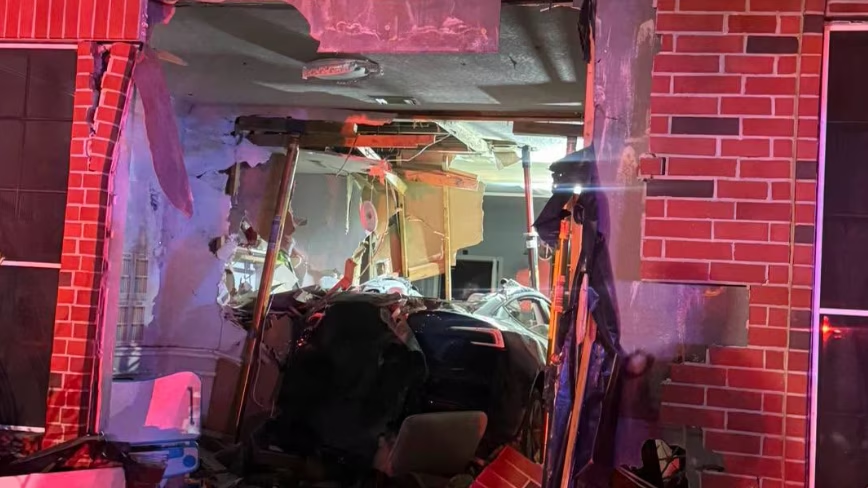
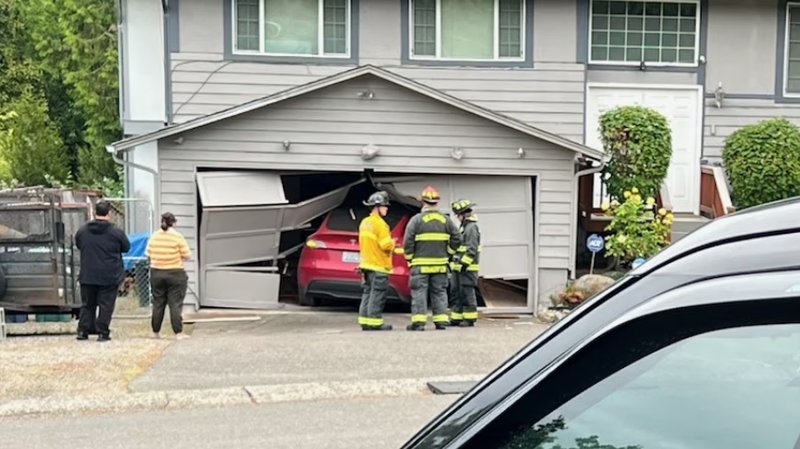
In Harris County, Texas, a Tesla Model 3 driven by Michael Butler lost control last Friday, crashing into a residential home at high speed. A 76-year-old woman inside did not survive. According to initial statements from the sheriff’s office, Butler confirmed that Autopilot was engaged at the time of impact. The automation was active as the vehicle sped through the neighborhood road.
Authorities have yet to clarify which specific components of the driver-assistance system were operating—whether the adaptive cruise control with auto-steer or the broader “Full Self-Driving” suite. The fact remains that technology designed to reduce human error is now at the center of a tragedy.
What really runs under the hood of an Autopilot
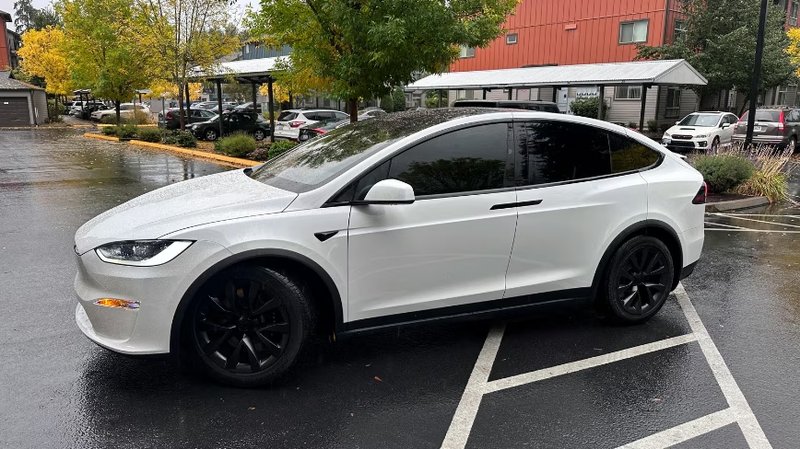
Tesla’s Autopilot relies on cameras, radar (on older models), and an onboard computing platform—often referred to as Hardware 3 or 4—capable of running neural networks for perception, planning, and real-time control. All inference happens locally: there is no dependency on the cloud for split-second decisions. It is a textbook example of edge AI, where latency and network availability are unacceptable.
While the automotive domain is unique, the architecture closely mirrors the logic of organizations deploying Large Language Models on-premise: local execution, data under their own oversight, unified governance. The critical difference is that here an error doesn’t produce a wrong text reply—it causes a physical impact with irreversible consequences.
Control and sovereignty at stake
For enterprise decision-makers considering bringing LLMs in-house—whether for privacy, GDPR compliance, or to reduce Total Cost of Ownership—incidents like this serve as a stark warning. It is not enough for a model to be accurate 99% of the time; formal testing, redundancies, and, above all, the certainty of manual override or supervisory systems when AI mistakes occur are essential.
On-premise deployment, which AI-RADAR closely tracks, promises full command over the pipeline, from quantization to token management. But it also demands that infrastructure (VRAM, memory, internal networking) be sized to deliver predictable inference times, just as an autonomous vehicle cannot afford a delayed decision. Tesla updates its software remotely, yet the computational load stays local—a balance between centralized updates and distributed execution that resonates with hybrid strategies now debated in enterprise AI.
Lessons for enterprise AI (and for drivers)
Beyond the news story, this Texas incident highlights an axiom many overlook: artificial intelligence, whether a voice assistant or a self-driving car, operates in an imperfect world. Overfitting to training data or an unforeseen situation (an “edge case”) can trigger abnormal behaviors.
For those building or adopting self-hosted AI solutions, the message is twofold. On one hand, on-premise control allows failures to be cataloged and corrected without surrendering data to the cloud; on the other, it requires continuous investment in monitoring, performance metrics (throughput, latency), and rollback plans. It’s no different from what is expected of an Autopilot system, which users should always treat as assistance, not replacement.
As investigations sort out responsibilities, the path to truly reliable AI remains paved with such episodes. AI-RADAR will keep providing analysis and frameworks to help organizations weigh the trade-offs between local control and cloud flexibility, convinced that data sovereignty and algorithmic transparency are the first, real safety tools.





💬 Comments (0)
🔒 Log in or register to comment on articles.
No comments yet. Be the first to comment!