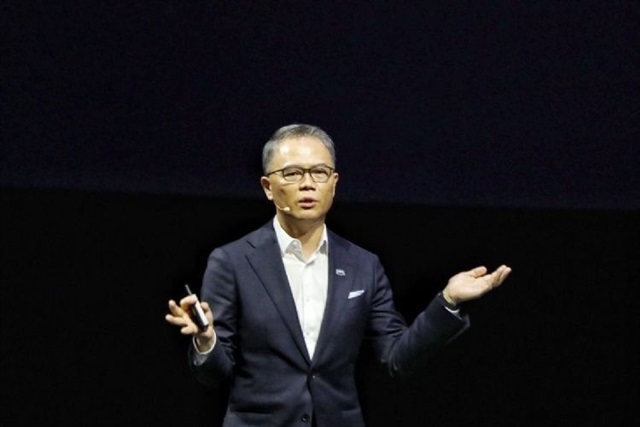
Robert Wang, AWS general manager for Taiwan and Hong Kong, wasn’t just making a courtesy visit. Bringing Trainium, Inferentia, and Graviton processors onto a Taiwanese stage sends a multi-layered message, all tied to the most delicate node of contemporary AI: the physical production of computing power.
Taiwan manufactures over 90% of the world’s advanced chips – a figure that alone explains why any move intersecting silicon and geopolitics deserves attention. AWS chose this very island to showcase the custom chip family on which it is building its cloud-based machine learning and general-purpose compute offerings. Trainium is the processor designed for model training, Inferentia for inference, Graviton for ARM-based general workloads. Three pieces of a strategy aimed at reducing dependence on external GPU suppliers and vertically integrating hardware control.
Custom silicon and the supply chain: a precarious balance
Announcing these chips on Taiwanese soil is no coincidence. On one hand, AWS reaffirms the maturity of its silicon, now a core part of cloud instances used by thousands of companies for training and inference. On the other, it highlights just how deeply the entire AI ecosystem is tethered to a single geographic area for advanced manufacturing. TSMC – the primary production partner for 5nm and beyond chip fabrication – has its key fabs right there, and any tension across the Taiwan Strait translates into immediate risk for accelerator and processor availability.
This isn’t abstract. Those managing on-premise infrastructure or evaluating self-hosting of LLMs know that the hardware supply chain is concentrated in very few hands. Custom chips like Trainium remain a cloud prerogative: they can’t be bought for private environments, and this draws a sharp line between those who can afford operational elasticity and those seeking data sovereignty and direct pipeline control.
The sovereignty paradox
For organizations pushing toward on-premise deployments – driven by GDPR constraints, industrial secrecy, or latency requirements – AWS’s Taiwan visit raises an uncomfortable question: how much independence can you gain if the AI silicon is fabricated in a single global location and is often accessible only through cloud services? The answer isn’t binary, but the signal is clear: the custom chip race widens the advantage of those who control the entire stack, from silicon to service, leaving on-premise adopters with more limited and less transparent hardware options.
AWS didn’t release performance numbers during the event – no details on energy consumption, throughput, or total cost of ownership – but the choice of stage says plenty. Taiwan is not just a factory: it’s a barometer of the global AI supply chain’s stability. Showing off these chips there acknowledges their irreplaceable role, while also accepting the systemic risk it carries. For those watching the sector through the lens of autonomous deployment, this episode confirms the urgency of diversifying hardware sources and pragmatically weighing trade-offs between cloud flexibility and local control – a space where AI-RADAR provides analytical frameworks to assess costs, risks, and possible alternatives.






💬 Comments (0)
🔒 Log in or register to comment on articles.
No comments yet. Be the first to comment!