The Landscape of Shortages and Market Dynamics
The technology sector continues to navigate a context of uncertainty regarding the global supply chain. Recent reports indicate a growing spread of shortages for MLCCs (Multi-Layer Ceramic Capacitors), fundamental passive components for the operation of almost every modern electronic device. These capacitors are essential for voltage stabilization and noise filtering, critical aspects for the reliability and performance of complex systems, including those dedicated to artificial intelligence.
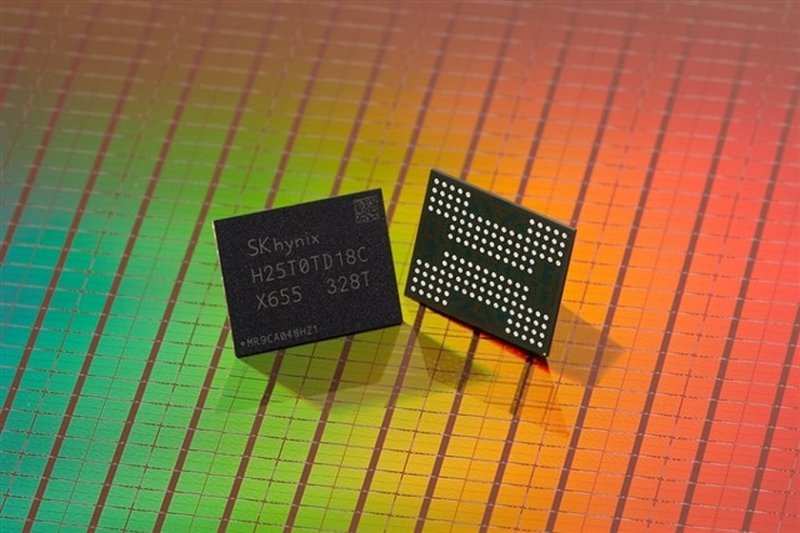
Concurrently, news emerges regarding SK Hynix, one of the world's leading memory manufacturers, reportedly in talks with tech giants such as Microsoft and Google. These discussions, if confirmed, could have significant implications for the future of AI infrastructure, influencing the availability and specifications of high-performance memory, such as HBM (High Bandwidth Memory), crucial for training and Inference of Large Language Models (LLMs).
The Importance of MLCCs and SK Hynix's Role
MLCCs are ubiquitous in electronics, from server motherboards to the most advanced GPUs. Their shortage can slow down the production of critical hardware, directly impacting delivery times and costs for companies looking to expand their AI computing capabilities. For CTOs and infrastructure architects, this translates into increased complexity in procurement planning and managing CapEx for on-premise deployments.
SK Hynix, on the other hand, is a key player in the memory market, with a prominent position in the production of DRAM and NAND Flash, in addition to the aforementioned HBM. Discussions with hyperscalers like Microsoft and Google suggest a strategic interest in securing stable supplies of advanced memory, essential for powering their data centers and cloud-based AI service offerings. This scenario highlights the close interdependence between component manufacturers and AI service providers, with repercussions that can extend across the entire market.
Context and Implications for AI Deployment
Component shortages and memory vendor market dynamics directly impact AI deployment decisions. For organizations evaluating a self-hosted or hybrid approach, the availability of specific hardware, such as GPUs with high VRAM, is contingent on supply chain stability. Fluctuations in prices and availability can significantly alter the Total Cost of Ownership (TCO) of an on-premise AI infrastructure, making long-term planning more complex.
SK Hynix's talks with cloud giants could influence the priority and allocation of memory resources, potentially favoring large buyers and making it more challenging for smaller companies or those opting for bare metal to obtain the desired quantities and types of memory. For those evaluating on-premise deployment, AI-RADAR offers analytical frameworks on /llm-onpremise to understand the trade-offs between costs, performance, and data sovereignty, aspects that become even more critical in a volatile supply chain context.
Final Outlook: The Resilience of the AI Supply Chain
The current context underscores the importance of a resilient supply chain and well-defined procurement strategies for AI infrastructures. MLCC shortages and the strategic moves of players like SK Hynix are indicators of a constantly evolving market, where access to critical components can determine the success or delay in the development of AI projects.
For decision-makers, it is crucial to monitor these trends and consider their impact on the ability to scale AI operations, whether choosing a cloud, on-premise, or hybrid deployment. The ability to anticipate and mitigate supply chain risks will become a distinguishing factor for maintaining a competitive edge in the era of artificial intelligence.







💬 Comments (0)
🔒 Log in or register to comment on articles.
No comments yet. Be the first to comment!