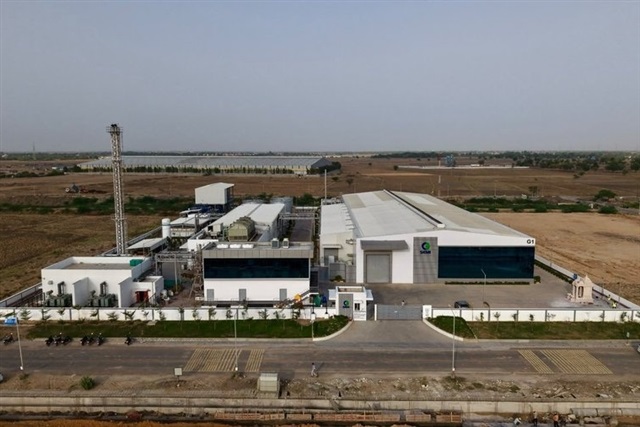
India has switched on its third engine in the semiconductor strategy. CG Semi, a subsidiary of the CG Power and Industrial Solutions group, has begun commercial production at its packaging and test plant (OSAT) in Sanand, Gujarat. The move was announced by minister Ashwini Vaishnaw, marking another step in an ambitious program to build a complete chip ecosystem on Indian soil.
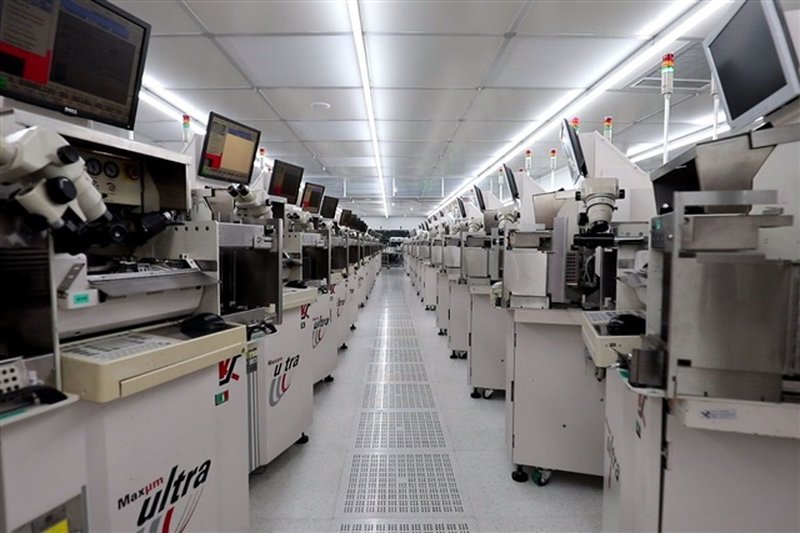
The facility, focused on chip assembly, testing, and packaging, is not a pure-play silicon fab, but it plays a crucial role in global supply chains. At a time when demand for advanced packaging capacity is exploding – driven by AI, HPC, and distributed computing – having a nearby OSAT node redraws the geography of risk.
For companies evaluating on-premise LLM deployments, local availability of semiconductors is far from incidental. Self-hosted infrastructure for inference and training of generative models depends on GPUs and accelerators that are often stuck waiting for components or assembled in East Asia. A plant in India, even if focused on the back-end, reduces logistics dependency and offers an alternative for handling chip volumes destined for servers and edge systems, increasingly placed in Indian data centers for latency, privacy, and regulatory compliance reasons.
India is indeed moving on multiple fronts: following Micron’s ATMP announcement in Sanand and the planned Tata Electronics fab in Dholera, the country is building a scaffold that stretches from raw materials to production. This isn’t just about smartphone microchips: it’s a game that concerns the ability of an entire ecosystem to sustain AI workloads without relying on foreign suppliers for every critical component.
CG Semi’s step comes at a time when supply chain security has become a top priority for governments. Having domestic OSAT capability means turning raw wafers into ready-to-use chips for motherboards, servers, and embedded modules, shortening lead times and lowering TCO for operators choosing on-premise infrastructure on Indian soil.
It’s not yet an alternative to leading-edge fabs, but it’s a piece of a larger mosaic. And for those watching the market through the AI-RADAR lens – where data sovereignty, total cost of ownership, and pipeline control are central – this news confirms that the hardware battle for AI is increasingly fought not in Silicon Valley but in emerging industrial hubs.




💬 Comments (0)
🔒 Log in or register to comment on articles.
No comments yet. Be the first to comment!