
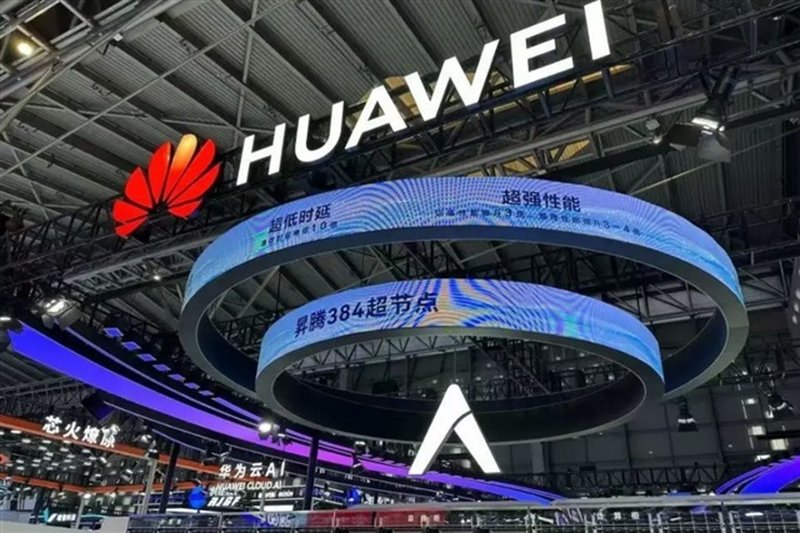
At the 2026 World Artificial Intelligence Conference in Shanghai, China’s AI sector delivered a message as eloquent as it was predictable: the path to computational autonomy no longer runs through a single cutting-edge chip. The spotlight was on so-called “super-nodes,” system-level aggregations that link tens or hundreds of less advanced processors—domestic ones or chips outside embargo tiers—to match the performance of the modern accelerators Beijing cannot access. It’s a profound shift in logic, forced by US export controls, that is reshaping not just China’s technological ambitions but the very architecture of AI compute at industrial scale.
To grasp the shift, one must look beyond the headlines. Super-nodes aren’t generic clusters: they are designs where interconnect bandwidth, memory coherence, and distributed scheduling become the deciding factors, far more than the specs of any single silicon die. The focus moves from raw GPU power to the ability to orchestrate a heterogeneous set of units. The concept isn’t new in the abstract—supercomputing has known it for decades—but applying it to the training and inference workloads of large language models (LLMs) means rewriting pipelines, frameworks, and often parallelization algorithms to hide the latency and bottlenecks introduced by hardware fragmentation.
What the Shanghai conference made plain is an uncomfortable truth for many Western vendors: export bans, rather than slowing China, are accelerating an alternative ecosystem. Deprived of NVIDIA H100s or their successors, necessity forces investment in proprietary networking, optimized communication libraries, and cooling for extreme densities. Chinese companies—with Huawei’s Ascend chips prominent, but not alone—now fully understand that the real “treasure” is not 3-nanometer silicon but the skill to integrate, cool, and make hundreds of components talk to each other efficiently.
The implications for on-premise deployment are immediate. The super-node philosophy breaks the dependency on a single flagship part and makes configurations based on readily available, even second-hand or mid-range, hardware viable. For a European enterprise that wants to retain data sovereignty and operate in-house, avoiding hyperscale clouds often subject to extra-EU jurisdictions, the concept becomes a strategic lever: you can pool GPUs of different generations, interconnect them with high-speed fabrics already on the market, and achieve acceptable inference throughput—provided there is investment in system integration skills. The bottleneck is no longer the unobtainable card, but the ability to design the node and manage its software complexity, a trade-off that rewards those with strong internal teams or specialized system integrators.
On the software side, the Chinese model favors frameworks that natively embrace coarse-grained parallelism (model, pipeline, data), reducing dependency on CUDA drivers and libraries optimized for NVIDIA architectures. This is an area where China is investing heavily, and where even players outside its orbit could find advantages: less vendor lock-in, greater stack transparency, and a codebase that runs on diverse accelerators. It’s not science fiction: open standards and runtimes like SYCL or LLVM compiler extensions are already enabling training workloads on unconventional hardware, and super-nodes are the toughest proving ground.
Energy costs and datacenter footprint remain a sore point. Pooling many less efficient chips can inflate TCO if ancillary consumption (cooling, network switches, power delivery) isn’t compressed. But the Chinese experience shows that when the alternative is zero advanced compute capacity, the optimization frontier moves. And every improvement in that domain—more frugal network cards, per-rack liquid cooling, activation compression algorithms—becomes immediately usable by anyone designing a local AI infrastructure, in Beijing or Milan.
In short, WAIC 2026 revealed no miraculous invention, but it did certify the end of the illusion that AI progress is tied to the fastest semiconductor. Super-nodes are a structural answer to restrictions, but also a signal to the rest of the world: system integration is becoming the key differentiator, and those who master it can build sovereign compute capacity even with the bricks they have at hand.






💬 Comments (0)
🔒 Log in or register to comment on articles.
No comments yet. Be the first to comment!