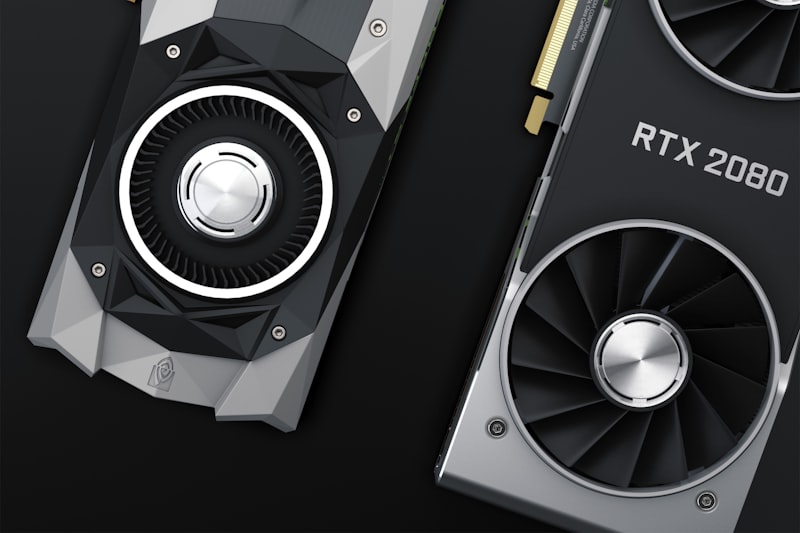
Word of the move circulated in supply chain circles: ByteDance, Alibaba and Tencent have reportedly placed orders for more than $35 billion in Nvidia chips. A Reddit post added a concrete detail: 3 million RTX 5500 Pro units at $11.4 each, presumably for LLM inference and AI video generation. The unit price, if it refers to a full card, looks anomalous compared with known list prices; the cautious reading is simply that the volume signals massive absorption of accelerator components.
For those looking at on-premise and self-hosted deployments, the news is not neutral. The consumer and workstation GPU market has for years been the pool from which independent labs, small companies and anyone wanting to run LLMs locally draw. When three hyperscalers shift volumes of this size, retail and nearby distributors become residual: allocations are negotiated earlier, prices follow large buyers' demand, and the individual developer waits at the back of the queue.
The core argument is that this operation signals a structural change in the geography of inference. It is not just a demand spike. The implicit message is that compute capacity for generative models is consolidating in centralized data centers, often outside the jurisdiction of those using them. This shifts incentives: for local application builders, what remains are previous-generation cards, models that need quantization to fit into limited VRAM, or cloud services. The choice is no longer between owning hardware and using the cloud, but between accepting intermittent supply or delegating execution to third parties.
There is a second, less visible but more durable effect. The rush of large Chinese operators to Nvidia GPUs, under export control constraints, makes every available unit more strategic. Suppliers tend to favor customers with multi-year contracts and guaranteed volumes. Those buying a few cards for a local server become marginal clients, with less bargaining power and longer lead times. This has direct implications for data sovereignty: if the self-hosted alternative becomes more expensive or impractical, the operational default for many organizations becomes the cloud, with data and models leaving the company perimeter.
The stated destination also matters: inference and generative video, not foundation model training. The demand is for serving already-trained workloads at scale. If inference absorbs the same cards hobbyists use to run local LLMs, the bottleneck shifts downstream: training is not the only stage reserved for large players, but also everyday execution. That is a signal worth noting for anyone designing applications that today run on a single machine with a consumer GPU.
For those evaluating on-premise deployments, the trade-offs between VRAM, quantization and supply costs are documented on /llm-onpremise. One question remains open: if the 3 million unit figure is correct, the self-hosted challenge will not only be technical but logistical. Optimizing models will not be enough; it will be necessary to understand whether the supply channel will continue to exist for those who do not sign orders for millions of units.






💬 Comments (0)
🔒 Log in or register to comment on articles.
No comments yet. Be the first to comment!