
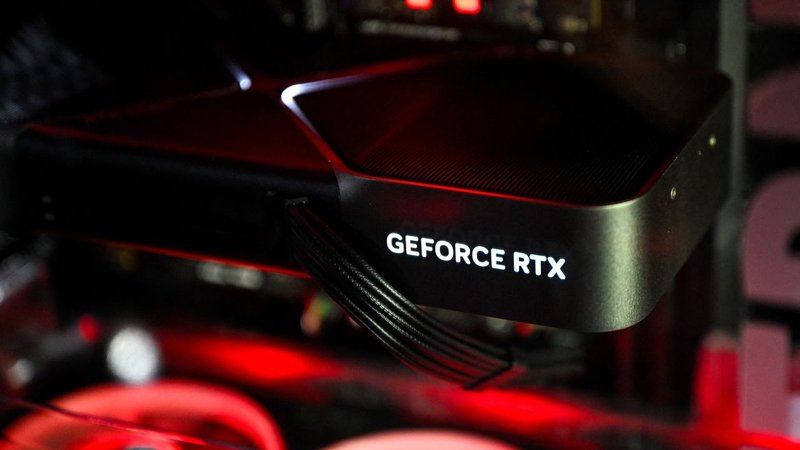
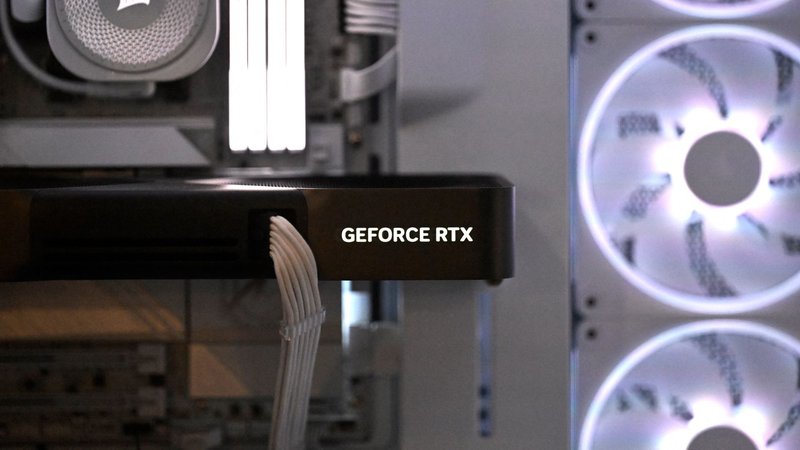
Two pallets of ZOTAC RTX 5090 graphics cards, with a declared value of $470,000, have disappeared from a Brazilian airport. The report comes from a Reddit post by user chemist_slime, which provides no details on method, timing, or responsibility. In its raw form, the news says much more than a simple warehouse shortage.
The RTX 5090 sits at the high end of consumer GPUs and is among the components that the local AI market watches closely. In many self-hosted deployments, the choice falls not on enterprise accelerators but on consumer cards with large VRAM and high memory bandwidth: traits that matter for LLM inference, where keeping the model in memory and moving tokens quickly separates a responsive pipeline from a bottleneck. When two pallets of these components vanish from the logistics chain, the signal is not just a missing inventory item but the strategic value these cards have assumed beyond gaming.
The point is not the single disappearance. It is that the physical GPU supply chain has become a weak link for those designing on-premise infrastructure. TCO spreadsheets tend to focus on list price, energy consumption, software licenses, and amortization. They rarely include airport transit security, warehouse theft, insurance premiums, or delays from parts that disappear. Yet a self-hosted cluster does not start in a configurator: it starts with goods that travel, pass through logistics hubs, and can become targets.
There is also a second-order effect that touches data sovereignty. Those who bring models in-house often do so to control data and reduce cloud exposure. But control does not stop at software: if you don't know where your GPUs came from, if serial numbers are not traceable, or if cards arrive through unofficial channels, you lose a piece of that sovereignty. The gray market feeds on exactly this: disappeared components that reappear without warranty, at tempting prices, ready for buyers seeking compute power without too many questions.
For enterprises evaluating an on-premise deployment, the Brazilian episode is not a curiosity item. It is a reminder: the physical supply chain must be audited with the same rigor as software dependencies. AI-RADAR offers analytical frameworks at /llm-onpremise to weigh these trade-offs, but the principle remains simple: the real cost of an inference node does not end with package delivery. It ends when you know who touched that package, where it passed, and whether you can trust its chain of custody.
The Brazilian airport has not released details. What remains is the initial fact: $470,000 worth of GPUs left the official circuit. For those planning a local cluster, the question is not only how much VRAM is needed, but whether the supplier can prove chain of custody, not just the invoice.








💬 Comments (0)
🔒 Log in or register to comment on articles.
No comments yet. Be the first to comment!