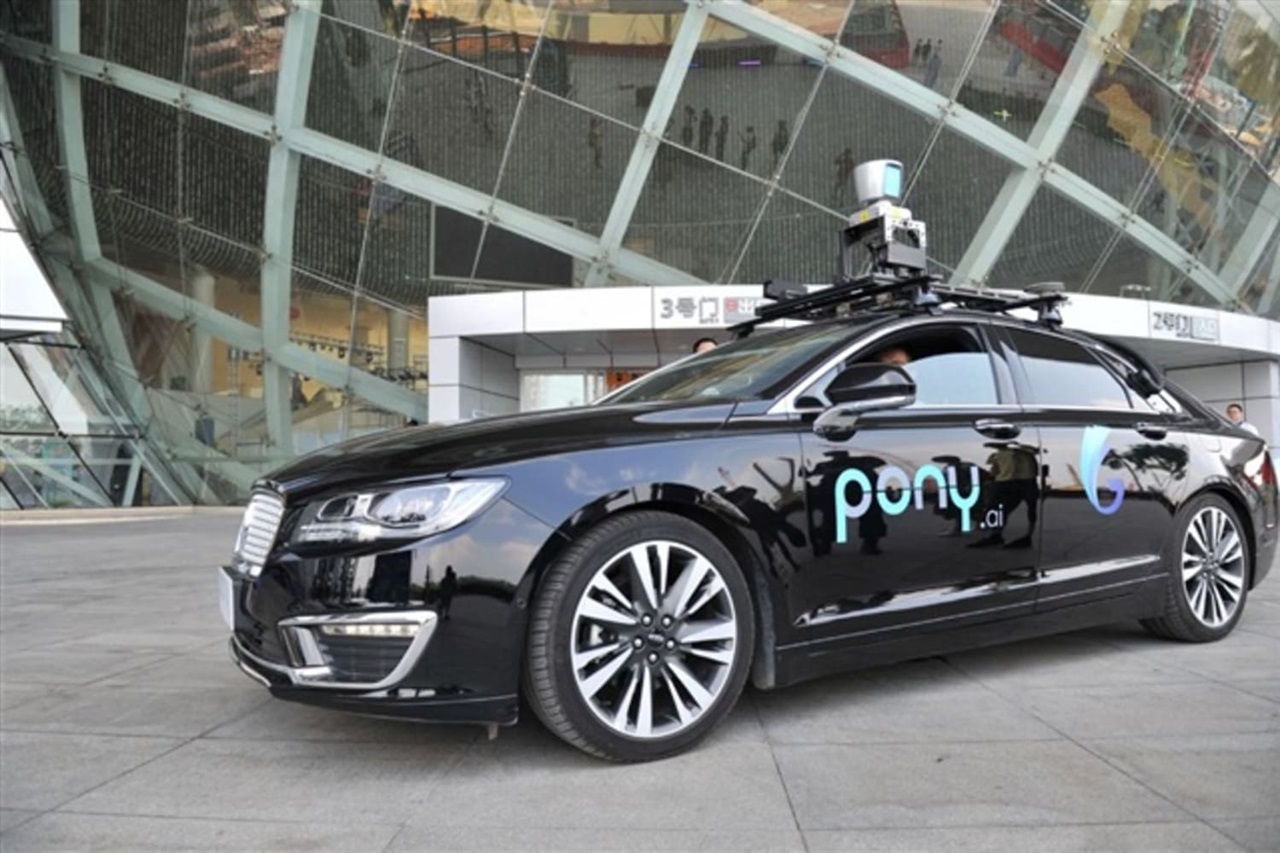
In just a few years, the center of gravity in Chinese automotive design has shifted from mere component assembly to an architecture where artificial intelligence is no longer just a software module but a physical element reshaping on-board electronics. The fusion of advanced driver-assistance systems (ADAS) and the digital cockpit is not a simple graphic integration: it is the starting point for a radical rethinking of the autonomous driving supply chain, with consequences extending far beyond the automotive sector.
Fewer ECUs, more compute domain
When ADAS and infotainment ran on separate hardware, updating autonomous driving logic meant intervening on separate boxes with long development cycles and high costs. Today, Chinese manufacturers are pushing toward a single central computing platform, often based on next-generation system-on-chips. This shift is not just driven by economic efficiency: it is the answer to two technical constraints that are insurmountable for anyone working on autonomous driving. The first is latency: a vehicle at 60 km/h travels almost 17 meters in one second, and every millisecond of delay in fusing sensor data can turn an avoidable accident into a statistic. The second constraint is data sovereignty: China has imposed strict rules on how vehicle-collected data is handled, effectively making on-board processing or processing within national data centers mandatory.
What physical AI means
The term “physical AI” aptly describes what is happening. No longer models trained on static datasets and then loaded onto a fixed computing unit, but inference systems operating in real time on continuous streams from cameras, lidar, radar, and ultrasonic sensors. This computational load cannot be offloaded to the cloud: connectivity offers insufficient guarantees and transmission costs would be prohibitive. The alternative is an on-premise — or rather on-board — architecture, where the vehicle becomes a four-wheeled data center. Suppliers are gearing up with neural accelerators integrated directly into SoCs, and competition revolves around the perfect balance between computing power, energy consumption, and the ability to update models without replacing hardware.
What this transformation teaches those outside the automotive sector
China’s supply chain is rapidly experimenting with architectural patterns that concern any organization dealing with critical AI workloads. The move from cloud-dependent logic to local deployments to guarantee latency and data control is not exclusive to autonomous driving. In sectors such as manufacturing, finance, or healthcare, bringing inference on-premise answers the same needs: performance predictability, intellectual property protection, and regulatory compliance. The merging of previously separate functions (cockpit and ADAS, two domains with different real-time and safety requirements) echoes the convergence of IT and OT in factories, where AI workloads coexist with deterministic systems on the same compute node.
The lever of technological sovereignty
It is no coincidence that this transformation is accelerating precisely in China. Export restrictions on advanced semiconductors have pushed local companies to invest in alternative architectures and proprietary development frameworks. The result is an ecosystem where domestic hardware is not just a fallback but a competitive factor that forces the entire supply chain to rethink software to best exploit available resources, including aggressive quantization and VRAM optimization techniques. For European IT decision-makers, observing these dynamics helps understand that the cloud versus on-premise debate has already been overtaken by facts: the real game is how to orchestrate local, edge, and cloud resources in a coherent way while maintaining data control.
Integrating physical AI into vehicles is an extreme testing ground for autonomous systems developers. Failure is not an option, and this imposes architectural choices that prioritize robustness. Whether it is a car or an industrial plant, the principle is identical: inference must occur as close to the data source as possible. For those today evaluating on-premise deployment of Large Language Models, the technical challenges are different but the trade-offs are the same: latency, sovereignty, TCO, and the ability to update models without downtime. And perhaps it is in China’s race toward autonomous driving that we can preview the solutions we will adopt in our server farms within a few years.






💬 Comments (0)
🔒 Log in or register to comment on articles.
No comments yet. Be the first to comment!