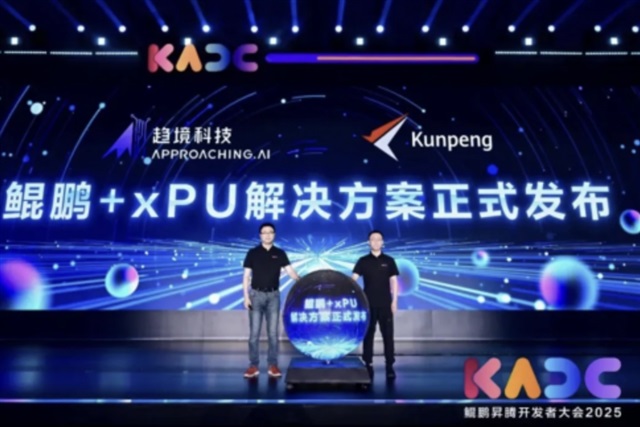
Beijing – As US semiconductor restrictions freeze shipments of NVIDIA A100 and H100 to China, a shop‑less player has conquered the local market for AI compute capacity. The singularity lies in the absence of physical assets: the company does not own a single GPU, yet it has become the go‑to destination for training and inference on LLMs developed within the country. The “Huawei” credit attached to the news hints at the hidden engine of this rise — an aggregator that orchestrates compute power on a national scale, channeling domestic hardware away from the glare of the big public clouds.
Behind the phenomenon one can read the evolution of a market strangled by export controls, but also the affirmation of a model that decouples chip ownership from service delivery. Anyone with Ascend, Kunpeng or locally produced GPU nodes can pour unused cycles onto a platform that packages them as on‑demand compute slots, often at lower prices than the contracts of large Chinese cloud providers. The intermediation recalls the dynamics of capacity marketplaces — similar to what happens in the West with platforms such as RunPod or Vast.ai — but with an all‑Chinese constraint: data residency, compliance with Beijing’s regulations and the almost obligatory use of home‑grown silicon.
The hardware accelerator that emerges is Huawei’s Ascend series, now a mainstay of domestic compute. Unlike NVIDIA GPUs, Ascend chips execute models through the CANN (Compute Architecture for Neural Networks) stack, a software ecosystem parallel to CUDA that is slowly accumulating support from frameworks like PyTorch and MindSpore. The GPU‑less compute seller rests precisely on this fragmentation: it aggregates silicon that would otherwise remain confined to research labs or state‑enterprise datacenters, making it accessible to startups and independent developers. In doing so, it turns the weakness of China’s technology supply chain — the shortage of NVIDIA GPUs — into a scale advantage for hardware that many local players are now forced to use.
For those evaluating deployment strategies, the story signals something deeper than the mere birth of a new sales channel. We are facing the creeping commoditization of AI compute: the differentiator is no longer just the silicon, but the orchestration layer that negotiates latency, price and geographic location. Whoever controls that layer — the capacity broker — can dictate terms even without owning the means of production. It is a lesson that travels beyond the Great Wall: in environments where digital sovereignty demands on‑shore data and hardware ownership is difficult or expensive, intermediation models could become the flywheel for scaling LLM adoption without tying up capital in assets subject to rapid depreciation.
Second‑ and third‑order implications are already in motion. Large Chinese hyperscalers, from Alibaba Cloud to Tencent, risk seeing their pricing power eroded over a customer base that can now tap a spot compute market, fragmented yet efficient. On the other hand, domestic hardware manufacturers gain an indirect commercialization channel that multiplies the utilization of their units, accelerating the feedback loop for driver and library improvements. In perspective, this market architecture could push the standardization of the entire Chinese AI stack around a common middleware, reducing dependence on foreign suppliers not only on the hardware side but also on the software side — a stated goal of the Made in China 2025 plan.
It is not, however, a free lunch. Quality of service, performance predictability and security of multi‑tenant environments remain unknowns that only the platform’s maturity will be able to resolve. For those architecting sensitive deployments and evaluating on‑premise paths, the existence of this aggregator introduces a third way between owning cards in a basement and renting standard cloud instances: a kind of geolocalized compute‑as‑a‑service, with residency guarantees but without control over the underlying infrastructure. It is a compromise that can work for sporadic training or low‑risk inference, while for critical workloads the self‑hosted, bare‑metal option remains the benchmark.
The GPU‑less Chinese compute seller is not just a market curiosity. It is the emblem of how chip geopolitics is reshaping the structure of AI supply, shifting value from hardware ownership to the ability to orchestrate distributed resources — a wake‑up call for anyone who believes that AI dominance passes solely through the hoarding of cutting‑edge silicon.






💬 Comments (0)
🔒 Log in or register to comment on articles.
No comments yet. Be the first to comment!