
Taiwanese PCB heavyweight Compeq has signaled that demand from artificial intelligence and satellite communications is so robust it is wiping out the usual seasonal slowdown. At a time when order volumes typically contract, the company is seeing a steady flow, revealing just how deeply AI is redrawing industrial cycles.
Behind that “AI demand” lies an entire supply chain: high-density servers, GPUs, accelerator boards, and interconnects all need increasingly complex, multilayer PCBs with low-loss materials. Training and inference for Large Language Models are driving architectures that consume hundreds of thousands of components, many of which rely on advanced substrates like those produced by Compeq. The parallel growth of the satellite segment adds another layer of pressure, since LEO and GEO communication payloads also use high-reliability boards.
This data has immediate relevance for anyone planning on-premise AI infrastructure deployments. In a market where GPU and server availability has already been tested over the past two years, the absence of a production lull in an upstream link like PCBs means the supply chain is not loosening its grip. PCB factories, usually subject to seasonal demand drops, today remain loaded with orders, and this cascades into delivery lead times that stay tight for system integrators and AI-ready node suppliers alike.
This is more than a procurement issue. There is a structural reading: the AI hardware cycle no longer follows the seasons of consumer electronics or traditional data centers. It is becoming a baseline demand, comparable to energy, growing regardless of quarterly patterns. For companies evaluating the total cost of ownership of a self-hosted infrastructure, this anomaly cuts two ways. On one hand, a consistently stressed supply chain could keep hardware prices high, making the initial investment more burdensome. On the other, persistent demand signals that the market is building real capacity, which could accelerate technological maturity and, over the medium term, lower the cost of on-premise solutions relative to cloud subscriptions.
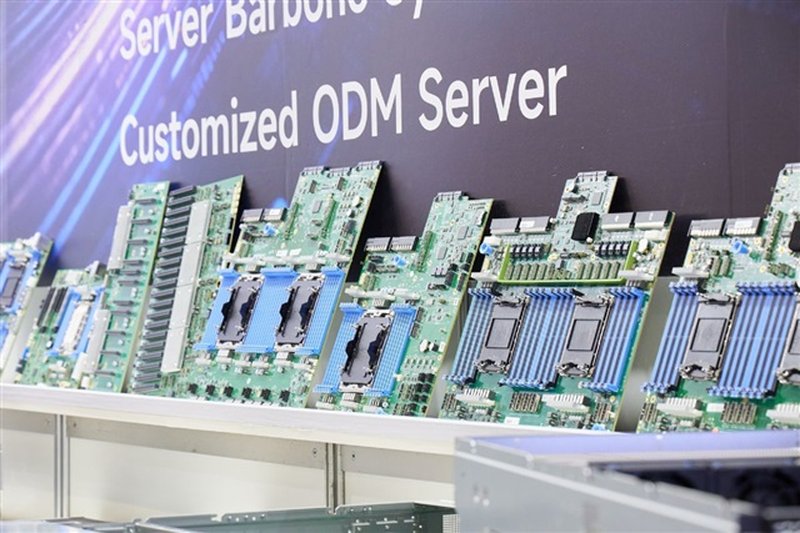
Hardware for inference and fine-tuning of ever-larger models is hungry for specialized PCBs: motherboards for multi-GPU servers, backplanes for NVLink systems, interposers for HBM memory. By supplying these components, Compeq serves as a leading indicator of the entire ecosystem’s health. The fact that the company openly talks about a seasonal offset suggests that any bubble, if it ever existed, is not deflating yet.
In this light, anyone designing an on-prem infrastructure today must accept that hardware purchasing cycles can no longer count on quiet windows. Savvy companies are already negotiating frame contracts and diversifying suppliers to shield themselves from potential bottlenecks. The question is whether the PCB sector can scale production quickly enough to prevent the AI effect from becoming a new chronic delay factor for the whole industry.






💬 Comments (0)
🔒 Log in or register to comment on articles.
No comments yet. Be the first to comment!