
Compeq's Crucial Role in the AI Ecosystem
Compeq, a prominent name in electronic component manufacturing, is emerging as a key supplier in two rapidly expanding technological sectors: artificial intelligence (AI) and low-orbit satellites. This strategic position underscores the importance of the hardware supply chain in supporting innovation and growth in areas that demand extreme computational capabilities and uncompromising reliability. The demand for AI solutions, particularly for Large Language Models (LLMs), is driving an unprecedented need for robust and high-performance infrastructure.
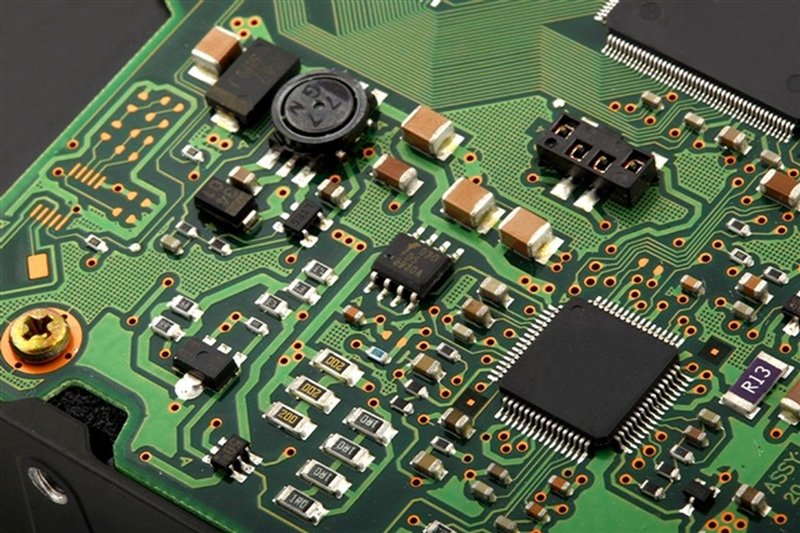
Indeed, the AI boom is not limited to the development of algorithms or software models; it rests on solid hardware foundations. Companies like Compeq, specializing in the production of printed circuit boards (PCBs) and other critical components, are indispensable for the creation of high-density servers, GPUs, and networking systems. These elements form the backbone of data centers, both on-premise and cloud, where LLM training and inference occur, requiring precision engineering to handle intensive workloads and dissipate generated heat.
Hardware Requirements for Large Language Models
The development and deployment of Large Language Models impose stringent hardware requirements. Latest-generation GPUs, with their high VRAM and parallel computing capabilities, are at the heart of this revolution. However, their efficiency largely depends on the quality and reliability of auxiliary components, such as the PCBs that connect various chips and enable high-speed data transfer. An on-premise infrastructure, in particular, requires every component to be optimized to ensure performance, stability, and a favorable Total Cost of Ownership (TCO) in the long run.
The choice to deploy LLMs in self-hosted or air-gapped environments is often driven by data sovereignty needs, regulatory compliance, or simply the desire to maintain full control over the infrastructure. In these scenarios, the quality of hardware components becomes even more critical. A supplier's ability, like Compeq's, to deliver cutting-edge products directly contributes to the robustness and efficiency of AI pipelines, influencing factors such as inference latency and overall system throughput.
Market Context and Implications for On-Premise Deployment
Compeq's positioning in such dynamic sectors reflects a broader market trend: the growing demand for customized and controlled AI solutions. Many organizations, from financial institutions to government agencies, are actively exploring alternatives to the public cloud for their most sensitive AI workloads. This drives the demand for specific hardware, optimized for on-premise deployment, which guarantees not only performance but also security and compliance with local regulations.
For those evaluating on-premise deployment, there are significant trade-offs between initial (CapEx) and operational (OpEx) costs, energy consumption, and the flexibility offered by the cloud. The availability of reliable hardware component suppliers is an enabling factor in making these choices sustainable. AI-RADAR, for example, offers analytical frameworks on /llm-onpremise to help evaluate these trade-offs, providing a neutral perspective on the constraints and opportunities related to adopting self-hosted infrastructures for LLMs.
Future Prospects and the AI Value Chain
The success of companies like Compeq highlights how the entire AI value chain is interconnected, from model research to silicon production, to final deployment. A company's ability to provide high-quality components is fundamental to sustaining innovation and competitiveness in the sector. With the evolution of LLMs and the increasing complexity of models, the demand for increasingly powerful and specialized hardware will only grow, solidifying the role of component suppliers as pillars of the technological ecosystem.
In an era where computational power is synonymous with strategic advantage, the robustness of the hardware supply chain becomes a key indicator of the AI industry's maturity and resilience. The ability to respond quickly to market needs with reliable and scalable solutions will be crucial for companies aiming to capitalize on the transformative potential of artificial intelligence, both in cloud environments and, increasingly, in on-premise configurations.







💬 Comments (0)
🔒 Log in or register to comment on articles.
No comments yet. Be the first to comment!