
COMPUTEX 2026: Taiwan Redefines Its AI Role, From Manufacturing to Design
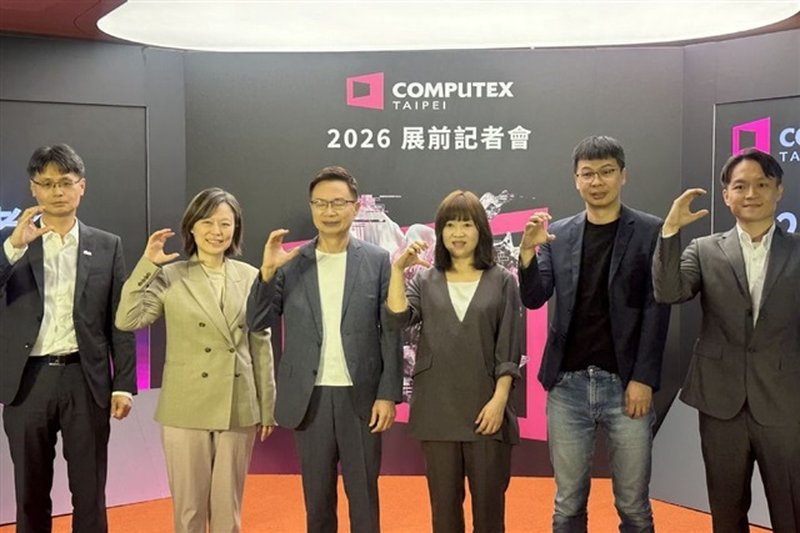
COMPUTEX 2026 is set to be a pivotal event for understanding Taiwan's evolving role in the global artificial intelligence landscape. Traditionally recognized as the hub for semiconductor manufacturing and high-tech hardware components, the island is now demonstrating a strategic ambition to shift its focus. Analysis by DIGITIMES highlights a significant transition: from merely building AI infrastructure to becoming a key player in the design and development of advanced AI solutions.
This redefinition is not just a change in label but reflects a profound transformation in the AI value chain. For decades, Taiwan has served as the backbone of global electronics manufacturing, producing the essential "silicon" that powers all types of technology, including the servers and GPUs crucial for Large Language Models (LLM) workloads. Now, the focus is shifting upstream, aiming to influence the architecture and design of AI chips and systems.
The Strategic Shift and Its Implications
The move "from building to designing" implies an expansion of Taiwanese capabilities beyond mere fabrication. It signifies increased investment in research and development, intellectual property, and the creation of ecosystems that support the entire AI lifecycle, from chip conception to software optimization for Inference and Training. This includes the development of new processor architectures, high-speed interconnects, and specific software Frameworks to accelerate LLM performance.
For companies operating in the sector, this change could lead to greater vertical integration and a more comprehensive offering of solutions. Instead of just providing components, Taiwanese entities might propose optimized technology stacks, capable of ensuring high Throughput and low Latency, which are fundamental for large-scale LLM deployments. This integrated approach is particularly relevant for those evaluating Self-hosted and Bare metal solutions, where hardware-software optimization is crucial for maximizing efficiency and minimizing TCO.
Impact on the Market and On-Premise Deployments
Taiwan's increasing emphasis on AI design has direct repercussions for organizations considering on-premise or Air-gapped deployments. Greater innovation in "silicon" design can translate into GPUs with larger VRAM, higher computing power, and improved Quantization capabilities, all critical factors for running complex LLMs locally. This can reduce reliance on cloud solutions and offer more granular control over data sovereignty and compliance.
In a context where the availability of cutting-edge AI hardware is often limited and costly, an expansion of design and production capabilities in Taiwan could stabilize the supply chain and potentially offer more competitive alternatives. For CTOs and infrastructure architects, understanding this evolution is essential for planning future investments, evaluating the trade-offs between CapEx and OpEx, and choosing the most suitable platforms for their AI Pipelines. AI-RADAR, for instance, offers analytical frameworks on /llm-onpremise to evaluate these complex trade-offs.
Future Prospects for the AI Ecosystem
COMPUTEX 2026, therefore, is not just a technology showcase but an indicator of a broader trend: the progressive maturation of the AI ecosystem. Taiwan's ability to evolve from a purely manufacturing role to one of leadership in design signals its resilience and strategic vision. This positioning strengthens its influence not only in hardware production but also in defining the standards and architectures that will drive the next generation of artificial intelligence.
This evolution promises to further stimulate innovation, offering new opportunities for the development of more efficient, secure, and customizable AI solutions. For companies aiming to build and manage their own AI infrastructures, a Taiwanese ecosystem more oriented towards design means access to cutting-edge technologies that can support increasingly stringent requirements in terms of performance, security, and control.






💬 Comments (0)
🔒 Log in or register to comment on articles.
No comments yet. Be the first to comment!