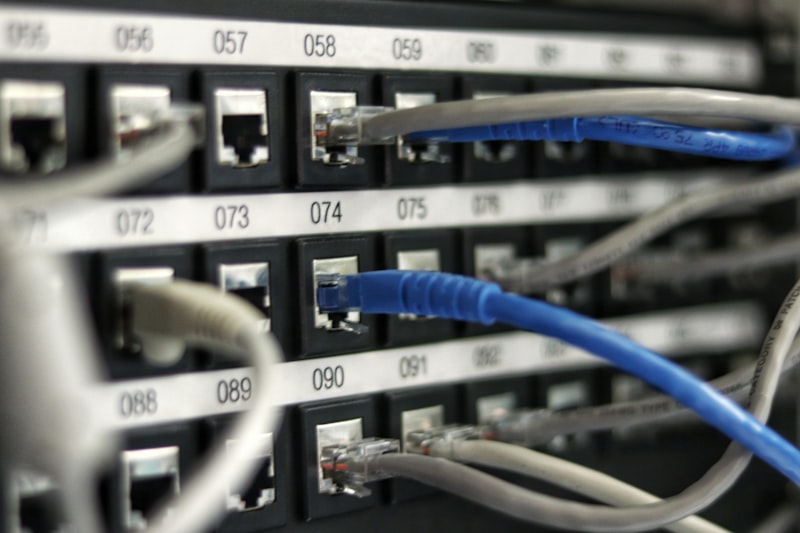
The Future of AI Interconnection: The Role of CPO
The artificial intelligence landscape, particularly for Large Language Models (LLMs), is constantly evolving, pushing the limits of computing infrastructures. At the heart of this transformation is the need for increasingly faster and more efficient interconnections between Graphics Processing Units (GPUs) and other system components. In this context, Co-Packaged Optics (CPO) emerges as a fundamental technology, promising to revolutionize how data is transferred within data centers.
CPO integrates optical modules directly into the same package as the host chip, drastically reducing electrical transmission distances and, consequently, power consumption and latency. This innovation is particularly critical for high-density GPU clusters, where the bottleneck is no longer just computing power but the ability to rapidly move enormous volumes of data between GPUs during LLM training and inference phases.
Contrasting Strategies: Precision vs. Breadth in the CPO Market
At the core of this innovation, leading Taiwanese optical component manufacturers are outlining divergent strategies for CPO. Some “lens giants” are opting for a “precision”-focused approach, aiming to develop highly specialized, high-performance CPO solutions tailored for niche markets that demand maximum capabilities. This could translate into products with extreme technical specifications, optimized for very specific workloads or for customers with unique infrastructural needs.
In parallel, other industry players are pursuing a “breadth” strategy, focusing on mass production and cost optimization to reach a wider market. This approach aims to make CPO technology more accessible, fostering greater large-scale adoption. The implications of these strategic choices are profound, influencing not only component availability but also their cost and integration into future data center architectures.
Implications for On-Premise AI Deployments
The different “playbooks” adopted by Taiwanese manufacturers will directly impact deployment decisions for AI infrastructures, especially for those evaluating on-premise solutions. A “precision”-based approach could offer advantages in terms of extreme performance for particularly demanding LLM workloads but might entail higher initial costs and less flexibility in the supply chain. Conversely, a “breadth” strategy could ensure greater availability and a lower Total Cost of Ownership (TCO), albeit with potential compromises on peak performance.
For CTOs, DevOps leads, and infrastructure architects, understanding these market dynamics is crucial. The choice of CPO components will directly influence the scalability, energy efficiency, and resilience of AI clusters. Data sovereignty and compliance, often priorities in self-hosted and air-gapped deployments, also depend on the robustness and availability of the supply chains for these critical components.
Future Outlook and Trade-offs for AI Infrastructure
The debate between precision and breadth in the CPO market reflects a broader tension in the AI hardware sector: balancing cutting-edge performance with the need for scalable and economically sustainable solutions. Companies implementing on-premise LLMs will need to carefully evaluate these trade-offs, considering how CPO supplier strategies align with their specific requirements in terms of VRAM, throughput, latency, and budget.
AI-RADAR offers analytical frameworks on /llm-onpremise to evaluate the trade-offs between different infrastructural options, helping to navigate these complexities. Regardless of the direction individual suppliers take, the evolution of CPO will be a determining factor for the next generation of AI infrastructures, whether in cloud data centers or self-hosted environments.







💬 Comments (0)
🔒 Log in or register to comment on articles.
No comments yet. Be the first to comment!