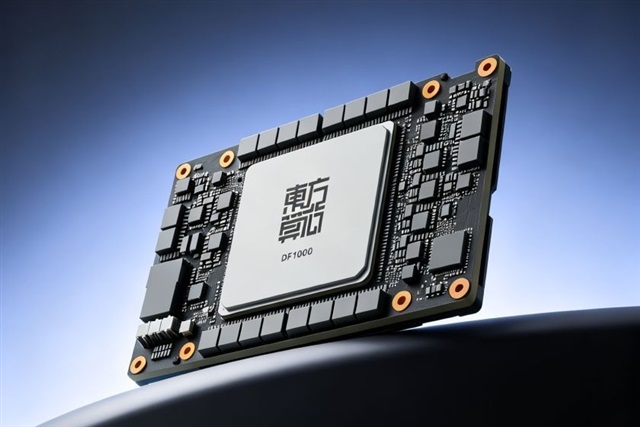
It’s no coincidence that the project surfaces now. With US restrictions on exports of advanced GPUs like NVIDIA’s A100 and H100, the Chinese government and private capital are accelerating the development of homegrown alternatives. The new company, Shanghai Orient Computing Core Technology, led by an engineer trained in Tsinghua University labs, has reached a $1.8 billion valuation and is working on a 3D architecture for artificial intelligence.
The problem is well known: training and inference for Large Language Models require ever more powerful hardware, and China’s supply chain has historically lagged in the GPU sector. The three-dimensional approach — stacking logic and memory layers rather than placing them on a single plane — promises higher density and bandwidth, but comes with thermal and yield challenges that few global players have mastered so far. That a team with strong academic roots and such substantial funding has chosen this path signals that China is not merely trying to catch up on traditional planar designs but aims for an architectural leap to close the gap quickly.
For enterprises evaluating on-premise deployments, the implications are concrete. In many regulated scenarios — healthcare, finance, government — data must remain within national borders, and cloud services relying on foreign GPUs become inaccessible or restricted. Having access to locally designed AI chips, potentially optimized for quantized model inference, would change the availability of self-hosted hardware without depending on suppliers subject to geopolitical controls. Of course, an accelerator’s value isn’t measured only in transistors: the software ecosystem, framework support, and compatibility with existing pipelines are equally critical. Yet the mere fact that investments of this magnitude are being made is a sign of how much data sovereignty and total cost of ownership (TCO) have become strategic drivers, not just technical ones.
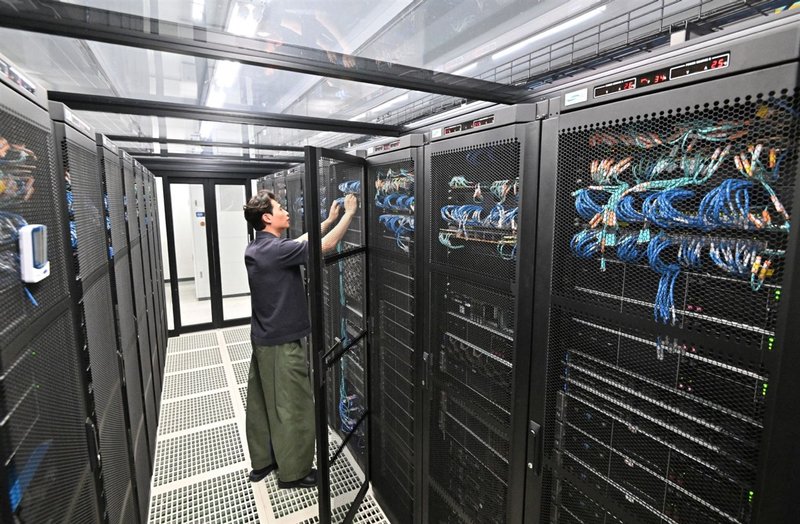
AI-RADAR has long tracked the evolution of components for self-hosted LLMs and provides analytical frameworks to weigh the trade-offs among on-prem, edge, and cloud solutions. In this case, the game is being played on a field where the technology still has to prove its maturity, but the direction is clear: the next generation of Chinese data centers could be powered by domestically developed silicon. If Orient Computing manages to translate its 3D design into reliable production volumes, the AI hardware landscape will gain an option that today simply does not exist at industrial scale outside the big American names.








💬 Comments (0)
🔒 Log in or register to comment on articles.
No comments yet. Be the first to comment!