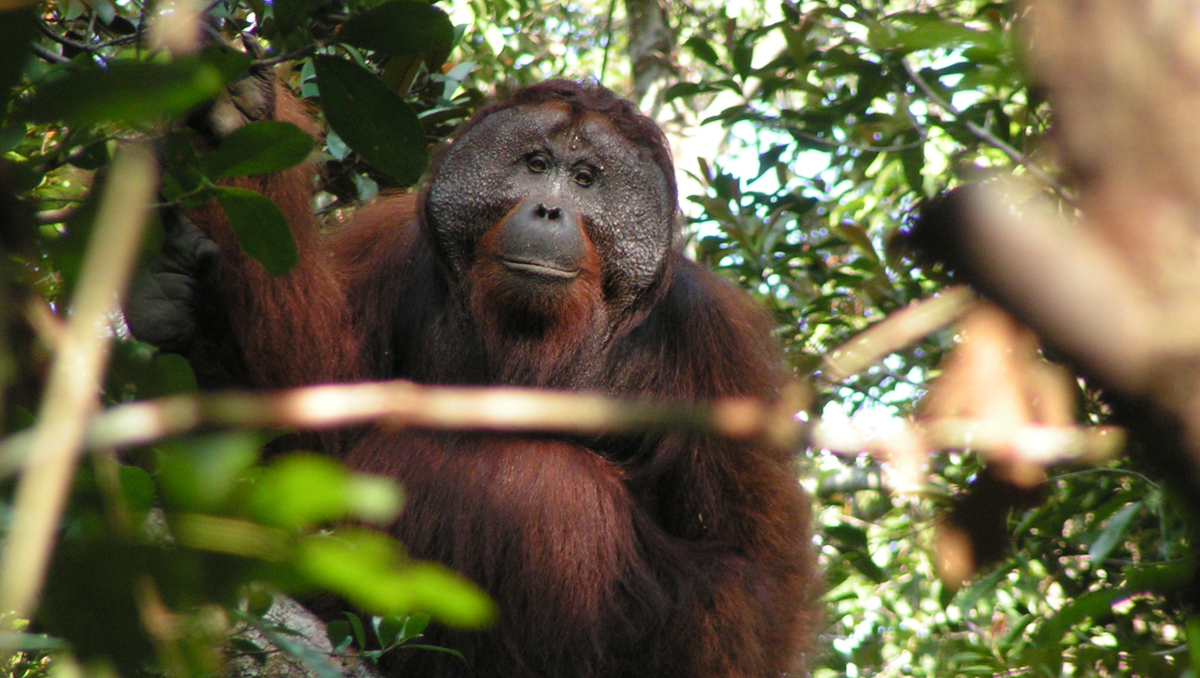
If there's a constant in contemporary research, from biological sciences to astrophysics, it's the volume of data to be queried and modeled. This week, four emblematic studies remind us in different ways: the laughter of great apes gives clues to a trait shared for 15 million years; an interstellar comet turns out to be almost as old as the universe; 'weather jiu-jitsu' proposes taming hurricanes with small nudges; and pop music, at least in the West, speaks increasingly of 'I' and less of 'we'.
Each of these research efforts rests on computing infrastructures ranging from space telescopes to training clusters for statistical models. And for those operating in fields where data protection or latency matters, the question is not only 'what can we discover?' but also 'where do we keep the data and who processes it?'.
The computational substrate: models, storage, and latency
Take the analysis of primate vocalizations led by Chiara De Gregorio (University of Warwick). To compare the rhythmic patterns of laughter among orangutans, bonobos, and human children, the team had to manage audio recordings, extract acoustic features, and apply clustering models. Operations that, replicated at scale, require inference and training pipelines that can be costly. When data is sensitive – for example, vocal recordings of minors – the push toward on-premise deployment becomes a compliance requirement, not a marginal architectural choice.
The study of comet 3I/ATLAS, led by Martin Cordiner of the Catholic University of America, also relies on a computing giant: the James Webb Space Telescope. Spectroscopic data on the deuterium-to-hydrogen ratio were processed to estimate an age of 12 billion years. Here the pipeline is distributed, but the crucial point is flow management: transferring petabytes of observations between the observatory and computing centers demands robust architectures and clear decisions on edge processing and compression. For those replicating similar experiments in a corporate setting, on-premise can reduce dependence on external networks and ensure reproducibility.
Weather jiu-jitsu and simulations: the weight of inference
The 'weather jiu-jitsu' proposal by Qin Huang (Arizona State University) is a textbook case of how deployment choices influence research. The concept – seeding clouds in advance to divert a hurricane rather than fighting it once formed – relies on climate models running on HPC. To validate the approach, the researchers simulated Hurricane Sandy, the 2021 Texas freeze, and California floods. Such models require GPUs with ample VRAM for inference, and teams often have to balance the hourly cost of cloud against purchasing dedicated hardware. In scenarios where experiments are continuous, the TCO of an on-premise solution can be more predictable.
Text analysis and linguistic diachrony: less visibility, more control
Finally, the study on pronouns in hit songs from 1970 to 2019 (Golubickis et al.) is a perfect example of natural language processing on large corpora. To quantify 'I' versus 'we', researchers used parsing and counting scripts. If the dataset were protected by copyright or privacy constraints, local processing would become essential. More and more companies investing in LLM and text analysis are evaluating frameworks like vLLM or Ollama precisely to keep data in-house, preventing it from leaving the corporate perimeter.
What it means for infrastructure decision-makers
These studies, though heterogeneous, signal a convergence: research quality depends on the ability to orchestrate heterogeneous computational workloads, often with strict constraints on data and budget. For technology decision-makers, the game is played on a few precise nodes: model quantization (FP16, INT8) to fit inference on cards like A100s with 80GB, balancing CapEx and OpEx, and adopting hybrid architectures that integrate the best of cloud and on-premise. It is no coincidence that, for those evaluating on-premise deployment, complex trade-offs exist between initial investment and effective data sovereignty.
Ultimately, from ape laughter to egocentric music, science produces fascinating stories but also concrete needs. The choice of where and how to process data is not just technical: it is a strategic lever for reproducibility, compliance, and ultimately for the very possibility of doing science at scale.


💬 Comments (0)
🔒 Log in or register to comment on articles.
No comments yet. Be the first to comment!