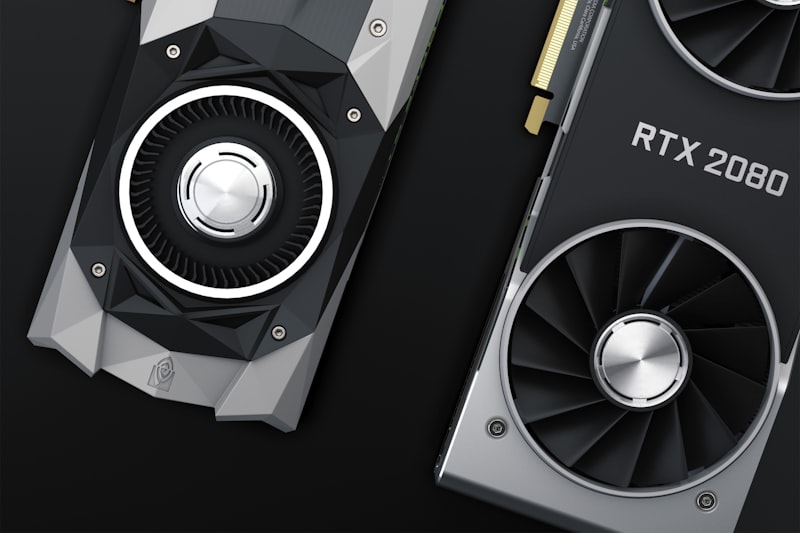
A Costly Incident for High-End Hardware
A recent incident has highlighted the intrinsic risks in the direct management of high-value hardware components. An MSI RTX 5090 Lightning Z GPU, an extremely high-end graphics card valued at around $5,000, was significantly damaged. The incident occurred at the hands of a user described as a "newbie overclocker," who was learning soldering techniques, resulting in damage to the card's resistors.
This event, while seemingly an isolated case of unfortunate inexperience, underscores an important reality for organizations investing in AI infrastructure: the fragility and cost associated with the physical management of hardware. For teams involved in on-premise deployments of Large Language Models (LLM), protecting and maintaining these resources represents a fundamental component of the Total Cost of Ownership (TCO).
The Strategic Value of GPUs for AI Workloads
Latest-generation GPUs, such as the RTX 5090 series, are the beating heart of modern artificial intelligence infrastructures. Their parallel processing capability is indispensable for both intensive LLM training and high-performance Inference. In enterprise contexts, these cards are not mere components of a gaming PC, but strategic assets that enable critical computational capabilities for innovation and operational efficiency.
The investment in a single $5,000 GPU is significant and often multiplies to dozens or hundreds of units in an on-premise data center. Managing such a fleet of machines requires not only advanced technical skills for performance optimization and Framework configuration but also rigorous attention to physical handling and damage prevention. Each damaged unit represents a direct capital loss and a potential slowdown in development or production pipelines.
Implications for On-Premise Deployments and Data Sovereignty
The incident highlights one of the fundamental differences between on-premise deployments and the adoption of cloud services for AI workloads. While in the cloud the responsibility for hardware maintenance and replacement falls on the provider, in a self-hosted environment, the organization is directly responsible for every aspect, from selection to installation, maintenance, and fault management. This also includes physical protection from human error or accidents.
For CTOs and infrastructure architects who prioritize data sovereignty, regulatory compliance (such as GDPR), or the need for air-gapped environments, on-premise deployment is often the only viable path. However, this choice entails accepting greater operational complexity and direct risks related to hardware management. The need for qualified personnel for installation, maintenance, and even activities like overclocking (though not recommended without experience) becomes a critical factor in TCO calculation. For those evaluating on-premise deployments, AI-RADAR offers analytical frameworks on /llm-onpremise to assess trade-offs between control, costs, and operational risks.
Risk Management and Best Practices for AI Infrastructure
The story of the damaged RTX 5090 serves as a warning about the importance of implementing rigorous best practices in AI infrastructure management. This includes not only training technical staff but also adopting standardized procedures for installation, maintenance, and troubleshooting. Physical protection of components, the use of appropriate tools, and awareness of one's own skill limitations are crucial aspects.
In an era where AI computing hardware is increasingly powerful and expensive, minimizing operational risks becomes an absolute priority. Companies must consider not only the initial cost of GPUs but also the costs associated with potential damage, downtime, and the need for highly specialized personnel. Only through a holistic approach to infrastructure management can the return on AI investment be maximized and the operational continuity of LLM-based services be ensured.






💬 Comments (0)
🔒 Log in or register to comment on articles.
No comments yet. Be the first to comment!