Growing Tensions Over AI Data Centers in Pennsylvania
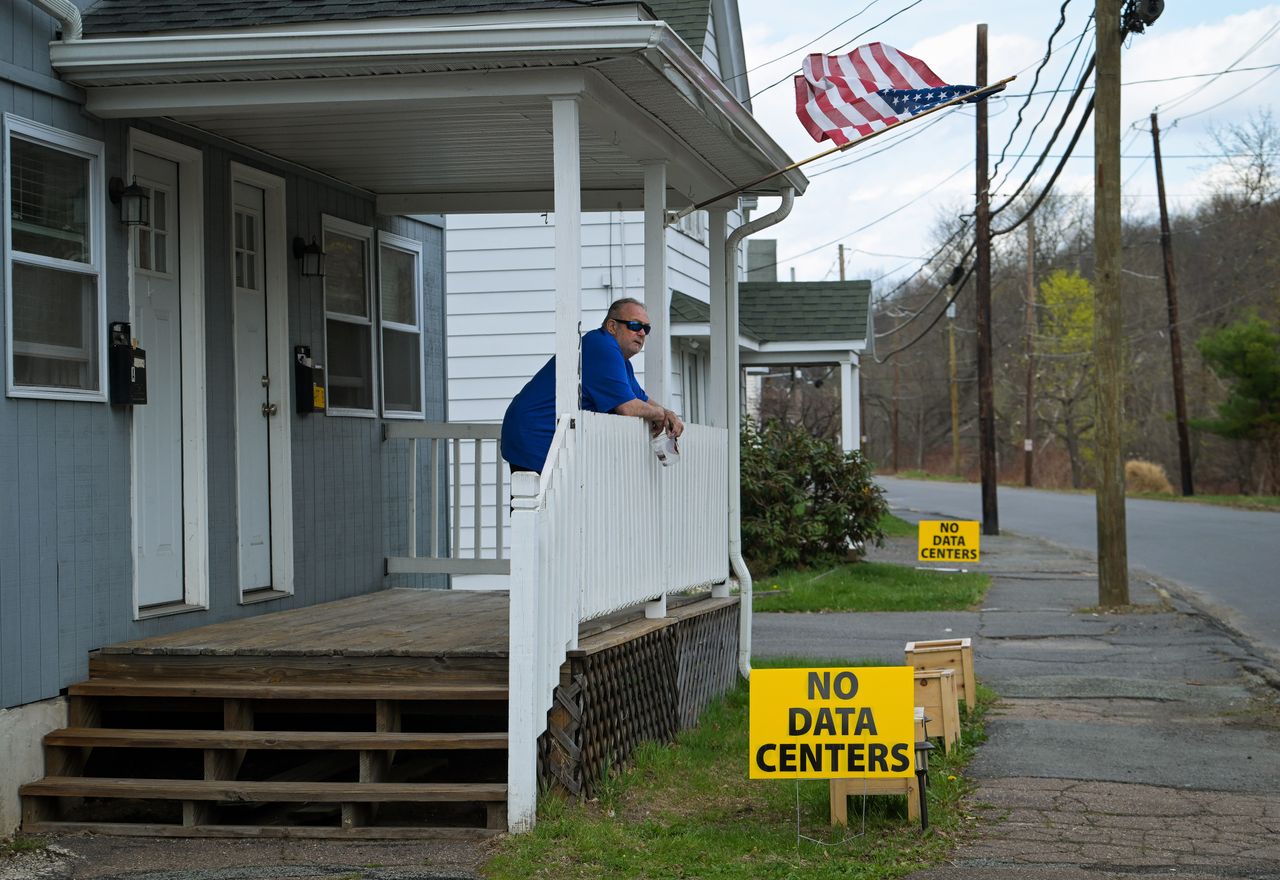
The rapid expansion of artificial intelligence is bringing new challenges not only on the technological front but also on the social and infrastructural one. A striking example comes from Pennsylvania, where residents have expressed strong discontent regarding the construction of new data centers dedicated to AI. During a two-hour town hall meeting, citizens openly criticized Governor Shapiro, complaining that they feel "bulldozed" by decisions made without adequate consideration of their concerns. The presence of "No data centers" yard signs in local homes testifies to the extent of this opposition.
This situation underscores a growing friction between the need for advanced computational infrastructure to support Large Language Models (LLM) and other AI applications, and the impact such facilities can have on local communities. The implications extend beyond mere aesthetics, touching crucial aspects such as energy consumption, land use, and water resources, all factors contributing to an increasingly heated debate.
Implications for AI Infrastructure and TCO
Data centers designed for AI workloads, particularly for LLM Inference and training, present very specific and intensive infrastructural requirements. Unlike traditional data centers, these facilities demand significantly higher power density and cooling systems to manage high-performance GPU clusters, such as NVIDIA H100 or A100, which require substantial amounts of VRAM and computational power. The planning of such installations must consider not only energy supply but also the local electrical grid's capacity to sustain high consumption peaks.
These factors directly impact the Total Cost of Ownership (TCO) of an AI deployment. Beyond initial CapEx costs for hardware acquisition and building construction, operational expenses (OpEx) related to energy and cooling can be considerable. Site selection thus becomes strategic, not only for proximity to reliable and low-cost energy sources but also for community acceptance, which can influence approval times and project costs.
Data Sovereignty and Local Control: A Delicate Balance
For many organizations, the decision to adopt a self-hosted or on-premise approach for AI workloads is driven by needs for data sovereignty, regulatory compliance (such as GDPR), and security. Air-gapped environments or dedicated infrastructures offer unparalleled control over sensitive data and proprietary models. However, the realization of these physical infrastructures clashes with local realities, as demonstrated by the Pennsylvania case.
Community resistance can delay or even block projects essential for on-premise deployment strategies. This forces companies to carefully evaluate not only the technical specifications of the hardware (such as GPU memory or network throughput) but also the social and political context of the chosen site. Finding a balance between the need to maintain control over AI assets and managing local concerns becomes a critical aspect in the deployment pipeline.
Future Perspectives and Trade-offs for AI Infrastructure
The Pennsylvania situation highlights a fundamental trade-off in the AI era: the drive for technological innovation and the creation of new computational capabilities must be balanced with environmental sustainability and social acceptance. For CTOs, DevOps leads, and infrastructure architects evaluating self-hosted alternatives versus cloud solutions for LLM workloads, the local context becomes as critical a constraint as technical specifications.
Planning a robust and resilient AI infrastructure requires a holistic approach that considers not only performance (e.g., tokens/sec, batch size) and efficiency (e.g., quantization) but also territorial impact and dialogue with communities. AI-RADAR offers analytical frameworks on /llm-onpremise to help evaluate these complex trade-offs, providing tools for making informed decisions that account for all factors involved, from specific hardware requirements to data sovereignty and TCO.








💬 Comments (0)
🔒 Log in or register to comment on articles.
No comments yet. Be the first to comment!