U.S. AI Data Center Expansion: Two-Thirds of New Projects in Drought-Prone Areas
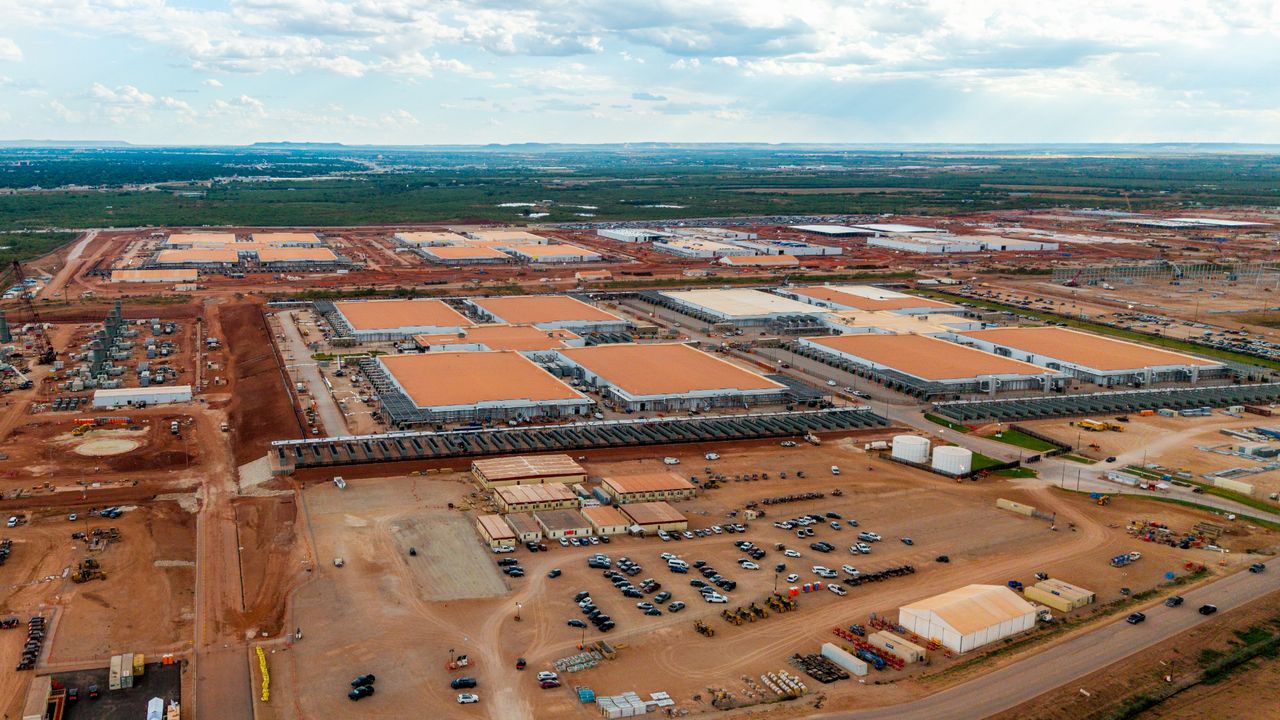
The accelerated development and deployment of Large Language Models (LLMs) and other artificial intelligence applications are driving unprecedented growth in data center infrastructure. However, this expansion brings significant challenges, particularly concerning natural resource consumption. A recent analysis has revealed a concerning fact: the majority of new AI-dedicated data centers in the United States are being built in areas already experiencing water shortages.
Specifically, two-thirds of the 809 planned AI data center projects across the U.S. are slated for regions classified as drought-risk zones. This trend raises crucial questions about the long-term sustainability of such infrastructures and their environmental implications, especially for organizations considering on-premise deployment for their AI workloads. The intensive cooling requirements for powerful GPUs, the beating heart of these systems, make water availability a critical factor to consider.
The Water Footprint of AI Infrastructure
Modern data centers, particularly those optimized for AI workloads, generate considerable amounts of heat due to high compute density. High-performance processors and GPUs, such as NVIDIA H100 or A100, consume significant power and require robust cooling systems to maintain optimal operating temperatures and prevent throttling. While various cooling methodologies exist, many, even air-based ones, extensively use water through evaporative cooling towers or chillers.
Direct-to-chip liquid cooling or immersion cooling, while more energy-efficient and potentially less reliant on water for direct server cooling, often still require supporting infrastructures that use water to dissipate the overall heat from the facility. This makes water availability and cost an increasingly relevant element in calculating the Total Cost of Ownership (TCO) for large-scale AI deployments, impacting not only operational expenses but also the very feasibility of a project in certain locations.
Implications for On-Premise Deployments and Data Sovereignty
For CTOs, DevOps leads, and infrastructure architects considering self-hosted or hybrid alternatives for their LLMs and AI workloads, site selection for a new data center or the expansion of an existing one becomes a complex strategic decision. Data sovereignty, regulatory compliance, and the need for air-gapped environments push many companies towards on-premise solutions, but the water context adds a new layer of complexity.
Locating in drought-prone areas can lead not only to higher operational costs for water procurement but also to increasing regulatory risks and potential service disruptions. The evaluation of trade-offs must now include environmental resilience and natural resource availability. For those evaluating on-premise deployments, analytical frameworks are available to assess complex trade-offs that now include water availability and environmental impact, in addition to traditional performance and cost metrics.
Future Outlook and AI Sustainability
Growing awareness of AI's environmental impact is pushing the industry towards more sustainable solutions. Innovation in cooling, with closed-loop systems that minimize water consumption, and the development of more energy-efficient chips are fundamental steps. Integration with renewable energy sources and the possibility of reusing waste heat from data centers for other purposes (e.g., urban heating) also represent promising directions.
However, the challenge remains significant. AI infrastructure planning can no longer ignore a holistic evaluation that considers not only compute power and available VRAM but also the impact on energy and water consumption. Ensuring the sustainability of AI expansion will be crucial for its long-term development and for mitigating the environmental risks associated with this technological revolution.









💬 Comments (0)
🔒 Log in or register to comment on articles.
No comments yet. Be the first to comment!