
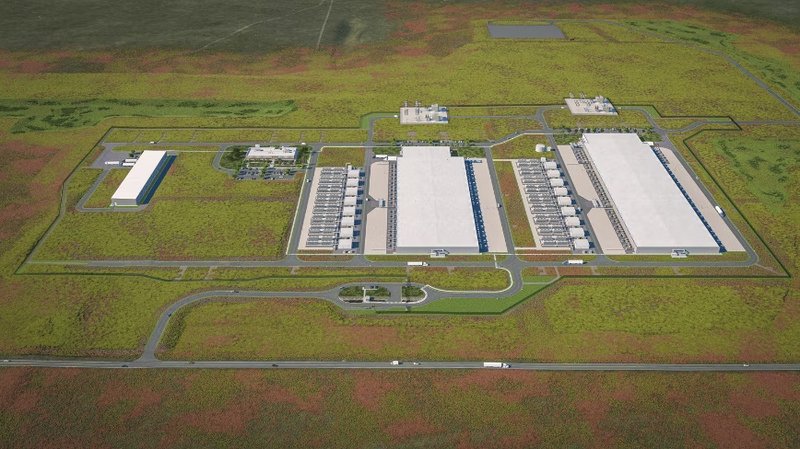
Investor Kevin O’Leary has resurrected his favorite metaphor: AI data centers consume far less water than golf courses. He made the claim to Business Insider while defending his Stratos project, a 40,000-acre data center in Utah that has already sparked protests and a governor’s executive order. The comparison is technically correct, at least in total volume, but it’s a distraction exercise.
What matters is not the comparison with a sector that enjoys a completely different regulatory and cultural status, but the local impact. Water in Utah is a strained resource, contested between agriculture, residential communities, and suffering natural basins. Placing a water-hungry infrastructure into an already fragile ecosystem exacerbates conflict rather than resolving it with national statistics. The executive order that blocked the project was born of real political pressure, not a spreadsheet.
For those building on-premise AI stacks, the lesson is structural. Total Cost of Ownership is no longer measured only in kilowatt-hours or GPU cycles. Water – or rather its unavailability – is becoming a hidden operational cost and a regulatory risk. In water-stressed regions, a company evaluating a local inference cluster may find that the permit for evaporative cooling is denied, water rates soar, or the local community pushes back. In such cases, self-hosted deployment becomes not a sovereignty choice but a permit labyrinth.
There is a second effect: the technological pushback. Opposition to water use accelerates the adoption of direct liquid or immersion cooling, which eliminates evaporative consumption but increases upfront CapEx. This shifts the TCO equation: the initial investment rises, but long-term operational cost and the risk of drought-related plant shutdowns fall. Anyone designing on-premise infrastructure today cannot ignore these variables, which tie together hardware, geopolitics, and meteorology.
O’Leary’s statement unintentionally makes visible a latent conflict. The LLM industry grows on a physical substrate that is not infinite. The golf comparison is convenient because it shifts the conversation onto a cultural enemy, but it doesn’t answer the real question: are we willing to pay the water price of artificial intelligence, and who bears it? The next executive orders, in Utah and elsewhere, will supply answers before the industry has even formulated them.





💬 Comments (0)
🔒 Log in or register to comment on articles.
No comments yet. Be the first to comment!