Resilient Hardware for Edge AI
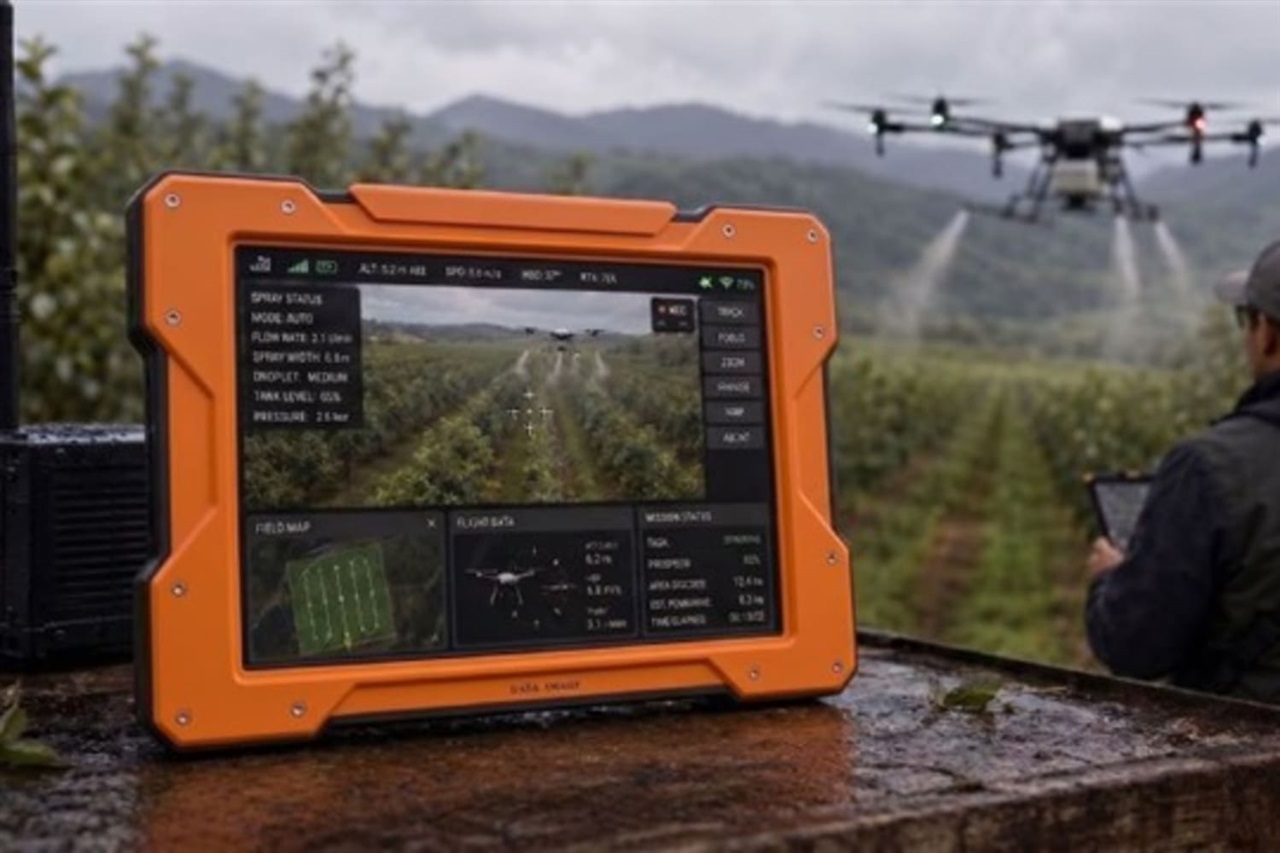
Data Image, a company operating under the Qisda group, garnered attention at COMPUTEX by showcasing its latest generation of displays. These products, characterized by their ruggedness and high brightness, have been specifically developed with AI-powered unmanned vehicles in mind. Their presence at the industry fair underscores a clear trend: AI is no longer confined to data centers but is expanding towards the edge, into operational contexts where hardware must withstand extreme conditions.
The need for reliable and durable components is crucial for the success of AI deployments in sectors such as autonomous logistics, precision agriculture, or surveillance. Data Image's displays represent a fundamental piece in this ecosystem, providing the necessary visual interface for real-time monitoring, control, and data visualization, even in challenging environments.
Technical Details and Operational Requirements
The displays presented by Data Image are defined by two main characteristics: ruggedness and high brightness. Ruggedness implies superior resistance to environmental factors such as vibrations, shocks, dust, humidity, and extreme temperature variations, which are common conditions in unmanned vehicle usage scenarios. This resilience is achieved through the use of specific materials and advanced construction techniques, essential for ensuring continuous operation and the longevity of the overall AI system.
High brightness, on the other hand, is crucial for ensuring screen readability even under direct sunlight, a non-negotiable requirement for vehicles operating outdoors. The ability to clearly display information, from sensor data to navigation maps, is vital for the safety and efficiency of autonomous operations. These technical requirements highlight how hardware selection is not a mere detail but a determining factor for the performance and reliability of AI systems at the edge.
The Impact on On-Premise and Edge AI Deployments
The emergence of hardware solutions like Data Image's rugged displays is a clear indicator of the maturing AI ecosystem for on-premise and edge deployments. For CTOs, DevOps leads, and infrastructure architects, the choice of suitable physical components is as important as the selection of Large Language Models (LLM) or software frameworks. Unmanned vehicles, in fact, represent a paradigmatic example of edge deployment, where AI inference occurs locally, often in air-gapped environments or with limited connectivity.
This approach ensures not only low latency and high throughput for real-time decisions but also superior control over data sovereignty and compliance. The ability to keep sensitive data on-device, without relying on constant or vulnerable cloud connections, is a significant advantage in many sectors. For those evaluating on-premise or edge deployments, AI-RADAR offers analytical frameworks on /llm-onpremise to assess the trade-offs between initial capital expenditures (CapEx), operational expenditures (OpEx), and the resilience required by the environment.
Future Prospects and TCO Considerations
The market for autonomous vehicles and edge AI is rapidly expanding, and with it grows the demand for specialized hardware that can withstand environmental challenges. Choosing rugged, high-brightness displays, while potentially incurring a higher initial cost, often translates into a lower Total Cost of Ownership (TCO) in the long run, thanks to increased reliability, reduced downtime, and less need for maintenance or replacement. These trade-offs are central to strategic decisions for companies investing in autonomous AI solutions.
In a context where performance and resilience are equally important, hardware innovation like that proposed by Data Image is fundamental. It allows extending the capabilities of artificial intelligence to increasingly complex and critical scenarios, ensuring that AI-based decisions can be made and displayed reliably, regardless of external conditions. This is an essential step towards the full realization of the potential of distributed and autonomous AI.






💬 Comments (0)
🔒 Log in or register to comment on articles.
No comments yet. Be the first to comment!