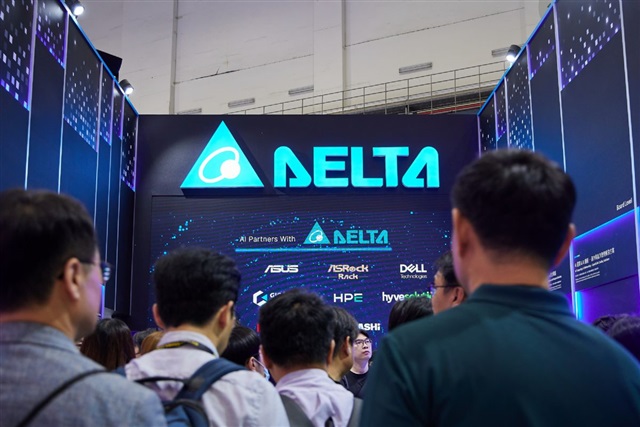
The headline is scant, but the trajectory is clear. According to DigiTimes, Delta Electronics is positioning its high-voltage direct current (HVDC) power solutions to intercept the next wave of AI data center expansion. The window indicated is the second half of 2026 — a timeline that is no accident, aligning with the expected maturation of compute architectures for next-generation model training and with unprecedented pressure on rack-level power density.
The issue at hand is that AI is no longer just a silicon and algorithm challenge: it’s a problem of energy physics. Modern GPUs and custom accelerators draw power levels that make traditional alternating current (AC) distribution with multiple conversions obsolete. Every AC-to-DC step inside a server — and then down to lower voltages for CPU and VRAM — introduces losses that, at cluster scale, become a significant operational cost and a thermal bottleneck. HVDC circumvents this inefficiency by delivering a direct current line straight to the racks, reducing conversion stages and improving overall reliability.
Delta is no newcomer to these themes; the company has been manufacturing server power supplies, networking hardware, and cooling systems for years. But its interest in HVDC applied to AI signals a qualitative leap. It’s no longer about supplying standard components, but about helping to define a power architecture designed for extreme workloads where a single rack can exceed 50 kW thermal and requires stable power with minimal tolerances. The Taiwanese firm is betting that mainstream adoption will occur just as cloud providers and large enterprises begin deploying clusters for LLM inference and fine-tuning on platforms like NVIDIA Blackwell or its equivalents.
The implications for organizations evaluating on-premise deployment are profound and go beyond mere energy savings. Introducing HVDC systems in data centers lowers Total Cost of Ownership (TCO) on two fronts: it cuts the electricity bill, which accounts for a growing share of operational spending, and enables higher compute density for the same footprint, postponing or avoiding physical site expansion. In a data sovereignty context, where processing must remain within defined geographical and legal borders, having an efficient, scalable electrical infrastructure is an often-overlooked enabler. For entities handling sensitive data that cannot rely on the public cloud, the ability to build a self-hosted environment with manageable power and predictable costs can make the difference between a sustainable project and an economically unviable one.
A second-order effect is that HVDC standardization could accelerate the proliferation of edge micro-data centers, where energy constraints are even tighter. Field AI, requiring local inference for latency or confidentiality reasons, benefits directly from compact, efficient power systems. Delta, with its industrial components footprint, could push for modular solutions, further eroding the barrier to entry for on-site AI processing.
This is not an overnight revolution. Utilities and data center operators will need to adapt to evolving standards and a still relatively narrow supplier ecosystem. Yet the move by a player like Delta, with its manufacturing capacity and global customer base, is a leading indicator of where the industry is heading. While the world focuses on model parameter counts, the real game for on-premise AI is being played out on cables, converters, and kilowatts.








💬 Comments (0)
🔒 Log in or register to comment on articles.
No comments yet. Be the first to comment!