
Taiwan's display makers, long pillars of the global PC and monitor supply chain, are recalibrating their factories: demand for IT panels is cooling, and production resources are being progressively redirected toward AI components. This is not a simple diversification dictated by short-term market conditions but a structural repositioning that speaks the language of AI hardware—one worth reading through the lens of those planning local deployments and self-hosted infrastructures.
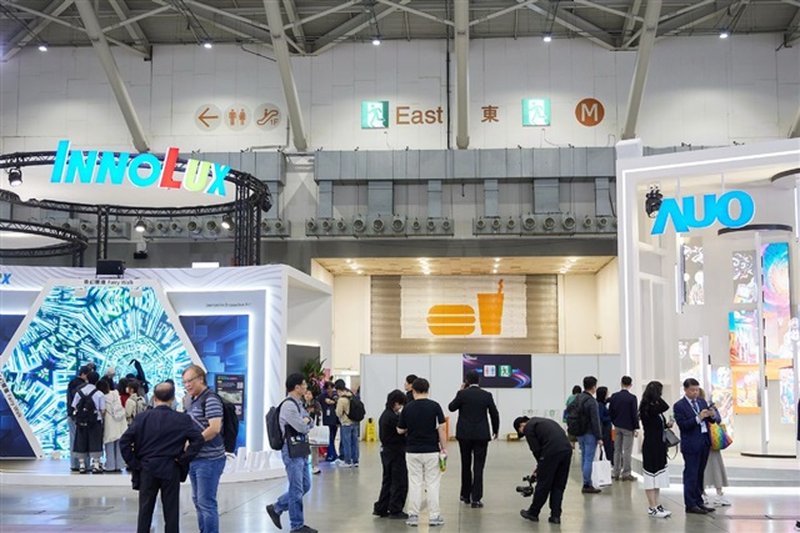
The slim headline, from a source that offers no further details, is enough to set coordinates when set against Taiwan's industrial backdrop. Giants like AU Optronics and Innolux built their fortunes on LCD panels for laptops, monitors, and TVs. Now that the consumer market for traditional devices is slowing, those same production capabilities—fabrication lines, precision assembly expertise, supply chain management know-how—are seeking new purpose in the AI world. This pivot may not mean GPUs or training silicon; it could involve optical components, sensor modules, chip packaging, or the integration of subsystems for inference servers.
For anyone tracking on-premise deployments, the stakes are concrete. When excess manufacturing capacity flows into AI infrastructure, the hardware market broadens. More suppliers, more competition, potentially lower prices and a greater variety of solutions for those who want to build or upgrade their local stack. The effect is neither immediate nor guaranteed, but it signals an ecosystem growing beyond the usual chipmaker names—and that alters the incentives for companies weighing whether to move sensitive workloads onto internal servers.
There is an apparent paradox: the consumer demand slowdown might actually accelerate the shift toward on-premise AI that many IT departments are now evaluating. Display production is a high-volume, low-margin endeavor; when volumes drop, the temptation to repurpose lines for higher-value products grows strong. AI, even in its apparently peripheral components, promises better margins. Whether this leads to greater availability of inference hardware—cards, modules, embedded systems—one can reasonably expect an impact on the Total Cost of Ownership of self-hosted solutions, even if it is too early to quantify it.
For those already running LLMs locally, hardware supplier diversification is a factor worth monitoring closely. Depending almost exclusively on a handful of companies for GPUs is one scenario; being able to choose from a broader range of accelerators, perhaps optimized for specific inference workloads with lower energy costs, is another. The move by Taiwanese display makers, however embryonic, indicates that the supply chain is organizing itself to offer precisely that breadth of options.
Finally, there is an industrial geopolitics angle. Taiwan remains a critical node in global supply chains. The shift of production capacity toward AI is not only about component supply but also about the location of critical manufacturing. For European organizations bound by digital sovereignty requirements and GDPR compliance, being able to draw on components not exclusively tied to non-EU suppliers but globally diversified can simplify the design of architectures that guarantee physical data control. It is not a solution in itself, but a piece in a larger mosaic that is, step by step, making self-hosting less of a gamble and more of a viable choice.





💬 Comments (0)
🔒 Log in or register to comment on articles.
No comments yet. Be the first to comment!