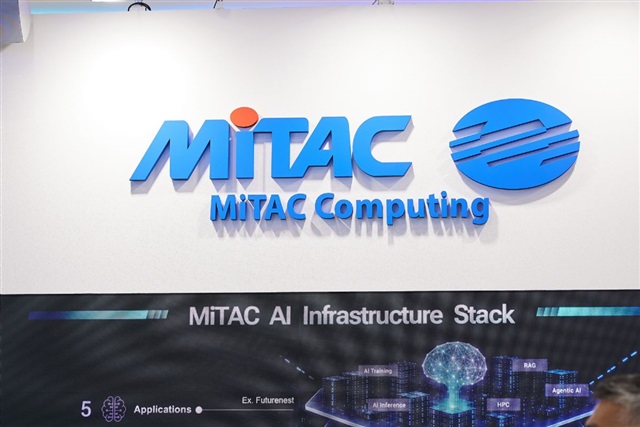
The generative AI wave isn’t just measured by new models or aggressive quantization — it runs through factory floors too. MiTAC, the veteran Taiwanese original design manufacturer, has announced an expansion of its AI server production lines across three strategic hubs: Taiwan, Vietnam, and California. A direct response to the surge in demand for accelerated compute, reshaping the geography of hardware manufacturing.
The news, reported by DIGITIMES, doesn’t detail the specifications of the machines that will come off the new lines, but the context speaks volumes. For months, lead times for systems equipped with high-VRAM GPUs have remained tight, and companies evaluating on-premise or hybrid LLM inference are grappling with real hardware availability. The expansion of players like MiTAC signals that the supply chain is racing to narrow those gaps.
Why server production is shifting (and expanding)
It’s not just about volume. The choice to open or ramp up lines in Vietnam and California — alongside the Taiwan stronghold — mirrors two parallel forces: the need to diversify geopolitical risk and the drive to get closer to end customers. The North American market, in particular, is fueling AI server demand, both from large hyperscalers and from enterprises choosing the self-hosted route. Having manufacturing capacity in California can shorten lead times and simplify logistics for those ordering racks ready for local deployment.
For anyone evaluating an on-premise infrastructure for LLMs, this shift carries concrete weight. Supply latency is a factor that directly impacts TCO (Total Cost of Ownership) and workload planning: knowing that ODMs are investing in new facilities suggests that the current bottleneck in compute nodes could ease in the coming quarters. Of course, the picture remains fragmented — the most sought-after configurations (multi-GPU systems with high memory bandwidth) are still a choke point, and competition for enterprise GPUs shows no sign of abating.
The data sovereignty junction
Interest in on-premise deployment isn’t purely technical. In sectors governed by GDPR or local data residency laws, the ability to run inference and fine-tuning within one’s own data center is increasingly a prerequisite. MiTAC and its peers understand that a slice of AI server demand comes precisely from organizations that cannot — or will not — entrust sensitive data to public clouds. The irony is that while the spotlight is on LLMs and serving frameworks, the real battle is often about putting metal in the racks.
The announced expansion doesn’t solve deployment dilemmas on its own: thermal management, high-speed networking, and workload orchestration remain open challenges. Yet it signals that the manufacturing ecosystem is taking the enterprise AI maturation phase seriously — the stage where scalability is no longer just a software problem but a matter of assembly lines. For those who track component cycles closely, MiTAC’s expansion is an early indicator: AI hardware is on its way to becoming a commodity, even if, for now, it remains a scarce resource.







💬 Comments (0)
🔒 Log in or register to comment on articles.
No comments yet. Be the first to comment!